
(N)CPC Central Committee New Year’s Statement
23 January 2025
To all the revolutionary-minded people in Canada who are genuinely seeking an alternative to the declining order of the bourgeoisie, to all the real communists out there, both those of the (N)CPC and also those who have yet to find a real Party worthy of their activity, and to all those already fighting for a better world, let us be clear: the deterioration of the international situation cannot be ignored. Although it is customary for Marxist-Leninists to throw this sort of claim around with little basis, it is not the case here. We are now witnessing the acceleration of inter-imperialist contradictions on a global scale. Eastern Europe, the Middle East, Africa, Asia—the Anglo-American Imperialist Alliance (AAIA) and its rivals are clashing on an ever-increasing number of fronts, through war (Ukraine, Sahel, Sudan, Lebanon, Syria),1 as well through politics (in Moldova, Georgia, several Latin American countries) and economics via China’s Belt & Road Initiative and the Euro-American IMEC (India-Middle East-Europe Economic Corridor).
The global economic context and the ever-increasing competition between great powers are driving the bourgeoisie in the imperialist countries of Europe and America to accelerate the process, begun decades ago, of destroying the social-compromise measures enacted to demobilize their local proletariat during the crucial decades between 1945 and the 1980s. At the same time, having followed in recent decades a “bread and circuses” policy in which locally high living standards and concessions on many sectoral, democratic-rights issues (women, migrants, LGBT, etc.)—i.e. cultural liberalism—went hand in hand with economic “neo-liberalism”, the bourgeoisie is now reversing course.
The now-resigned Prime Minister Trudeau, attacked by his opponents in the electoral arena and unable to deceive the people any longer with fine words, recently renounced his historic position in favour of massive immigration and joined the chorus in blaming immigrants for a whole range of social problems, starting with the now undeniable housing crisis. This was, until recently, a marginal discourse as the bourgeoisie sought to replenish the ranks of the proletariat. Today, it tends to dominate in Canada, reflecting new conditions where Canadian capitalists have enough cheap labour and now need to focus on upping the level of repression against immigrant workers. In the US, the destruction of historic abortion-rights protections, the growing campaign against transgender people and incoming President Trump’s stated desire to rid the military of “wokeism” augur the “end of the recess.” In France, the Front National is on the doorstep of power. In the UK, pogroms have recently targeted Africans and Pakistanis.In the US, Elon Musk arguably threw up a couple Nazi salutes at Trump’s inauguration.
The two mobilizations
What is happening? The imperialist bourgeoisie is preparing to receive significant blows. The Anglo-American imperialists remain dominant on the world stage, but their hegemony is contested, and the ever-deepening structural crisis of capitalism make it so that economic conditions within even the most consolidated imperialist countries are at a high risk of worsening even further. In these conditions, the regime of preventive counterrevolution2 is overheating and might crack. When preventive counterrevolution fails, two alternatives open up: the revolutionary mobilization of the masses or their reactionary mobilization.
The bourgeoisie in the big imperialist countries wants to mobilize large sections of the proletariat behind it, and so it must reinforce reactionary forms of nationalism. We’re already seeing competing kinds of it arising amid the looming tariff war with the US (which Canada seems to be on the brink of as of late January 2025). In some countries, the bourgeoisie is starting to implement a repressive natalist policy, because it needs future little soldiers. Less and less able to distract people with mere “entertainment culture,” fractions of the bourgeoisie now tend to make cultural struggles (against Islam, against LGBT, etc.), issues around which to rally sectors of the people behind it without having to make economic concessions.

This reactionary mobilization of the masses, whose logical conclusion is inter-imperialist war, is not fascism. Fascism is the open dictatorship of the most reactionary sections of the ruling classes, directed against the revolutionary proletariat. Fascism will become a serious possibility if the revolutionary mobilization of the masses can develop sufficiently to threaten the imperialist bourgeoisie. This is still far from being the case. For the time being, the ruling class has a significant head start over conscious revolutionary forces and even over the spontaneous action of the proletariat in defense of its interests.
The objective conditions, however, are favourable to the revolutionary mobilization of the popular masses. The generalized degradation of living and labour conditions, the pushback on democratic rights and the increasingly obvious preparation for inter-imperialist war, are all good reasons for workers to mobilize. Then again, it’s up to our Party to seriously take up this task.
The legal socialist movement, in its eclecticism, is currently unable to develop the mobilization and the organization of the masses in a significant direction. Faced with the right-wing shift of bourgeois politics, we see two trends emerging that will prevent it from accomplishing these tasks.
The first trend—a classic and well-known trend to anyone who remembers the Harper years—is tailism of the liberal wings of the bourgeoisie and petty bourgeoisie. Many self-proclaimed “socialists” are calling for the most mediocre social liberalism to stand in the way of tougher bourgeois policies. In France, for over twenty years, revisionists and social democrats have regularly called for allying themselves with anyone to block the Front National; in the United States, there have been “socialists” willing to support Obama, Clinton, Biden, Harris at any price, any time. Under a Conservative Poilievre government in Canada, we’ll undoubtedly see a resurgence of this kind of tailism.
At the same time, a new and dangerous form of tailism is developing among the ranks of the legal left. We now see emerging a new trend of “red-browns” in the US and Canada—or MAGA ‘’communists’’—clowns who believe the left should align with the cultural and social positions of the right-wing bourgeoisie because they supposedly represent the ‘’core of the people’’ who inhabit the trailer parks and subsidized housing blocs. These activists think they’re doing political judo by deploying the methods of the bourgeois right wing against itself. In reality, they’re preventing an independent and revolutionary organization of the proletariat. Although these forces are very weak in Canada, we have already seen a few examples, and we can bet this form of opportunism will keep developing as the situation evolves.
The political situation across the country
In order to build up the necessary independent, revolutionary mobilization of the working class, oppressed nations and their allies, our political interventions must be based on coast-to-coast-to-coast social investigation and class analysis (SICA). Fieldwork and active participation in the class struggle across the entire country is the only path toward formulating an analysis and calls to action that reflect the aspirations and the current level of class consciousness of the popular masses as a whole. In precisely this spirit of investigation, we are sharing here field notes submitted by Party organizers and sympathizers from across the country. While not covering the entire country, we believe these notes are sufficient to provide a sketch of the myriad ways in which the general political conditions outlined above are manifesting across the immense landmass that is Canada.
1. British Columbia
BC hosts two of Canada’s three most expensive cities (Vancouver #1, Victoria #3); real estate makes up 18.4% of the province’s GDP; and property values continue to skyrocket with the growth of real estate investment trusts (REITs). Jet-setting developers and a host of multinational corporate heads, with their legal and technical professionals, call the urban centres home and the mountains and ocean their luxury playgrounds against the backdrop of working-class poverty. The provincial minimum wage is $17.40/hr, while the estimated living wage for Metro Vancouver has climbed to $27.05/hr. While unemployment is the second-lowest in Canada at 5.7%, inflation and real estate speculation are fueling a housing crisis of devastating proportion. New immigrant workers make up to 46% of the workforce in BC. Meanwhile working conditions continue to deteriorate as jobs are “gigified,” and workers themselves take the blame in the press for the social ills of capitalism. Workers share with our organizers how their situation is worsening, with many sleeping in their cars and barely scraping by.
Rural BC encompasses 95% of the province’s land mass, and resource industries—which include energy production, mining, forestry, agriculture and transportation—still account for 12.5% of the provincial GDP, valued at $37.7B.3 The resource and transportation sectors are the foundation of the manufacturing and construction industries that contribute another $46.6B (or 15.3%) to the province’s GDP. Pressures on the resource economy stem in part from contractions in forestry due in part to tariffs on imports south of the border and the loss of critical infrastructure and skills from mill closures (there were 16 mills closed in 2024 alone). Yet, there is speculation that forestry has room for value-added manufacturing; mineral deposits are rich; and the shale oil field in Northeastern BC is the largest in Canada. Enbridge’s BC Pipeline out of Fort Nelson transports 55% of the LNG produced in Northern BC to Sumas and the US border. While some producers in the resource and manufacturing industry have been experiencing US order crunches with the threat of Trump tariffs looming, LNG producers aren’t feeling that same pressure thanks to Trump. Climate change activists rightly point to extraction and consumption of fossil fuels as fanning the literal flames of climate disasters. However, ignoring the central questions of who consumes what, and for what purpose flames antagonisms between resource workers and those who hope to protect their communities from the consequences of climate change. There is a need for a materialist analysis of what production by and for the people could mean for addressing climate change.
Within a three-hour drive of Vancouver the political and economic landscape of BC dramatically shifts, and the October 2024 provincial election was a clear indication of the sharpening political polarization across this divide. Premier David Eby’s NDP barely scraped a majority government: their sway is urban and coastal, and they only hold seats in small pockets of ridings east and north of the Lower Mainland. While Eby and his caucus purportedly hold progressive positions—opposing the privatization of health care, favouring the recognition of Indigenous rights and gender and pay equity, and toward addressing the climate catastrophes of fire, flood and landslides that have devastated communities across the province in recent years—the NDP exposes their own political opportunism and are incapable of any substantive or lasting change. Frustrated with inaction on the part of the government to tackle any issue effectively, young voters are turning to the right. The BC Conservatives under the controversial leadership of John Rustad came very close to winning the election on their “common sense” platform of promises to reduce environmental regulation, support the resource industry and improve paycheques for working families with an influx of skilled jobs. This situation has further exacerbated the culture wars among the people.
And while the leadership of major unions and the BC Federation of Labour still maintain their historic relationship to the provincial and federal NDP as the “defenders of labour” (the NDP did bring some tepidly favourable legislation for workers, such as the five-day mandatory sick leave), the labour movement is increasingly under pressure described as a “a race to the bottom” and the NDP is falling grossly short of any real tangible alternatives. “Fuck Trudeau” banners have remained commonplace, while grumblings about the political failures and working-class abandonment of the politicians are on the lips of the masses. So the conditions for class struggle ripen. Strikes at the major ports have bottle-necked the flow of goods to the tune of billions. In December 2024, in a worker-organized poll completed by over 700 striking postal workers, 83% supported the union remaining on the picket line and calling for illegal political strikes in defiance of labour law. True to this, following the disgusting move by the Liberals to force postal workers back to work, militant postal workers called on labour organizers to establish illegal picket lines and continued to shut down distribution depots. This is one small indication among many that a window of possibility is opening and that there is hunger for class struggle that breeches the levee of ordinary politics!

Militant workers and unionists in BC, December 2024, defying the Trudeau government’s strike-breaking “back-to-work” legislation by launching solidarity picket lines against Canada Post’s processing centres in Richmond and at Vancouver Woodland (appearing above).
2. Alberta
Alberta has the highest unemployment rate in the Prairies at 7.5%. In the cities of Edmonton and Calgary, the unemployment rate is even higher at 8.3% and 7.9%, respectively.4 Alberta (tied with Saskatchewan) also has the lowest minimum wage of any province or territory in Canada at $15/hr, a minimum wage that hasn’t been raised since 2018.5 (Compare this to the federal minimum wage of $17.30/hr.)6 Though the median wage of workers in Alberta is relatively higher than other provinces at $30/hr,7 the cost of living in the main cities of Calgary and Edmonton has increased significantly, consistently making headlines in the years since the pandemic. Calgary has a housing-market bubble that increasingly pressures renters and working-class homeowners, given the inflationary pressures on mortgages. From November 2023 to November 2024, the average cost to buy a home rose 11.4% (from $445,541 to $496,348).8 The average monthly rent for a one-bedroom in Alberta rose to $1,565 (a 3% increase between November 2023 and November 2024).9
When Trump initially announced the 25% tariff threat, Alberta’s Premier Danielle Smith responded by claiming she would “nationalize” the oil and gas industry in the province.10 This seems to have been a grandstanding move, since Smith has been under fire in her party and steadily losing political capital. Alberta has also recently instituted its own border patrol, using sheriffs, in response to Trump’s ravings about illegal migration from the Canadian border.11 Amid this political climate, the Conservative political ruling class continues to stoke reactionary sentiment towards migrant workers, as well as against LGBT rights. Our social investigation in Calgary and Edmonton indicate that the multinational proletariat was not taking up these positions overwhelmingly.
Also noteworthy from our field notes: the repression of the Palestine solidarity movement has been, to our knowledge, worse in Calgary than in any other major city in Canada. Police regularly used harsh physical violence and indiscriminate arrests over the past year, alongside brazen attempts to lay criminal charges for actions protected under the Canadian Charter. Our hypothesis here is that Alberta, and Calgary in particular, is a testing ground in this country for the regime of preventive counterrevolution to shift tactics and experiment with greater uses of force and increased limitations on civil and human rights.
3. Saskatchewan
Saskatchewan’s unemployment is below the national average at 5.6%. Tied with Alberta, it has the lowest minimum wage in Canada at $15/hr, while the median wage across all industries is $27/hr. Like everywhere across the prairies, the cost of housing is rising swiftly, particularly for market rentals. Though housing has historically been very affordable in Saskatchewan and Manitoba in particular, rents are rising as new developments are being built that can skirt the typical 2-3% provincial cap on yearly rent increases. In Saskatchewan, the cost for a one-bedroom rose 13% to $1,262/month between November 2023 and November 2024, while the average cost of buying a home increased 5.4% (from $321,100 to $338,400).
4. Manitoba
Manitoba’s unemployment rate is also below the national average at 5.8%. The minimum wage is only slightly higher than in Alberta and Saskatchewan at $15.80/hr, while the median wage in the province is $25/hr. But the average rent for a one-bedroom apartment increased 10% between November 2023 and November 2024 to $1,433, while the average cost of buying a home increased 8.7% over the same period (to $374,552 from $328,564). In Winnipeg and in rural areas across the province, first-time working-class homeowners are still taking out mortgages and buying homes, but the window is definitely closing given cost-of-living inflation. Workers are talking more about rising cost of rent and have begun to feel the housing crunch since the pandemic. Vacancy rates for market rental in Winnipeg hover around 1.5%.
Manitoba’s economy is growing slowly at 1%. Some 21,000 new jobs were added in the fourth quarter of 2024, 71% in private industry.12 The province’s economy is largely agricultural, and 70% of total exports go to the US, so Trump’s threats about tariffs are causing serious anxiety among farmers and related sectors that facilitate exports.13
This fall, the first-ever treaty with the Red River Métis was signed between the federal government and the Manitoba Métis Federation.14 It’s being hailed as a real economic and political step forward since it ensures registered Métis gain access to health and education benefits somewhat similar to those available to status Indians. We need to understand this treaty as part and parcel of the current strategy to resolve the Indian question in Canada through assimilation, integration into cities and class stratification. It warrants more serious analysis from our organization, alongside numerous land claims settlements that have been pushed through the legal system and treaty tables in the past few years.
Workers in Winnipeg have the appetite for struggle and many workers clearly express the need for independent organization of the class, against any of the established political parties. Though we do not yet hear a consistently militant or fighting spirit among workers, that is a spirit and consciousness we can encourage as we organize more effectively and deeply in the class.
5. Ontario
Prospects for Ontario’s working class heading into a possible recession in 2025 are grim, given that they aren’t good as it stands.
The official unemployment rate is the highest it’s been since 2017 at 7.6%. Of course, this figure excludes “discouraged workers” who have given up looking for work, so the real number is much higher. Many workers report a similar story: applying for literally hundreds of jobs and hearing back from perhaps one or two. The “tight labour market” of 2021-22 is long dead and gone.
Manufacturing sales in the province are also trending downward, almost 4.5% lower than this time last year.15
Average wages rose slightly, corresponding to the increase in minimum wage in the province from $16.55/hr to $17.20/hr in October 2024, though this has not made up for the loss in purchasing power workers have suffered over the past three years.
Average rental costs have seen a slight decrease from previous historic highs toward the end of this year, but overall have increased substantially year over year in most population centres.16 Despite these minuscule rent decreases, the government’s own “unofficial estimate” is that 234,000 people in the province are homeless17—a staggering 1.5% of the population.
Hospitals throughout the province are reporting huge (though probably exaggerated and sensationalized) budget deficits18—in part due to deliberate underfunding by the province, in part due to increased service needs and in part due to the parasitism of management—and substantial staffing cuts seem likely without a major fight to prevent them.
The squeeze is clearly on, and there are dark clouds on the horizon. Conservative Premier Doug Ford is positioning himself as a champion of the Canadian economy against Trump’s threats of tariffs and of the US annexing Canada, and he may use the shine from these theatrics to secure another term with a majority government. The opposition, for its part, is thoroughly uninspiring and disorganized, with nobody really having the charisma, track record or profile to mount a credible challenge.

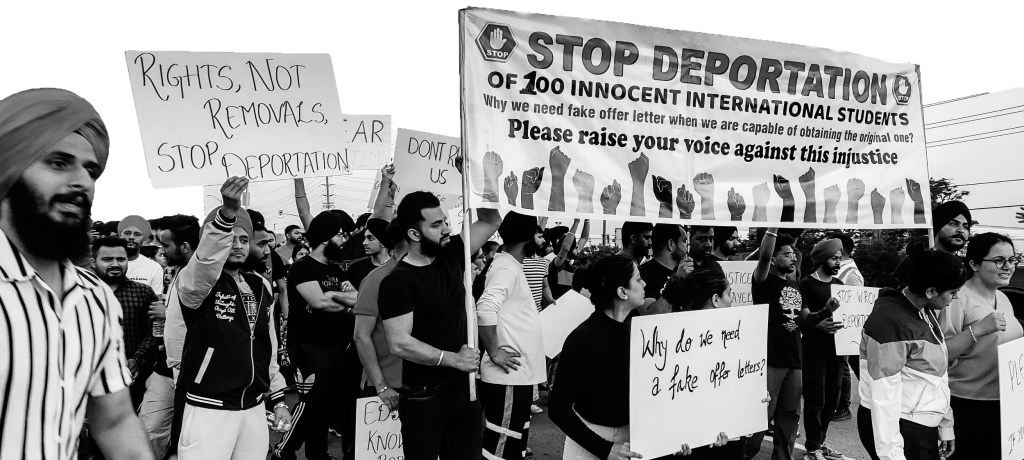
Because of this, there is both an appetite for struggle and change but also a depressed resignation among many workers. There are flashes of the potential for mass struggle—Unifor organizing the 800 workers at a Walmart warehouse in Mississauga, the Naujawan Support Network and other groups of international students and workers organizing and mobilizing in prolonged struggles against exploitative bosses and the government—but for the moment these are mostly embers in the wind.
6. Quebec
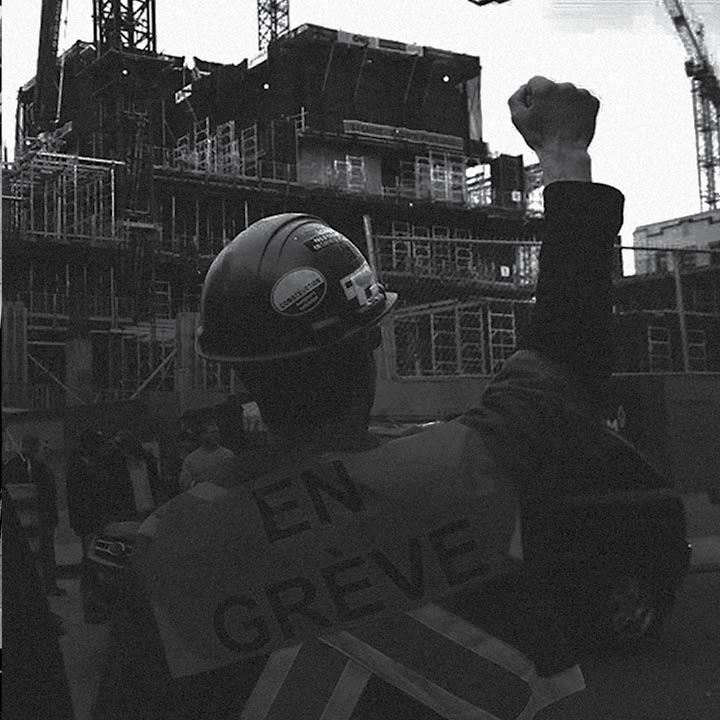
In 2024, Quebec has seen significant defensive struggles by workers in both the private and the public sectors, including the massive Front Commun strike at the beginning of the year. Nonetheless, as throughout much of the country, the living conditions of the working class in Quebec are on the decline. For instance, the average cost of rent in Montreal, which houses the province’s largest concentration of tenants, has increased 17.85% over the year 2023, reaching a historic high of $1,639/month by the first quarter of 2024. Despite this, the Coalition Avenir Québec (CAQ) government has seen fit to pass a new law allowing landlords to refuse lease transfers without having to provide a valid reason, therefore putting an end to the province’s only effective mechanism for rent control.
This law is only one example of what we’ve identified as the CAQ’s wide-ranging package of regressive reforms, which also include measures targeting workers in health care, education, construction, welfare recipients and various other sectors of the working class. For instance, in the health care sector the CAQ has established a new central authority, Santé Québec, a government-owned corporation which is now at the helm of the province’s hospitals and other healthcare facilities and operates under a mandate calling for massive budget cuts across the system. Despite the government’s insistence that the cuts aren’t supposed to impact services, patient attendants have already started being laid off in various facilities.
The CAQ government’s offensive against the working class can be contrasted with its friendliness toward big business. For instance, over the last few months of 2024, a new spending scandal emerged as it became clear the government had invested $710 million in Northvolt, a multinational EV battery-making corporation that had plans for a factory near Montreal but is currently in the process of collapsing and seems to be reneging on its promises. In these conditions, it is unsurprising that the CAQ’s approval rating has dropped even below that of Justin Trudeau.
The situation in Quebec’s bourgeois electoral politics must be monitored closely over the next year. While provincial elections are not due until 2026 and the CAQ still enjoys a parliamentary super-majority, the nationalist Parti Québécois (PQ) has been riding a wave of favorable polls and has re-emerged as the CAQ’s main rival, promising a new independence referendum if it wins the upcoming election. To face this new challenge, the CAQ has been attempting to build up its own “patriotic” credentials, which, as a federalist party, it can only do by stoking the worst forms of national chauvinism and in particular by scapegoating Muslim immigrants. The PQ has been responding in kind, increasing its own chauvinist tendencies to challenge the CAQ on the identitarian field. In general, both parties have been taking up conservative cultural and social positions that go with the general drift of Canadian bourgeois politics.
While these deleterious political developments bring danger and further division, even within the working class, they are not the only aspect of the situation worth watching. If the possibility of a new referendum in Quebec remained on the table through 2025, it would become necessary for communists across Canada to prepare themselves to seize the occasion in new and creative ways. Such a referendum, while not inherently progressive given Quebec’s current position as one of Canada’s two dominant nations, would open up a major political crisis in which bold and resolute action could achieve significant gains for the revolutionary movement.
7. The Maritime Provinces
Starting with Nova Scotia, the province with the highest poverty rate in the country:19 in the past year alone, the cost of living rose by 6% in Halifax and 4% in the rest of the province.20 The median wage for professionals, manufacturing and trades has stagnated at $35/hr,21 while the minimum wage, sitting at a lowly $15.20/hr, has seen an increase of only 1.2% over the past 4 years.
Meanwhile, one-third of Nova Scotians (and Atlantic Canadians more generally) earn less than $20/hr, and yet the living wage for all regions of Atlantic Canada is nearly $25/hr.22 Thus, one in three Atlantic Canadians earn, at most, 20% less than the living wage.
The unemployment rate in Nova Scotia is currently 6.5%, with many people exhausting themselves filling out hundreds of applications, handing out resumes and calling offices to line up just a few interviews for low-paying jobs.23
Rent has increased 12% from 2023 to 2024, despite a 5% rent cap in the province. The average rent in the province for 2024 was $1628/month for a two-bedroom apartment. High rents, a vacancy rate of 1.1% in 202324 and frequent evictions and renovictions are driving many people into homelessness.25
A 2024 report by the Chief Administrative Officer of the Halifax Regional Council stated that:
The Halifax Regional Municipality [HRM] continues to struggle with a growing homelessness and housing crisis. As of June 25, 2024 the by-name list has grown to 1,316 people. In HRM’s 4 designated locations, there are 88 tents or structures, in space that is suitable for 30. In addition, there are nine tents in Northbrook Park, 6 at Grafton Street Park, and multiple encampments in many other locations.26
In June 2024, 719 individuals were identified as experiencing homelessness in Eastern Nova Scotia. This represents a 72% increase from the last count, which was made in 2021.27 This is certainly an undercount.
Meanwhile in New Brunswick, newly elected “progressive” Liberal Party leader Susan Holt, who took over from the massively unpopular former Irving Oil executive Blaine Higgs, promises a rent cap of 3% to keep the province “affordable” while the masses are already being bled dry by landlords across the province.28
As the COVID-19 pandemic demonstrated, the state of the health care system in Nova Scotia is dire, with decades of understaffing and increasing privatization leading to a significant decline in its resilience and capacity.29 As a result of staffing shortages, the masses are stuck on months-long waitlists for mental-health intake appointments, more than 13% have no family doctor, and people are dying waiting to be seen in ERs. Meanwhile, Atlantic Canada has the highest cancer rates in the country.30
Nova Scotia’s Progressive Conservative premier (and Paradise Papers celebrity) Tim Houston31 was recently re-elected after promising during his campaign to “fix” health care—what he means is that we will funnel the budget towards fighting health care unions to pave the way for more privatization.
Recently, after nine months of heated negotiations, 9,000 health care workers represented by CUPE, UNIFOR and the NSGEU reached an agreement with NS Health after their contract expired in October 2023.32 Similarly, 10,000 teachers in Nova Scotia reached an agreement after threatening to strike.33 These strikes follow 2021’s massive strike of public-sector workers in New Brunswick represented by CUPE, which mobilized 22,000 workers in a province of (at the time) less than 800,000 people.34
In 2023, a massive fire broke out at a recycling plant operated by American Iron and Metal (AIM) at the Port of Saint John, burning for two days straight and leaving many sick from the toxic smoke that shrouded the city. Public outrage forced the New Brunswick government to finally revoke AIM’s license to operate at the port, after years of repeated explosions at the plant which shook the city and killed plant workers.35

As crises have been deepening and contradictions sharpening across the region, workers across the Maritimes have been demonstrating their readiness to struggle against the oligarchs and their reactionary representatives who keep the masses living in misery. But it’s the task of the Party to tap this reservoir of resistance to its fullest potential and to give it a revolutionary direction that transcends the limitations of the spontaneous movement.
Conclusion: toward a year of independent working-class struggle
Across the country, the objective conditions are increasingly favourable to mass struggle and revolutionary upsurges. A major economic downturn in response to the looming tariff war would only further develop these conditions for struggle. In response to this, revolutionaries must respond with bold action, consolidating their ranks as revolutionaries, winning over ever-growing numbers of advanced workers and other revolutionary mass activists into mass struggle and leading the intermediate masses into escalating class struggle. Our Party intends on staying on course in fulfilling these tasks by continuing to develop its internal and external apparatuses, working to become an organization capable of facing every branch of the State and all our political enemies. As we unfold our work over the next year, we call on prospective revolutionaries and class-conscious proletarians to join the (N)CPC and commit to a life at the service of the proletariat and the fight for socialism.
Toward those activists who remain outside the ranks of our Party, we convey revolutionary greetings and a few words of advice. The legal socialist movement and other left factions must be wary of tailing either political wing of the bourgeoisie. Many organizations across this movement tend to fall prey to such deviations, which can only stifle their work and prevent them from making a positive contribution to the proletariat’s struggle. We call on the legal socialists to grow deep roots in the working class, not merely by chasing union-bureaucrat jobs but by diving into the struggle on the shop floor and by immersing themselves in it. We call on them to reject anything short of independent working-class politics. We call on them to study and learn from the most advanced proletarian-revolutionary movements across the world, in particular the heroic Maoist people’s wars in India and the Philippines. Finally, we call on them to study the (N)CPC’s publications, to learn about our views and our strategy and to come closer to our Party’s work preparing for the revolutionary overthrow of the old Canadian state.
To all the workers of Canada, united by a common exploitation and a common enemy across their various nationalities, we wish and will be working for a year of victories. We call on our class to reject the bourgeoisie’s lies, to steer clear of the “liberal” and “conservative” wings of capital and to fight for its own, independent interests. We will stand with you throughout your battles and build up the new world that must burst forth from the rotting corpse of capitalism-imperialism if war, climate disaster and ever-growing material and moral misery are to be averted.
Red Salute!
-Central Committee of the (New) Communist Party of Canada, January 2025
ENDNOTES
1 We don’t include Palestine on this list because, rather than an area of friction between different imperialists, Palestine is rather the target of an “internal” operation of ethnic cleansing on the part of the Israeli colonialist regime, which seeks to consolidate its internal stability and acquire new territories by eliminating the Palestinian population. The AAIA actively supports the Israeli regime because it represents one of its main support bases in the region, alongside regional powers Turkey and Saudi Arabia, while Iran, Syria (up until the collapse of the Assad regime) and the armed groups they support have a close relationship with Russian neo-imperialism.
2 The theory of the regime of preventive counterrevolution comes to us from the (new) Communist Party of Italy and aims to describe the methods used by the imperialist bourgeoisie since WWII to neutralize the communist movement and proletarian struggle. It rests on five pillars: maintaining the political and cultural backwardness of the masses, making socio-economic compromises with the demands of the masses while at the same time shackling them with financial bonds, increasing mass participation as subordinates in bourgeois political institutions, preventing the masses from organizing themselves independently and granting them organizations (unions, parties, associations) under the control of the bourgeoisie and repressing communists in a targeted manner.
3 All dollar references in this document are in CAD, unless otherwise noted.
4 Statistics Canada, “Unemployment rate by province and territory, November 2024” (Available at: www150.statcan.gc.ca/n1/daily-quotidien/241206/mc-a001-eng.htm/). All subsequent unemployment figures referenced below in this document are taken from the data set at this link.
5 Government of Canada, “Current and Forthcoming General Minimum Wage Rates in Canada” (15 January 2025). Available at: https://minwage-salairemin.service.canada.ca/en/general.html/. All subsequent minimum wage figures referenced below in this document are taken from the data set at this link.
6 The federal minimum wage applies to employees working in the federally-regulated private sector, including banks, telecommunications companies, and air, marine, rail and road transportation. It is adjusted annually on April 1 in line with the country’s Consumer Price Index.
7 Statistics Canada, “Employee wages by industry, annual” (10 January 2025). Available at: www150.statcan.gc.ca/
8 Canadian Real Estate Association, “National Price Map” (December 2024). Available at: https://www.crea.ca/housing-market-stats/canadian-housing-market-stats/national-price-map/. All subsequent home-inflation statistics appearing below in this document are taken from the data set at this link.
9 See “December 2024 Rentals.ca Rent Report” at Rentals.ca. All subsequent rent increase statistics appearing below in this document are taken from this report at Rentals.ca.
10 Mining, quarry and oil and gas make up 25% of the provincial GDP, while the next biggest industry is real estate at 10.4%, followed by manufacturing at 7.5% and construction at 7.4%. For a breakdown of GDP by industry in Alberta, see https://economicdashboard.alberta.ca/topics/gdp/ and for more information about Danielle Smith’s proposed changes see Drew Anderson’s article at http://www.thenarwhal.ca, “Danielle Smith wants to nationalize the oil industry? 5 takeaways from a wild week in Alberta politics” (2 December 2024).
11 Cryderman, Kelly and Carrie Tait, “Alberta launches sheriff-led border patrol to boost security after Trump’s tariff pledge,” The Globe and Mail (12 December 2024). Available at: http://www.theglobeandmail.com/canada/article-alberta-border-patrol-sheriffs-security/
12 Government of Manitoba, “News Release – Manitoba | Manitoba Government Releases Second Quarter Report for 2024-2025” (16 December 2024). Available at: https://news.gov.mb.ca/news/index.html?item=66757
13 Government of Manitoba, “2024/25 Second Quarter Report: Fiscal and Economic Update” (December 2024). Available at: https://gov.mb.ca/asset_library/en/proactive/20242025/second-quarter-report-december2024.pdf
14 Manitoba Métis Federation, “Red River Métis sign landmark Treaty, securing our right to self-governance” (6 December 2024). Available at: https://www.mmf.mb.ca/mmf-spotlight/red-river-metis-sign-landmark-treaty-securing-our-right-to-self-governance
15 Statistics Canada, “Manufacturing sales by industry and province, monthly” (15 January 2025). Available at: https://www150.statcan.gc.ca/
16 Canadian Mortgage and Housing Corporation, “Ontario – Rental Market Statistics Summary by Metropolitan Areas, Census Agglomerations and Cities” (October 2024). Available at: https://www03.cmhc-schl.gc.ca/
17 Ontario Aboriginal Housing Services, “Ontario’s ‘unofficial estimate’ of homeless population is 234,000: documents” (14 August 2024). Available at: https://www.ontarioaboriginalhousing.ca/
18 Bogdan, Sawyer, “Code red: How more Ontario hospitals are struggling with balancing the books,” Global News (14 September 2024). Available at: https://globalnews.ca/news/10752713/ontario-hospitals-failing-balance-books-financial-challenges/
19 King, Megan and Alex Cooke, “’Quite dire’: N.S. has the highest poverty rate in Canada, says new report,” Global News (24 January 2024). Available at: https://globalnews.ca/news/10247945/united-way-report-poverty-ns-halifax/
20 Saulnier, Christine and Russell Williams, 2024 Living Wages for Newfoundland and Labrador, Nova Scotia, and Prince Edward Island: Closing the Gap between the Cost of Living and Low-Waged Employment (August 2024) and Christine Saulnier and Kenya Thompson, Atlantic Canadians need a raise: One-third of workers earn less than $20 an hour (24 July 2024), both reports for the social-democratic thinktank Canadian Centre for Policy Alternatives (Available at: http://www.policyalternatives.ca).
21 Statistics Canada, “Employee wages by industry, annual” (10 January 2025). Available at: https://www150.statcan.gc.ca/t1/tbl1/en/tv.action?pid=1410006401
22 See the Saulnier and Williams report referenced in footnote 20.
23 Statistics Canada, “Labour force characteristics by sex and detailed age group, annual” (10 January 2025). Available at: https://www150.statcan.gc.ca/t1/tbl1/en/cv.action?pid=1410032701
24 Statista Research Department, “Rental vacancy rates in Nova Scotia from 2000 to 2023,” Statista.com (12 March 2024). Available at: https://www.statista.com/statistics/198712/rental-vacancy-rates-in-nova-scotia-since-2000/
25 Cooke, Alex, “Average rent in Halifax jumped by record-setting 11.9% in 2023: report,” Global News (31 January 2024). Available at: https://globalnews.ca/news/10262491/halifax-average-rent-12-percent-jump/
26 Halifax Regional Council, “Homelessness Update July 2024” (9 July 2024). Available at: https://cdn.halifax.ca/sites/default/files/documents/city-hall/regional-council/240709rc1519.pdf
27 Community Action on Homelessness, “The Affordable Housing and Homelessness Working Group: Research Projects, Plans and Homelessness Counts” (2022). Available at: https://www.endhomelessnesstoday.ca/working-group
28 Rudderham, Hannah and Jacques Poitras, “Liberals promise 3 per cent rent cap if elected,” CBC News (23 September 2024). Available at: https://www.cbc.ca/
29 Rent, Suzanne, “Shortage of respiratory therapists led to Life Flight being out of service: NSGEU“ (19 July 2024) and Yvette d’Entremont, “Nova Scotia union says lives at risk due to staffing crisis in ultrasound services” (1 August 2024), both from The Halifax Examiner (Available at: https://www.halifaxexaminer.ca/).
30 Kaiser, Leigha and Todd Battis, “Atlantic Canada has the highest cancer rates in the country, 25-year study shows,” CTV News (11 November 2022). Available at: https://atlantic.ctvnews.ca/atlantic-canada-has-the-highest-cancer-rates-in-the-country-25-year-study-shows-1.6149169
31 Houston’s name appears a number of times in the Paradise Papers, which is a leaked set of 13.4 million documents detailing offshore tax havens. Houston lived in Bermuda for 12 years before moving back to Nova Scotia in 2007, and his name appears in association with at least four companies in the data set.
32 Ettinger, Luke, “Health-care unions reach tentative agreement with N.S. Health, IWK,” CBC News (30 August 2024). Available at: https://www.cbc.ca/news/canada/nova-scotia/health-care-unions-tentative-agreement-nova-scotia-1.7309256
33 “Nova Scotia teachers’ union’s strike vote pushes government to agreement,” The North Star (24 April 2024). Available at: https://thenorthstar.media/2024/04/nova-scotia-teachers-unions-strike-vote-pushes-government-to-agreement/
34 “Thousands march to legislature in massive protest on Day 5 of CUPE strike,” CBC News (2 November 2021). Available at: https://www.cbc.ca/news/canada/new-brunswick/protest-legislature-cupe-strike-1.6234204
35 Magee, Shane, “New Brunswick revokes licence for AIM’s Saint John scrapyard after fire” (29 December 2023) and Hadeel Ibrahim, “Dozens of complaints to province about AIM came years before massive fire, documents show” (3 July 2024), both from CBC News (Available at: http://www.cbc.ca).

 (New) Communist Party of Canada / (Nouveau) Parti Communiste du Canada