
by the Central Committee, (New) Communist Party of Canada
Remarks from the Editorial Staff
On the occasion of International Women’s Day, a day of commemoration first proposed by Clara Zetkin in 1910 and since recognized by the international communist movement as the second-most important day for labour, Railroad is pleased to publish “On women, ideology, capitalism and revolution” from the Central Committee (CC) of the (N)CPC. This document elaborates the Party’s line on the question of women’s oppression, historically and today, while also giving Party cadre guidance and practical directives on how to better mobilize and organize proletarian women’s struggles in the course of our mass work and the class struggle broadly, particularly in view of the Party’s line on worker’s centrality.
This statement was developed over the course of 2024–25 through a period of Party-wide study, research, writing and discussion on the women’s question (which was mandated by the Founding Congress of the (N)CPC in 2023). It is being published by Railroad in March 2026 after recently being released in the Party.
All or most Party cadre participated in the internal study on the women’s question, minimally through study and debate, but with a good number of comrades having also submitted written reflections, summations or research. Two pieces from this internal exchange are published in Railroad #2.
While we expect the discussion, investigation and further sharpening of our line to continue as Party cadre study this document and apply it to their political work, this document puts down the (N)CPC’s current views and political unity on the women’s question.
1. The origins of women’s oppression
Marxist theory sharply differs with dominant accounts of the emergence of women’s oppression, including feminist accounts. We will begin by reviewing the basic theses put forward by Engels in On the Origins of the Family, Private Property and the State.1
Contrary to “common-sense,” neo-reactionary and feminist (!) views on the origins of women’s oppression, Marxists posit that early human societies were broadly sex-egalitarian. The division of labour, insofar as it existed, was based on physical ability, childbearing and other such natural constraints, and it did not prevent women from enjoying significant political and social roles in many such societies. The histories of most Indigenous peoples prior to and shortly after colonization in North America provide many examples of this egalitarianism or parity. For instance, in Haudenosaunee society, economic and political roles were split between men and women, the first being responsible for the hunt, war and external affairs, the second for agriculture, child rearing and internal affairs. In the more hierarchical and stratified Coast Salish communities around the Salish Sea, a system of property relations and extended kinship resulted in both women and men holding significant influence, status and wealth.
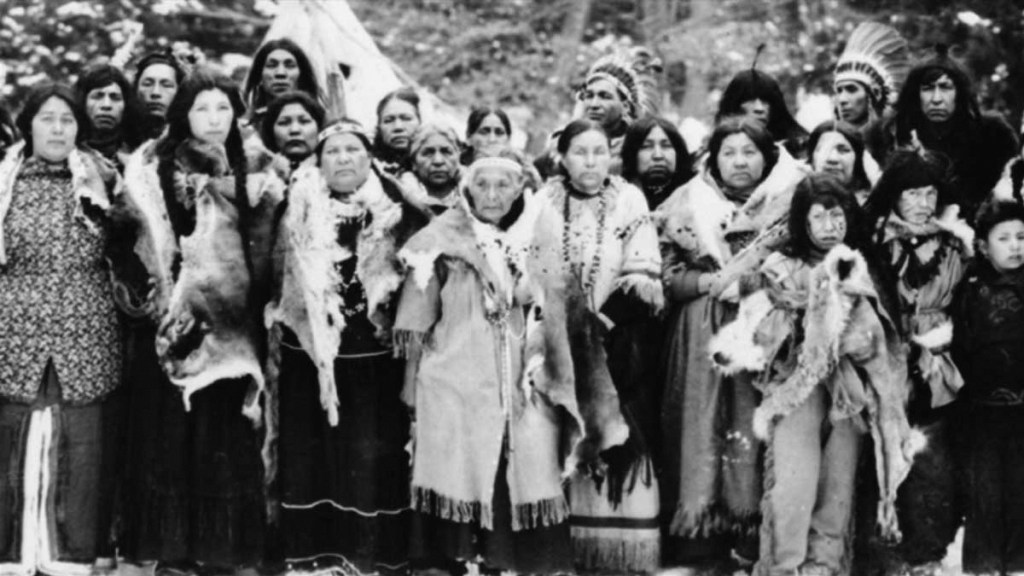
Haudenosaunee women don’t need feminist lectures on how to achieve equality with the men of their nations, an equality they had known for hundreds or thousands of years before the British and French colonials showed up.
Where non-Marxist views of women’s oppression posit that it is directly derived from biology and this first sexual division of labour, we recognize that instead, it is the social division of labour, and thus the emergence of private property, that resulted in women’s “world-historical defeat,” whereby they lost their social status and fell under patriarchal oppression that would last, under various forms, for millennia. As production developed to a point where surpluses could be accumulated, wars could be waged and outside groups could be subjugated and made to labour and generate further surpluses, the general tendency went towards the overthrow of mother-right in favour of patriarchy. Thereby, women were reduced to their reproductive role and held as property as a means to secure offspring to whom property could be bequeathed.
Patriarchy and the patriarchal family, which emerge more or less at the same time as early class society, would go on to take various forms with changing modes of production and according to local conditions in the myriad human societies which have existed between the emergence of private property and today. Within this history there are moments of greater and lesser freedom for women and of greater and lesser political influence, and these variations are also shaped by class. For instance, a female Roman patrician, though shut out of official venues of power, could at certain junctures enjoy real political importance, unlike an enslaved woman treated as chattel. A working-class woman in 19th-century Europe did not live under the same conditions as a peasant woman in Latin America today. The commonality, however, is the patriarchal family structure and the social division of labour.
2. Capitalism and the oppression of women
Early in its development, capitalism integrated women into large-scale social production in manufacturing and industry. It was necessary to do so both because large-scale industrial production made women’s work producing use values in the household largely redundant2 but also because maximizing the number of workers on the market could help create a downward pressure on wages. This was a significant shift, since up until then upper-class women had been tasked first and foremost with ensuring a line of succession by providing children for their husbands, and women from the popular classes, though usually working, did so in the confines of a largely domestic economy (in the home, on the farm, etc.). However, while making women into a new, cheaper source of labour power, capitalism did not liberate them. On the contrary, it strengthened the bourgeois family while putting tremendous strain on the proletarian family.
The general situation of women under capitalism therefore starts out by adding the exploitation of wage labour to their already-existing oppression. However, it encompasses a series of contradictions: between the patriarchal family and the structure of bourgeois liberal society, between women’s oppressed status and their new role as individual workers or capitalists and between women’s role with regards to reproduction and their role as productive workers. These contradictions, and active struggle to resolve them, create the basis for women’s eventual complete liberation.
This is why the century-and-a-half since Marx and Engels first brought a scientific-socialist analysis to bear on these matters have seen such tremendous, yet always incomplete, changes in women’s practical conditions of existence. As labour of all kinds was brought more and more into the realm of capital, the work women used to carry out in the private home was largely commodified and brought into the market, in turn bringing more and more women into the ranks of the working class. Popular women’s movements, many of them led by socialist and revolutionary women, fought for full legal emancipation and obtained it throughout much of the world in the last century. This allowed ruling-class women to become not merely the wives of capitalists, but capitalists themselves, not merely the wives of politicians, but politicians themselves, etc. This, in itself, is a massive break with millennia of the deepest oppression. Among the popular classes, first and foremost the working class, women took up an ever-growing role as fighters both for their own rights as women and for the emancipation of the class in its entirety.
However, while capitalism has laid down many of the necessary prerequisites for the full liberation of women, it has proven not only incapable of finishing the job but has deepened women’s exploitation and in some cases intensified new forms of oppression. Among these new forms of women’s oppression are the following:
1. In the entire world, the vast majority of women, as either workers or peasants, are subjected to exploitation that keeps increasing as capitalism-imperialism sinks ever further into crisis.
2. Throughout the semi-feudal, semi-colonial world, old-style patriarchal relations persist and constrain the lives of hundreds of millions of women.3
3. In the capitalist-imperialist countries, remnants of these old-style patriarchal relations coexist with new forms of sexism and oppression that spring from the contemporary dynamics and imperatives of bourgeois society and its social relations.
4. In the capitalist-imperialist countries, women are still constrained by the structure of the bourgeois family. The compromises put in place by the bourgeois state (due to proletarian pressure) to alleviate the contradiction between women’s role within the family and their role as workers are under constant threat as public services are being dismantled, along with many other concessions to the popular masses made at the height of socialism’s power in the world (in the postwar period).
Therefore, while capitalism has prepared the ground for the full liberation of women, their situation remains forever precarious. We must guard both against mechanical attempts to portray the situation of women in capitalist societies as stagnant, which rely on dated data and therefore dated methods of intervention in this sector and against crying victory too soon and neglecting the very real oppression of women in its contemporary forms. Vigilant struggle is necessary to prevent women’s hard-won rights from being rolled back, and much remains to be conquered. The final blows against women’s oppression can only be struck under socialism, not as an assured and automatic victory, but only through further struggle and cultural revolution.4
3. Women in Canada
Having examined in broad strokes the communist view of women’s oppression, its origins and its evolution under capitalism, we must now focus on the situation in our own country. Above, we have identified four ways in which capitalism has proven incapable of completing the liberation of women. We will now examine how these four prongs of capitalist exploitation and oppression play out in Canada.
3.1 Women as workers
Though it may seem counterintuitive to people who wish to examine women’s oppression in isolation, as a separate “system of oppression” rather than an embedded feature of the capitalist mode of production determined in part by the inheritance of prior modes of production, the main contradiction affecting proletarian women today in this country is the contradiction between capital and labour.
In May 2024, for instance, the labour force participation rate of women in Canada was at 61.3%, with an actual employment rate of 57.6%. These percentages are given for the entire population above the age of 15. If we focus in on women from 25 to 54 years of age, the core working-age group, we find a participation rate of 85% and an employment rate of 80.6%, indicating that much of the 38.7% of women outside of the labour market is accounted for by youth, students and the elderly. There is still, however, a gap between men and women in terms of participation in the labour market, as the male rates of participation and employment for the 25- to 54-year-old group are of 92.1% and 87.1%, with a similar gap in the general above-15 population. Nonetheless, these figures show that women comprise a sizable portion of the active workforce.5
What’s more, this figure has been constantly growing over the previous decades. In May of 1977, the participation rate of women in the 25–54 age group was at only 53.8%. In 1953, it was half that, at 23.5%, while 95.9% of men of this age group were involved in the labour market. The changing nature of women’s role in capitalist society is plain to see.
Of course, these general statistics do not provide us with a class analysis of women in Canada. Neither is our party’s position paper the place to carry out such an analysis in any level of detail. We will simply point out for the time being that the majority of the population of Canada is proletarian, as we have pointed out in our party program, and that this holds even more true for women in the Canadian labour force.
Of course, proletarian women as a sector of the working class differ from men. They are under-represented in some branches of industry and overrepresented in others. Women are under-represented in the productive sector. We need to be careful with this statement, however. It in no way implies that there are not significant numbers of women in certain productive industries, or that these women are not a core element of proletarian women as a group. The gender gap varies wildly by specific industry, by job title within a given industry, by position on the production line within a single job site, etc. In 2023, for instance, there were 272,100 women employed in the manufacturing of nondurable goods, as compared with 438,300 men. That is both a sizable absolute number and a sizable percentage difference.6
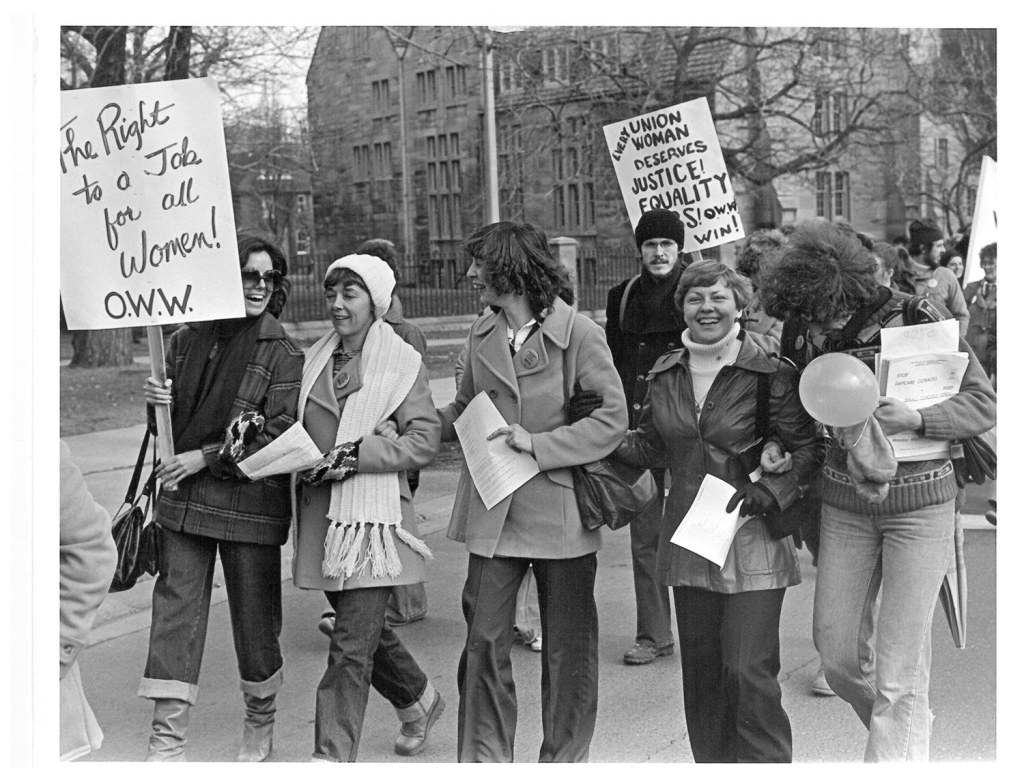
Social investigation and class analysis (SICA) further clarifies this for us. Comrades have for instance reported on such examples as a factory which employs mostly women to manufacture electric cables for electric vehicles. In the same city, they report on a factory which employs 1,400 workers to produce trucks, where about half of the workforce on the shop floor is comprised of women. We know from SICA that in certain manufacturing sectors, women are generally overrepresented: food production, textile, etc.
The (relative) under-representation of women in the manufacturing and extractive industries is also counterbalanced by their over-representation in education and health care, two sectors which we have identified as key to the position of workers’ centrality in our party program. While not productive in the economic Marxist sense, these two sectors are strategic both because they play crucial roles in the functioning of our society and because they include large-scale workplaces, as big as if not bigger (in the case of mega-hospitals, for instance) than the largest factories. Such massive concentrations of proletarians are a natural target for communist activity.
Another crucial fact about women proletarians is their situation relative to labour unions. While in absolute terms, women are more often unionized than men, this is simply a result of their relatively greater representation in the public sector. The issue is that a sizable portion of these unions do not represent workers, but rather sectors of the petty bourgeoisie (white-collar professionals, bureaucrats of various kinds, higher education professionals, etc.).
In the private sector, women workers are instead under-unionized, with 10.4% union membership as opposed to 15.2% in the case of men workers. This is due at least in part to the inability or unwillingness of major unions to pursue serious campaigns to unionize new shops. In light industry, where women are much more present than in heavy industry, many old, unionized enterprises shut down over the last few decades in response to changes in the world economy and particularly to free trade agreements such as NAFTA, which made it more difficult to earn a profit in labour-intensive (rather than capital-intensive) industries in advanced capitalist-imperialist countries. This does not mean these industries went away entirely! Instead, what happened is that these enterprises were replaced by sweatshop-like new companies employing large numbers of proletarian immigrants, many of them women. Even though objective conditions in such workplaces are favourable for struggle, the lack of class combativeness of unions today has meant that so far few of them have been unionized.
At the same time, and despite loud cries of adherence to bourgeois-liberal feminism (or even “radical” feminism), existing unions also tend to be mostly run by male personnel, even in gender-equal workplaces or workplaces where women are most of the workforce. According to a cursory investigation by some of our comrades, this appears to be true at all levels of the union apparatus, from the shop floor to the upper rungs of union bureaucracies. Women are indeed present and active in union leadership, but these are most often the aforementioned white-collar professionals or intellectuals who often act as labour aristocrats instead of taking up the task of organizing the masses of proletarian women.
Therefore, there is much space to struggle both for a greater participation of women in labour unions and to work to organize and mobilize as-yet-unorganized women workers, especially in light industry. This, however, must never be done through the scope of identity politics (“woman faces in high places”), but instead through the scope of workers’ centrality and moving large numbers of exploited workers to engage in organized class struggle (“Women hold up half the sky.”). If we take the former approach, we risk favouring petty-bourgeois women activists at the expense of proletarians, which would decrease combativeness and mobilization rather than increasing them. At the same time, we should be mindful of the fact that spontaneous women leaders may manifest themselves differently than spontaneous men leaders in working-class struggles. Our party must be open to identifying various types of spontaneous mass leaders for training, cultivation and recruitment, with class stand, commitment and ability to reach others being our main criteria, as opposed to mere boisterousness (not that that’s excluded).
Beyond women’s lesser or greater presence in various industries and workplaces, or even in unions, no communist approach to organizing women workers would be complete without examining the unique struggles and issues women are faced with on the job—these sectoral issues, which are too often neglected, are one of the keys to successfully involving women in the broader workers’ movement, and revolutionaries must pay them particular attention. While we can’t go into detail regarding every single issue women face in the workplace (this is a matter for the mass line to resolve in every particular set of circumstances), we will provide a few examples here.
The most severe sectoral issue for women in the workplace comes in the form of rape, sexual assault and sexual harassment. These forms of sexist oppression and degradation can escalate to dramatic proportions, especially because of the utterly unequal relationship between bosses and workers, which can be compounded and further deepened in the case of foreign temporary workers or other workers with unstable immigration statuses. Comrades have run into such cases in our mass organizing already, despite the relatively small scale and early phase of our Party’s intervention in workplace struggles. Comrades have seen women workers denounce rape or assault from managers only to be ignored and for these managers to be, in some case, further promoted. We will not eliminate sexual violence in the workplace through mere formal complaints from bureaucratized unions! Only strong, combative working-class organizations that are willing to take extralegal action when necessary can mitigate and eventually eliminate this form of brutality, especially if women workers are involved in the shop-floor organization both as proactive rank-and-filers and as leaders and organizers.
Women’s role in child rearing and childbearing also leads to sectoral labour issues. Schematically, this means that women’s subordinate role in the family, which predates capitalism, enters into contradiction with the formal equality of bourgeois liberalism and women’s role as proletarians. For instance, despite the legal protections that are in place for pregnant women and the legally prescribed, or union-negotiated, maternity leaves and other parental leaves that are in place in Canada, many employers are still confident enough in their power to fire (often in disguised ways) women during, before or right after such leaves. Among the sources of this issue is the fact that many women involved in non-union light industry workplaces, temp agencies and other such particularly slimy companies can be unaware of their rights or lack the resources to struggle to have these rights enforced. Similarly, women with children might face disciplinary actions or firings for being absent from work too often or might have difficulty in securing a job since many employers are reluctant to hire someone with a small child.
Most employers do not recognize family structures that don’t align with the bourgeois nuclear family, so what limited protections exist for biological parents (being able to take a day off if your child is sick, for example) aren’t available to other caregivers. Women who carry extended family obligations—common in immigrant and Indigenous communities as well as in many proletarian families—may have to choose between providing necessary care or providing necessary income and, at worst, may risk their jobs to fulfill their care obligations.
There are many other sectoral workplace issues facing women workers, as we have previously stated. All Party members and sympathizers should be aware of these sectoral issues and never underestimate their importance in workplace struggles. This would be narrow economism (as opposed to the Third-Worldist, do-nothing-communist definition of economism as “organizing any workers at all”).
3.2 Family and the State
We have already pointed to women’s role in reproduction and to their historical restriction to the domestic sphere in pre-capitalist social formations.7 We have also indicated that women’s role within the family, which has in part survived even formal bourgeois legality of the sexes, often puts them in vulnerable positions in the workplace, pushing them into the reserve army of labour or limiting their job stability and depreciating their wages. The contradiction between women’s role in the family and their role as workers under capitalism remains a significant one.
Since the early days of industrial capitalism, women workers have led struggles to solve this contradiction. The methods for doing so are well known and have been known for over a century now as they are the same ones that women Bolsheviks agitated for and implemented, through their Party, after the October Revolution. Formal equality, which was then denied by the bourgeoisie in even the most advanced bourgeois-democratic states (but has since been won in such states), was certainly a necessary part of the solution. It was not, however, a sufficient solution unto itself or even the main part of such a solution. The solution must also, and especially, include provisions for the collectivization of child rearing, as well as guaranteed, practical rights for childbearing. The elimination of the profit motive, in itself, goes a long way to solve this contradiction, as does a practical right to employment and to the necessities of life.
In Canada, these solutions have been (partly) forced onto the State through the struggle of the working class, and particularly of working-class women. They have taken the form of maternity leave and, in Quebec, publicly funded childcare. We need to be clear that these were not gifts from the bourgeoisie, nor merely the product of demands from bourgeois and petty-bourgeois women. The threat of a growing, ever-more-organized number of women workers forced the State to act to try and salvage industrial peace. In Quebec, the main area of activity for the Second Party-Building Movement, demands for (and the creation of) collective or public childcare were an important part of the activity of Marxist-Leninist organizations. Thus, the balance of forces between the bourgeoisie and the proletariat directly led to measures that have enabled women to work and be parents if they so choose.

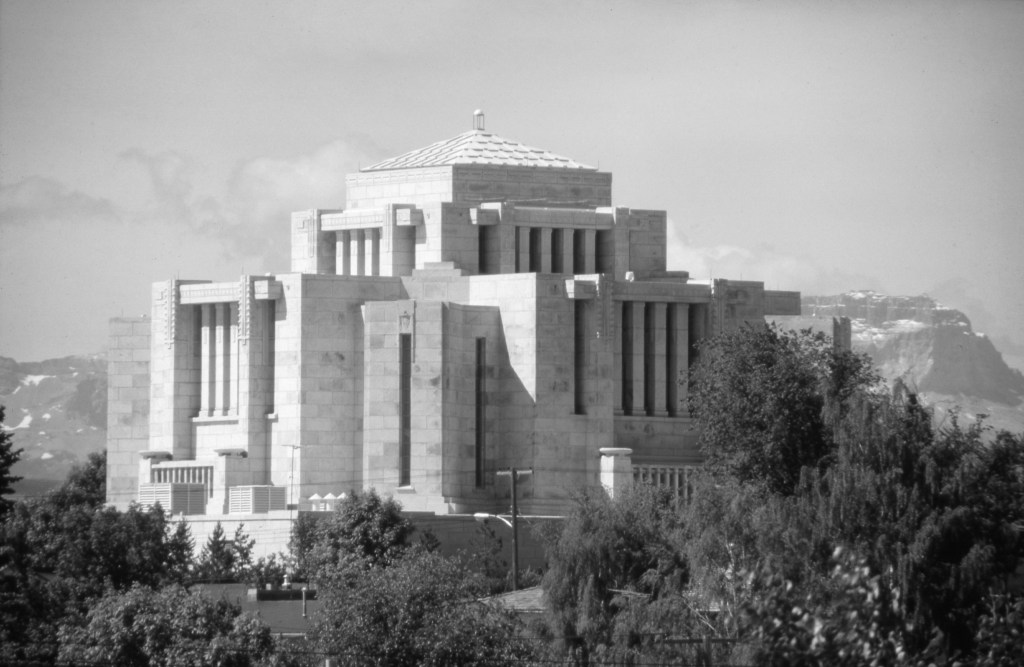
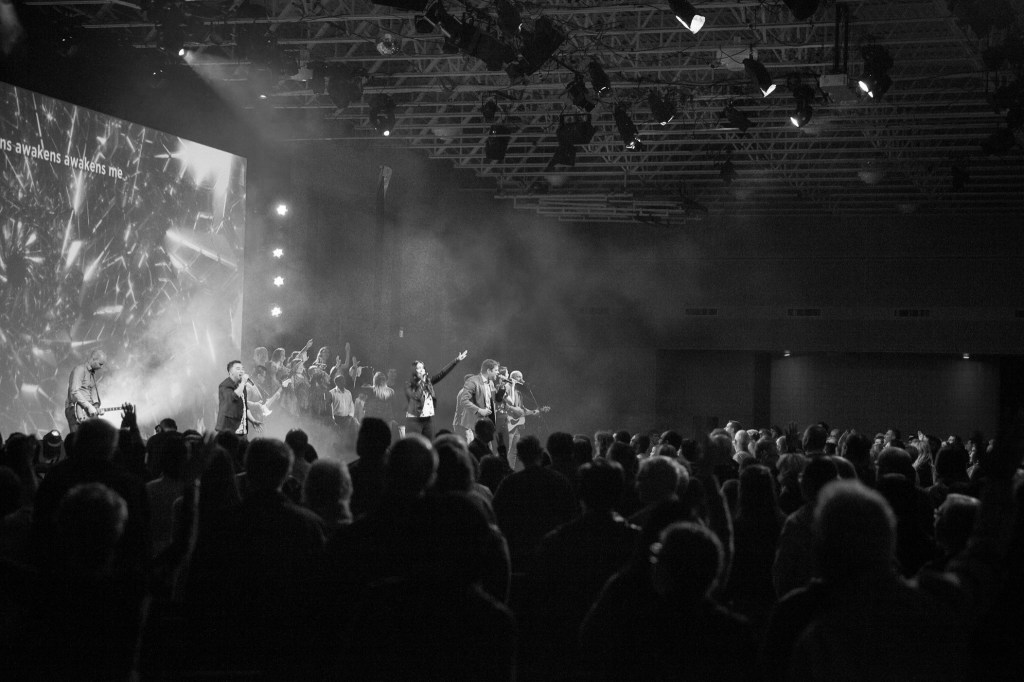
Hundreds of Ukrainian Orthodox and Catholic churches, many abandoned, sit scattered across the Prairies (top image), remnants of the waves of Ukrainian settlers dating from the late 1800s who homesteaded tracts of flat prairie land. The first temple of the Church of Jesus Christ of Latter-day Saints built outside of the U.S. sits in Cardston, Alberta (bottom left), a town founded and still populated mostly by Mormons. And the Springs evangelical megachurch—one of Canada’s largest churches (bottom right), founded in Winnipeg with branches in Calgary—preaches prosperity gospel to an average of 8,000 people weekly.
However, this balance of forces did not, in itself, rectify conditions for the sector of proletarian women who have faced the most direct state repression on their reproductive capacities and right to raise children: Indigenous women. The practice of “birth alerts” in hospitals that flag newborns for possible apprehension without the mother or parents’ knowledge—widely documented to disproportionately target Indigenous babies—ended in every province only in the past few years.8 But apprehension of Indigenous children continues apace: in 2021, 53.7% of children in foster homes were Indigenous, even though Indigenous children account for 7.7% of all children under 15 in Canada.9 These statistics do not include children in institutionalized care. The province of Manitoba has the highest rate of Native children in the foster system at, shockingly, 91% of all children in care in 2025.10 And a 2019 Senate Report acknowledged the ongoing practice, nearly 100 years strong, of forced sterilization that has also disproportionately targeted Indigenous women.11 Decades of Indigenous activism have seen incremental reforms and improvements on such state-designed polices that result from the ongoing colonial contradiction between Indigenous nations and the Canadian state.
But even when the formal policies are struck from the books, the underlying economic and political inequalities between Indigenous nations and the Canadian state continue to result in the fracturing of Indigenous families and the oppression of Native women. These inequalities arise within the capitalist economic system, and so the total liberation of Indigenous women, and all Indigenous people and nations, requires the total abolition of the capitalist mode of production. The interests of the vast majority of Indigenous women align with the aims of those revolutionary organizations and progressive proletarian movements that fought hard to shift the balance of forces with the bourgeoisie, extracting concessions in the 20th century.
Today, however, this balance of forces has shifted dramatically. The collapse of large chunks of the International Communist Movement from the late 1970s through the ’80s, which opened the way for the pacification of labour unions and the generalized economic offensive of the imperialist bourgeoisie against the masses, have left women workers that much less well defended against cuts to social programs which diminish the contradiction between working life and family life. At the same time, the bourgeoisie is led, as a result of the deepening crisis of capitalism and of increased inter-imperialist competition, to cut costs as much as possible. It is also led by the internal logic of capitalism to bring as many economic sectors as possible into the market to turn them into private assets. Neither are bourgeois women really incentivized to do anything against this, since instead of collective and socialized childcare and maternity leaves, they can rely on their private funds and on the labour of working-class people, many of them women—for instance immigrant childcare workers or cleaners—to shield themselves from this sharpening contradiction.
We can thus see that the weakening of public health care, public childcare and other social programs constitute a major objective of the ruling class in advanced capitalist countries, and the social forces that could combat it and defend the practical rights of women workers are weak, disunited and disarmed. The (N)CPC must therefore build up the fighting capacity of the working class as a whole, and of women workers within it, to counterbalance this powerful tendency even as it struggles for a socialist society where the dictatorship of the proletariat will be able to guarantee the rights of women proletarians and working-class children and families.12
When discussing the family, we must also point out that the bourgeoisie in advanced capitalist-imperialist countries across the world faces a major challenge due to falling fertility rates.13 In Canada, the total fertility rate between the years of 1921 and the mid-1960s only dipped (slightly) below 3.0 during the end of the Great Depression and the war years. In the 1970s, corresponding to the years of both the rapid dissolution of patriarchal laws and norms inherited from pre-capitalist times, such as the legalization of contraception and abortion, as well as massive cultural changes towards greater equality for women, this rate dipped below 2.0, which is the minimal rate necessary for “cohort replacement” (i.e., maintaining a balanced age structure of society).
This rate has kept slowly but steadily diminishing and is now approaching 1.0.14 This is leading to the increase of the average age of the country’s population. It is worrying for the ruling classes, because high numbers of young people are necessary to maintain and increase the number of workers available, as well as to maintain the country’s military power, which is crucial for inter-imperialist competition and to keep both domestic threats (the organized proletariat, oppressed nations) and countries under imperialist influence in line.
In the face of dropping fertility rates, the ruling classes of Western imperialist powers have pursued two different responses. On the one hand, they have in some places attempted to turn the clock back on formal equality by re-criminalizing abortion or contraception and by propping up the traditional patriarchal family.15 This is what the U.S. bourgeoisie is attempting to do today. In other places, such as Canada, the bourgeoisie has increasingly relied on immigration to fill the ranks of its working class. This is a temporary solution at best, however, because once immigrant women move to Canada, their fertility rates rapidly drop to levels comparable with the country’s average, since they no longer find themselves in the semi-feudal conditions that propped up this rate in the first place.
However, considering the sea change in immigration policy initiated by Justin Trudeau on his way out of office in early 2025 that saw a sizable reduction of newcomers coming into Canada and the tightening of criteria for permanent residency, subsequently doubled down on by incoming Prime Minister Mark Carney, there is now a rapidly diminishing stream of the imported, cheap labour that has historically offset Canada’s low birth rate and acted as a ballast keeping Canada’s economy from stalling and sinking into a recession.16
So, what is going on in the capitalist-imperialist countries? Our hypothesis is that by blunting its traditional stick (patriarchal relations, which are in tension with liberal-bourgeois society), the bourgeoisie stops forcing people to have children. This, in itself, is a good thing. However, capitalists have no carrot: their means of positively encouraging the women who wish to have children to actually have them are severely limited by the profit motive. As we have seen, whatever limited programs exist to protect women workers and grant them maternity leave and childcare services are under constant threat. People simply “cannot afford” to have children. A socialist society, by recognizing childbearing and child rearing as integral social endeavours, by guaranteeing jobs, incomes and the necessities of life to the working classes and by socializing and collectivizing childcare and expanding the education of children, would no doubt encourage people who so wish to have children by choice, without patriarchal coercion. In contrast, the right-wing bourgeois measures to try to increase the rate of fertility are outright horrifying, tending towards forced motherhood and sexual violence.
Finally, we must draw a line of demarcation with a certain tendency on the activist left which clamours for “family abolition.” Certainly, the question of the abolition of the family is an old one in the communist movement (it was discussed already in The Communist Manifesto by Marx and Engels). However, the queer-feminist and general activist understanding of family abolition is entirely alien to the proletariat, not to mention to Indigenous nations that continue to fight to retain their families and children. The point is not that there is an ideal “working-class family” that has to be preserved, with men with construction helmets and women with lots of babies, all smiling happily for the camera. The point is that the coercive and dysfunctional institution of the bourgeois family is a form of family that emerges historically and bears the very contradictions that cause its own internal fracturing, as Marx pointed out in 1848. But kinship structures—those cultural, biological and chosen relations that integrate us within the social fabric of life—are not making an exit from the stage of history any time soon. Socialism will deliver the death blow to the bourgeois family and finally enable kinship structures to flourish in its wake.
What puts an end to the patriarchal family is not the queer polyamorous commune, but such down-to-earth, popular measures as no-fault divorce, the repression of domestic abuse, collectivized childcare, the right to housing for all, full employment, etc. We have seen the extent to which capitalism has, in the imperialist countries, advanced towards these goals, as well as the contradictions that it still can’t solve and the ways in which socialism, and proletarian struggle even before then, can advance further on the road of women’s liberation. When the activist Left clamours for family abolition, it fails to advance practical revolutionary measures that most of the working class would be eager for. It makes it sound as if communists want to take away your grandma, your children and your spouse. This failure of properly framing agitation and propaganda around women’s sectoral issues is counterproductive, because it can easily lead proletarians, men and women alike, into the arms of the worst reactionaries, who claim to “protect the family,” “save the children” and so on. We must be intransigent in our revolutionary measures for women’s equality and full participation in society, but to implement these measures, we also need the full power of the proletariat behind us.
3.3 Patriarchal vestiges
In the Third Party-Building Movement, the Parti Comuniste Révolutionnaire–Revolutionary Communist Party of Canada (PCR-RCP) tended to describe women’s oppression as “feudal-patriarchal vestiges.” This formulation aimed at accounting theoretically for the oppression of women without granting the ahistorical feminist conceit that a society where the head of state, the chief of the armed forces, many lawmakers and many important capitalists are women can be “patriarchal” in a materialist, social-economic sense. The concept of feudal-patriarchal vestiges implied that patriarchy still permeated the superstructure, even though it no longer had a base to support it.
This is not wholly incorrect. We have seen above that patriarchal relations, which are born alongside property relations in general, have lasted through most of recorded human history. The ideas, institutions, laws and customs to which such a long history of material, economic patriarchal relations have given rise cannot disappear fully in only a few generations. We have also seen the practical limits which women’s equality runs into under capitalist conditions. Therefore, patriarchal vestiges are a reality in Canada today. However, we must be clear in identifying feudal-patriarchal vestiges. Certainly, the Department of Women and Gender Equality Canada is not a feudal-patriarchal vestige! Neither are publicly funded Women’s Studies departments in universities, for that matter. So where are these vestiges?
Certainly, many forms of sexist thought and many sexist norms and customs are to some extent inherited from the pre-capitalist patriarchal period. One only has to think of a man who thinks he can beat “his” wife to keep her “in line,” for instance. But individual sexists are not an organized social force unto themselves, and not all sexism is derived from feudal social institutions. The main social force upholding feudal-patriarchal vestiges today is found in organized religion.
Religious institutions date as far back as pre-class or early class society. However, the earliest forms of religious thought were not patriarchal, since they predated patriarchy itself. However, contemporary religions emerged in ancient class societies. The Abrahamic religions, for instance, emerged in different slaveholding societies over a timespan of more than a thousand years. They had a profoundly transformational effect on these societies. As slaveholding societies transitioned to feudal relations of production, the religious superstructure became further entrenched. In both the Islamic cultural area and the Christian cultural area,17 religion remained an unbreakable lock over humanity’s consciousness for over a millennium, as slavery and feudalism’s best tool to keep the masses of peasants and small artisans down.
Individual philosophers, scientists and other thinkers did start formulating at least partial critiques of religious dogma during this period (insofar as their investigation into the workings of reality allowed them to do so), but this critique could never be popularized because of the ongoing existence of a feudal social base, the entrenchment of the clergy (which was the closest ally of various aristocracies)18 and the comparatively low level of scientific knowledge. So pervasive was religion that even revolutionary struggle against the prevailing order came dressed in its trappings, as in the case of the German Peasants’ War of 1524–25, led by the Anabaptist pastor Thomas Muntzer under the slogan “Omnia sunt communia” (“All things in common”), and even rebellions well into the 19th century, including the slave/preacher Nat Turner’s 1831 armed rebellion against slavery in the U.S. or Louis Riel’s Métis national resistance movement later in the century, each of which were imbued with their own forms of Christianity.
Because it co-evolved alongside slavery and feudalism, contemporary religion carries with it both an ideological justification of social hierarchies, especially feudal ones,19 and in particular a naturalized, or rather supernaturalized, justification of sex discrimination and the subordinate status of women. This comes in the form of explicit commands (“Wives, obey your husbands as you obey the Lord,” Ephesians, 5:22), in the form of religious restrictions on divorce, sometimes in the form of the authorization of polygamy (whether in Islam or in Mormonism) and in a subtle “differentialist” theology that claims that this eternal institutionalization of the feudal family model is in fact not sexist at all, but merely recognizes the allegedly different natures and prerogatives of men and women. (Men’s prerogatives, of course, are production, war and political affairs; women’s prerogatives are limited to the affairs of the private home and the bearing and the raising of children.)
In the main imperialist countries, capitalism has subordinated the place of religion in society to various degrees and according to local conditions. For instance, in France, the violent shock of a rapid bourgeois revolution, the relative lack of adaptability of the Catholic clergy and the ongoing anti-clerical struggles of both the bourgeois-liberal and the working-class socialist movements during the entire 19th century seriously eroded the power of religious ideology. In Italy, this erosion happened to a much lesser extent, due to more backwards social conditions and to its position as the historical heartland of Catholicism. In the United States, strong liberal-bourgeois deist and free-thinking currents involved in the initial building of the Republic were counterbalanced by prevailing social conditions (the need for slaveholders to peddle the promise of an otherworldly reward to the enslaved, which the Bible, codified in Ancient Roman times, was eminently suited to do) and by a strong revivalist movement which, while minoritarian, still holds much sway over the politics of the country today.
Canada is to some extent influenced by American revivalism, and some sections of society still hold on to older forms of local European religion (the Anglican, United and Catholic churches, much diminished but which still enjoy considerable material resources). The majority of the population (63.2%)20 still identifies as “Christian,” though many of these “Christians” do not actively practise their religion and may hold very unorthodox beliefs. The second-largest, and growing, group of people is that of the non-religious or unaffiliated (26.3%), followed by Muslims as a distant third (3.7%). We should not underestimate the role of religion across Canada or ignore regional differences.21 And despite how out of touch religious ideology can be with the existing bourgeois-liberal social order and the capitalist relations of production, religion also evolves to stay relevant and influential. Some clergy’s progressive shift to welcoming LGBT people into their parishes, on the one hand, and some sects of Christianity fomenting support for wars in the post-9/11 world, on the other, are two contrasting examples.
In countries seized and exploited by imperialism, the survival of patriarchal semi-feudal relations as a base for capitalist exploitation facilitates the survival of religion on an even larger scale. The penetration of capitalist relations of production in all countries on Earth tends to create contradictory situations with regards to the situation of women in many countries. (Liberal-bourgeois constitutions and female politicians and business leaders can coexist with the buying and selling of wives in remote villages; nuclear physics can coexist with holy scripture.) Imperialism transforms old, local feudal-patriarchal ideologies into tools to protect its own rule, much in the same way religion was used to keep peasants in Europe and slaves in North America in line.
As we have seen above, the Canadian bourgeoisie needs to pursue a very proactive immigration policy to maintain and increase the population of the country. As our Party Program points out, by encouraging immigration, the ruling class can both shift the balance around the national question22 and save on the costs of childcare, health care, education and professional training by off-loading those costs onto the countries of origin of immigrant workers and professionals. When large groups of people move to Canada from countries where feudal-patriarchal ideology is still strong, they are generally followed by their clergy, and this ideology remains active here for at least some time. In the absence of a strong communist movement that can win immigrant workers to struggle for political power as an integral part of the multinational, multi-ethnic Canadian proletariat, religious institutions often become a major site of self-defence against both racist persecution and the broader difficulties of proletarian life, thus driving people further into the arms of the clergy.
This means we cannot fully discount collaboration with religious organizations in certain contexts. However, we must have absolutely no illusions whatsoever about their otherwise reactionary character. The junction of Muslim and Christian fundamentalisms, for instance, gave us the “1 Million March for Children,” a mass reflection of campaigns led by sections of the ruling class and its political representatives against transgender rights and, more broadly, sexual education in schools across the country.23 The more fully Christian yearly National March for Life in Ottawa, the country’s foremost anti-abortion event, is another example of religion’s power as a tool to mobilize people in defence of archaic, sexist politics. While reactionary religious movements cannot fully turn back the wheel of history (we have seen already that the economic basis for women’s restriction to the domestic sphere has been destroyed by capitalism itself), they can certainly do tremendous damage and cause much suffering by rolling back democratic rights for women and other sectors of the people who have only started to enjoy limited, relative freedom in the last few decades.
Religion does not only operate as a vehicle for feudal-patriarchal ideology in the realm of street mobilizations. Religious lifestyles and the patriarchal norms these lifestyles usually impose on families can easily shackle working-class women within the family. They can facilitate domestic abuse, prevent women from exercising the freedoms that bourgeois law is supposed to guarantee them, push them to “stay in the kitchen,” pressure them into undesirable marriages and especially prevent their participation in working-class political life and struggle. As our mass work deepens, we will undoubtedly keep running into promising mass activists whose political growth and ability to participate in the movement are constrained by their family’s religious and cultural expectations. Tools to counter such influence must be developed, but the main one must necessarily be to sink deep roots into many communities and make the Party itself capable of competing against such deeply entrenched ideologies.
We must also firmly underline the fact that though relatively recent immigrant communities can bring feudal-patriarchal ideologies with them, we can give no ground to anti-immigrant rhetoric on this basis. First, we have already seen that local religious reactionaries never went away, and are in fact instrumental in religious anti-abortion, anti-trans and other “traditionalist” mobilizations. Second, “The ideas of the ruling class are in every epoch the ruling ideas.” The international proletariat is under the influence of ruling classes both imperialist and comprador and is taught ideas which these classes find useful and convenient. Communists cannot idealize the spontaneous consciousness of the multinational proletariat, but they must fight tirelessly to lead the proletariat to recognize its true interests as distinct from ruling-class ideology. Finally, while people from semi-feudal countries bring semi-feudal ideas along with them when they move to Canada, people from countries with a higher level of class struggle and struggles against imperialism also bring a higher level of class consciousness. As many of the countries exploited by imperialism are sites of fierce, sometimes armed, class struggle, migrations from these countries into Canada stand to benefit the proletariat in Canada tremendously.
Beyond religious ideology, state institutions and the law may carry with them vestiges of patriarchal ideology. The truth is, at this point in history, the vast majority of such legal and governmental remnants of women’s oppression have been amended out of existence or drastically lessened. For instance, through a long and ongoing struggle by Indigenous women, provisions in the Indian Act tying a woman’s status, as well as her children’s, to her husband were gradually overturned, though the Act continues to limit some status-Indian women’s ability to pass on status to their children and descendants (among other sexist limitations), so amendments continue to be brought forward. Another area of the law which carries over practical (though not overt)24 feudal-patriarchal implications is social welfare, where one’s ability to receive benefits is affected by the financial situation of one’s spouse, which obviously limits the autonomy of unemployed women who are in a relationship, or who are considering entering one. Therefore, communists must be attentive to instances of unresolved legal vestiges of patriarchy, while recognizing that these instances are now relatively rare.
3.4 Capitalist sexism and sexual liberation
Where we diverge with the PCR-RCP on the question of “feudal-patriarchal vestiges” is that we do not restrict the question of women’s oppression and liberation to these vestiges. We state unequivocally that capitalism creates various forms of sexism and women’s oppression through its own internal mechanisms. Whereas previous forms of class society relied on binding people together in various forms of personal relationship (man and wife, feudal lord and serf, etc.), capitalism tends to recognize every individual person as an individual actor, free to enter into contracts according to their wishes. This very conceit is what allows for the relation between the bourgeois employer and the proletarian employee to emerge and facilitate the accumulation not merely of surpluses in-kind but of surplus value.
Cultural liberalism, for its part, has emerged as one possible ideological and cultural configuration of capitalism (it is certainly not the only possible one, however, as we are beginning to see). Part of the way cultural liberalism operates is by co-opting justified demands of marginalized or oppressed sectors of the people in capital-friendly, innocuous ways. This is what happened with sexual liberation. Before it became what it is now, free love was a simple and crucial demand to allow all people, and women in particular, to enjoy choice and freedom in their romantic and sexual partnerships: the ability to come together regardless of social and family pressures, to separate whenever they so wished, etc. This is the sense in which we must interpret Alexandra Kollontai’s proposals, for instance. When liberal culture co-opted this demand, which could not easily be repressed anymore in a society where men and women both worked, disposed of their own funds, and had the material means to decide where and how to live,25 it did so under the slogan of “sexual liberation” or even “sexual revolution.”
What bourgeois society did in practice was to promote a commodified sexual licence. It is by now a truism that “sexual liberation” is far from always being liberatory. In many ways, it has facilitated sexual predation. Where it has not gone all the way up to that level, it has made sexual promiscuity a badge of honour and created whole subcultures of men attempting to “pick-up” as many women as possible, seeing them not as fellow human beings, not as comrades, but as pieces of meat to be used up and discarded. The use of sexuality and of the female body as a marketing ploy became entrenched all over the world. On the flip side, the envy of sexually unsuccessful young men who had grown up being told that they were entitled to sex has fuelled the development of the traditionalist right’s social base.

The most severe forms of sexist oppression fuelled by capitalism are contemporary prostitution and pornography. Prostitution has existed for about as long as class society itself, as we learn from studying ancient Mesopotamia, the oldest culture that we know of whose writings and records we can access. However, for all the millennia since then, prostitution was merely an adjunct to the patriarchal family. In capitalism, it is taking on never-before-seen proportions.
In early capitalism, regulated and registered “whorehouses” were broadly accepted as a necessary social-release valve. The legal status of such establishments was revoked over time, though the prevalence of so-called “massage parlours” and strip clubs shows that the selling of sex in dedicated establishments merely went from being encouraged to being tolerated. Though street prostitution is still a reality for the most destitute and desocialized women, drug addicts and the desperately poor, the Internet has now emerged as the most important venue for the sex trade. New generations of vile social parasites, tech-savvy pimps, recruit young women enticed with the promise of money and advertise them online like one would a used couch or an old TV.
At the same time, prostitution appears to a small number of women as a way to avoid productive work and an easy way to make money. This gives rise to the notion that prostitution is “empowering” or even “liberatory,” and pushes even more people into the system. Cultural liberalism is only too happy to follow along and embrace the slogan “Sex work is work.” Pro-prostitution organizations are funded by the state, sectors of bourgeois academia embrace the “sex work” line and it even seeps into the legal socialist movement and the activist left.
Though the sex trade in itself is in most countries either illegal or in a grey area, official capitalism has not failed to cash in on it quite openly. Since the emergence of the Internet in particular, platforms that facilitate not only pornography but also prostitution have become highly lucrative businesses, with the global pornography industry alone estimated to be a 100 billion USD industry today. In this way, capitalist relations of production themselves serve to amplify specific forms of the oppression of women.
Another manifestation of women’s oppression in the modern period in Canada is the much higher prevalence of sexual assault, murder and disappearances of Indigenous women, as well as their trafficking into prostitution. Through the process first initiated in the dispossession of land and continuing in modern capitalism-imperialism, economic destitution and vulnerability faced by Indigenous nations are underlying conditions that cause the phenomenon of Missing and Murdered Indigenous Women. In addition, racism towards poor Indigenous women in particular has cast them as disposable, encouraging the most horrific violations, violent excesses and vulgar crimes by men.26 The prevalence and persistence of this phenomenon in Canada are among the most damning expressions of women’s oppression in contemporary capitalist-imperialist society.

3.5 Summary
The Central Committee of the (N)CPC’s view on the oppression of women can be summarized with the following key points:
1. Patriarchy as an economic and legal feature of previous modes of production has been largely dissolved by the development of capitalism, particularly in the capitalist-imperialist countries. However, it subsists in many places around the world, particularly the semi-feudal oppressed countries, and it continues to influence contemporary capitalist-imperialist society in Canada as well.
2. Capitalism exhibits a tendency to grant greater rights to women than those which could exist in pre-capitalist society, up to and including full equality before the law. However, capitalism exploits and oppresses women in three main ways: first, by making the vast majority of them into proletarians who are prevented from exercising political power and collectively exploited by the bourgeoisie; second, by failing to dissolve certain manifestations of the ages-old oppression of women within the family and through feudal-patriarchal features of the superstructure; and third, by generating new forms of sexism and women’s oppression according to its own profit-driven logic and liberal ideology.
3. The main enemy of proletarian women is capitalism itself. Women proletarians suffer from capitalist exploitation in the same way as all other proletarians, but they also constitute a specific sector of the proletariat (the largest such sector, in fact) insofar as they face specific forms of oppression and discrimination within the workplace and in the job market.
4. Another key enemy of proletarian women is the bourgeois state. The state is responsible for maintaining the last few vestiges of patriarchy in the legal superstructure. More importantly, the state provides public services which enable women to participate in the capitalist job market, but its own internal logic and its role as the key instrument of the ruling class’s political power pushes it to constantly roll back these services. Since these services were born as a bourgeois concession to mass political and economic struggle, only active struggle can defend them. Moreover, only the destruction of the bourgeois state and the building of proletarian state power can move to resolve the contradiction between women’s role in the family and their role as workers through the socialization of most functions which now belong with the family and through the establishment of dignified working conditions which give people the requisite time to pursue meaningful interpersonal relationships in ways of their own choosing.
5. In the struggle against feudal-patriarchal vestiges, the key enemies of proletarian women are religious institutions. Though religious institutions can play a variable and contradictory role in the class struggle in general, and in particular with regards to national minorities, no one can deny that religion is the main ideological driving force behind sexist mobilizations which call for reinstating patriarchal restrictions on women’s rights.
6. Finally, private enterprises and various liberal institutions which drive the specifically capitalist forms of women’s oppression (in particular, sexual exploitation under all its guises) are also a key enemy of proletarian women. These enterprises and institutions serve to entrench new forms of women’s oppression in society and degrade many men’s ability to relate to women in respectful and healthy ways. They also serve to mislead women by painting over oppression to make it appear as its opposite—liberation.
These six points must orient our Party’s approach to organizing proletarian women, both in organizing them as an integral part of the proletariat as a whole and when we intervene within their sectoral struggles. By striking well-defined enemies instead of transforming these struggles into purely cultural-ideological endeavours, we move closer towards full equality of the sexes, an equality that must be practical and not only legal.
4. Class analysis, Party strategy and the women’s question
How do we make our line on the women’s question operational? To identify the correct approach, we must first draw lines of demarcation against the widespread incorrect views. There are three main incorrect approaches that communists can take when attempting to intervene among women’s struggles.
First, we must avoid the obvious pitfall of ignoring proletarian women as a distinct and crucial sector within the proletariat. From the Bolshevik zhenotdel (women’s department) to the Chinese revolution’s mobilization of women, to recent (Peru, Nepal) and ongoing (Philippines, India) Maoist people’s wars, no proletarian revolution has succeeded without reaching the broad masses of proletarian and peasant women. The anti-communist characterization of Marxist-Leninist and Maoist movements as having taken little or no interest in women’s struggles is patently false and ahistorical. However, failed parties and movements have at times failed to regard proletarian women as the crucial class fighters they can and must become when involved in a genuine revolutionary communist movement. We cannot afford to fall into this trap.
Second, we must confront and reject the eclectic postmodern thesis of “distinct systems of oppression.” Treating “capitalism, patriarchy and white supremacy” as equivalent “systems of oppression” means failing to grasp the principal contradiction both in the national context, in the current era of capitalism-imperialism and in the context of the capitalist mode of production as a whole. While women’s oppression and sex discrimination is an ongoing feature of this mode of production and previous ones, it is not transhistorical. As we have seen, its current shape is wholly determined by capitalism and imperialism, and it can only be eliminated through proletarian revolution.27
Third, we must not tail the feminist movement. The feminist movement is a multi-class movement within which the petty bourgeoisie and the bourgeoisie are dominant, and it only rarely turns its attention to the struggles of proletarian women. In its myriad incarnations (liberal, radical, postmodern, queer) the feminist movement also tends to turn to idealism to explain the oppression of women. In particular struggles, progressive or socialist feminists can be important mass allies, and so we must avoid a blanket anti-feminism, which is a reactionary position. However, communists analyze the situation of proletarian women, and of other women, with the tools of historical and dialectical materialism and keep the objective interests of the proletariat and of proletarian women as their guiding principle when intervening in women’s movements and struggles.
In making our line on the women’s question operational, we cannot change our guiding principles or our strategic outlook. We must apply workers’ centrality, which leads us to organize in key industries with high concentrations of workers. Many of these industries (education, food production, textile, health care), employ large numbers of women workers, as we have seen already.
In some cases, these industries are under-unionized, such as the light industries which employ many women, and communists must be the first ones to lead these workers towards collective struggle for both their economic and social conditions and for political power. In other cases, these industries are already unionized, and in these cases, communists must intervene to mobilize and organize workers within these often-demobilized organizations and promote proletarian leadership, including the leadership of proletarian women, as opposed to the labour-aristocratic bureaucracy’s misleadership.
Neither do we apply workers’ centrality in an economistic way. Workers are the leading force of the revolution in Canada, and their demands cannot be limited only to economic demands. Therefore, the struggle against sexist discrimination in hiring, sexual harassment or sexual assault in the workplace, firings or disciplinary measures aimed at women for sexist reasons, because of their role within the family or because of backward ideology, are an integral part of the class struggle. Part of communists’ leading role in the labour movement must be to broaden its range of struggles beyond mere collective bargaining and formal complaints and toward a full recognition of the political and social interests and needs of the working class.
The road to organizing proletarian women, the vast majority of women, is the road of labour work and mass work more broadly. It is entirely normal for (some) women comrades to feel they have a particular stake in organizing proletarian women.28 The key word, then, must be proletarian. SICA can help us identify strategic workplaces which employ many women, and this desire to organize women can then be channelled in communist interventions within these workplaces. Women’s demands regarding public services can be channelled into people’s political mass organizations working in proletarian neighbourhoods. In all cases, the guiding principle is that sectoral work follows class-based mass work. We reach proletarian women by organizing the proletariat as a whole and the working class in strategic industries in particular and we take up their particular demands as they arise, as an integral part of the class struggle toward a new socialist society.
There is already, of course, an objective women’s movement (broader than the ideologically specific feminist movement, though that movement is very influential within it). It is made up of all the organizations, unions and activist groups who take up sectoral women’s issues as sites for struggle, whether it be abortion rights, childcare, sexual assault and harassment, etc. Since this spontaneous movement is a democratic multi-class movement, communists intervene within it to direct its attention to proletarian women in particular. The forces built up in class-based mass work can be brought to bear to ensure proletarian women are heard and that their demographic weight is reflected in the priorities of this broader movement.
5. Mass work, Party work and women’s leadership
In aspiring to follow in the footsteps of all genuine and successful communist organizations, the (New) Communist Party of Canada takes the necessary steps to ensure that all the great reserves of righteous fury and combativeness of proletarian women can fuel the revolutionary movement. To accomplish this, the Party carries out mass work among proletarian women as discussed above. It actively recruits proletarian women and remains attentive to the ways in which their combativeness, leadership abilities and commitment may manifest in ways different from those of proletarian men.
At all times, the Party must remain careful to allow none of its units, or the mass organizations within which it intervenes (both the ones it creates and organic ones within which it intervenes) to become grounds for unprincipled interpersonal behaviour. The revolution is not a dinner party. Nor is it a drinking club, an orgy or a dating app. Especially in the relatively early stages of party-building and mass work, organizations are vulnerable to sexual opportunism. In its own ranks, the Party ensures that members act responsibly in interpersonal relationships. While it does not promote the contemporary practice of “cancel culture,” which is destructive and makes organizations vulnerable to the state and to its political enemies, it works to build iron discipline and deals firmly with all forms of sexual misconduct.
The Party already includes women at all levels of leadership. In training cadre and preparing them for leading roles in both mass work and party work, it must ensure that promising women comrades are well represented. The Party does not draw any distinction between the abilities of men and women communists, and it deploys women to carry out mass work in all sectors, as well as Party work of all kinds, ideological and theoretical work, and other work outside the bounds of bourgeois legality. In particular, while the Party ensures that mass work targeting women workers is undertaken to an extent befitting its importance, it does not put women cadre in a ghetto of “women’s activism.”
The Party conceives of the theory of Marxism-Leninism-Maoism not as a succession of “geniuses” and “synthesizers” but as the collective product of proletarian struggle. This struggle has so far reached its highest expression in the October Revolution, the Chinese Revolution and the Great Proletarian Cultural Revolution. As such, the Party becomes capable of recognizing the key contributions of women leaders of the communist movement throughout history, from Bolshevik women such as Nadezhda Krupskaya and Alexandra Kollontai, to two of the Communist Party of Germany’s founders, Rosa Luxemburg and Clara Zetkin, to Cultural Revolution leader Jiang Qing, all the way to contemporary women leaders in the Communist Party of the Philippines (and the national-democratic movement) and the Communist Party of India (Maoist).
The Party recognizes that through the influence of feudal-patriarchal vestiges and capitalist forms of sexism and women’s oppression many proletarians are led to reactionary views and ideas about the role of women in society. As we have written already, the Party cannot isolate itself from proletarians who may have backward ideas on particular topics, or it would quickly find itself isolated from the proletariat as a whole. Once again, the ruling ideas are the ideas of the ruling class. To deal with this, our main principle must be to work towards unity rather than division.
The goal of communists is to unite as much of the working class as possible to fight against their real enemies—the capitalist class and its state apparatus. To do this, we must win over proletarians to our views, which are after all a concentrated expression of their long-term objective interests. One of the most effective ways to win people over on the women’s question is precisely by deploying women cadre in all fields of work. Common struggle helps dissolve prejudice and foster warm comradely feelings where previously disrespect or mistrust existed. It also opens up space for ideological struggle, which is necessary in remoulding mass activists and prospective communists. People are more open to be challenged politically and ideologically if it is done in the context of a movement which they can see benefits them. This is part of the reason why revolutions, though they cannot eliminate sexism in one fell swoop, allow for rapid leaps in the condition of women. Nor can we afford to be tailist with regards to reactionary views and attitudes. All Party members must learn when and how to struggle to win people over, to both avoid getting too cozy with incorrect ideas which divide the working class and avoid driving away the vast majority of the working class by trying to impose ideological purity.
In summary, the Party must:
- conduct social investigation and class analysis regarding proletarian women in Canada, with particular attention given to the industries where they are concentrated;
- mobilize proletarian women for socialist revolution, and integrate sectoral demands within the broader class struggle as a whole instead of treating them as a separate matter;
- promote the leadership of proletarian women both within the party and within mass organizations, trade unions, and the proletarian movement more broadly, as well as within the democratic women’s movement;
- struggle against sexist ideology within the proletariat and the people as a whole in order to build maximal class unity and ensure the full participation of proletarian women in the revolutionary movement; and
- defend the democratic rights of women against the right wing of the bourgeoisie, the fascists, far-right movements and reactionary religious institutions.
6. Revolutionary measures regarding the women’s question
We conclude by presenting an addendum to the Political Program of the (N)CPC’s proposals regarding socialist transition which makes more explicit the provisions for women’s full equality that the socialist revolution must put in place. Throughout the socialist transition, the (N)CPC will fight to:
- establish a strong, collectivized network of public services aimed at freeing parents, and women in particular, from parental tasks. This network will include universal, free childcare as well as a strengthened, free and universal education system providing a scientific, polytechnic education to prepare children for full participation in economic and political life as members of the proletariat, the new and last ruling class in history;
- maintain the full wages of women during childbearing, as well as provide a range of options ranging from full economic participation during childbearing, to full compensation with no work during childbearing and infancy, depending on women’s individual preferences, circumstances and line of work. Men will be granted parental leave to ensure their participation in caring for infants. Families will receive assistance in the raising of children both through the childcare and educational systems and by society collectively ensuring that children’s material needs (food, clothing, school supplies, access to cultural materials) are met;
- establish women’s work brigades to facilitate their integration in industries from which they have been excluded or where their presence is limited. Women’s participation in all industries will be ensured;
- violently repress pimps and other capitalists who attempt to make a profit through sexual exploitation. The sex trade will be eliminated altogether, through repression (towards pimps and johns) and the reintegration of its victims into the productive economy;
- abolish official recognition of religious institutions. Under the dictatorship of the proletariat, freedom of religion will be fully guaranteed, but religious institutions will be treated as any other free association of people and will have to make do with the means of active participants. The property of religious institutions will be seized, in particular the vast land holdings of long-established churches, to serve as community centres, cultural centres and other such institutions belonging to the entire people; and
- conduct mass campaigns to educate, mobilize and organize men and women to struggle for the full equality of women (including through mass campaigns for the integration of women in all industries, for women’s leadership within the dictatorship of the proletariat, against sexual violence, against domestic abuse, etc.).
Endnotes
1 We do not believe that Engels’ work, a nearly 150-year-old work of historical-materialist anthropology, can be the last word on the development of human societies through the ages. Engels drew on the latest anthropological data available to him, and communists today ought to follow him in this. We do believe that the fundamental points we repeat here are still valid and vindicated by data available today.
2 Domestic labour in the pre-industrial era wasn’t only a matter of cooking (itself a time-consuming, demanding activity in an era before electric ranges, microwaves or dishwashers), cleaning (also a more demanding task in an era before vacuum cleaners and chemical cleaning products) and the rearing of children (once again, a non-metaphorical full-time job before the emergence of the public school) but also involved the production of many other articles, including making clothing by hand and repairing them when necessary, making various tools for the household, etc. Even now, with all the efficiencies afforded by domestic appliances and the child minding (such as it is) provided by the public school system, labour within the home can still be a full-time job, which is why bourgeois women hire live-in caregivers and nannies to do this work.
3 It is important to note here that semi-feudal relations of production are maintained precisely by capitalism-imperialism itself. Therefore, the bourgeois-liberal brand of feminism that likes to tearfully bring up the condition of women in the “developing world” is entirely hypocritical as it has no intention of committing itself to anti-capitalism and anti-imperialism.
4 Here we are referring to the Maoist conception of cultural revolution. We do not mean that there can be such a thing as a separate “cultural revolution against sexism,” but instead that the last remnants of women’s oppression can only be washed away as society does away with the remnants of bourgeois right, commodity production, the division between manual and mental labour, etc., within which issues of sexual division of labour, the socialization of what used to be “women’s work,” etc. are consciously and purposefully taken on.
5 Statistics sourced from Statistics Canada.
6 For a comprehensive statistical analysis of women’s place in the labour force in Canada, see “Keyboards, syringes, cash registers and welding torches: A statistical portrait of proletarian women in the workplace,” which is also published in Railroad #2.
7 For instance, though peasant women are toilers and work as hard, or often harder, than peasant men, they do so most often strictly within the productive framework of the peasant household.
8 Malone, Kelly Geraldine. “Ending birth alerts a ‘red herring’ that doesn’t address root causes of child apprehension, experts say” (2022). CBC. (Available at: https://www.cbc.ca/news/canada/manitoba/birth-alerts-child-welfare-agencies-indigenous-children-1.6587623).
9 In the 10 years prior, the proportion of Indigenous children in care increased from 47.8% in 2011 and 51.7% in 2016. Hahmann, Tara et al. “Indigenous foster children living in private households: Rates and sociodemographic characteristics of foster children and their households” (2024). Statistics Canada. Available at: www150.statcan.gc.ca/n1/pub/41-20-0002/412000022024001-eng.htm).
10 Hoye, Bryce. “Number of youth in care ‘unacceptably high,’ advocate says as Manitoba posts 1st increase in years” (2025). CBC. (Available at: https://www.cbc.ca/news/canada/manitoba/department-families-report-cfs-children-in-care-2025-9.6943263).
11 Standing Senate Committee on Human Rights. Forced and Coerced Sterilization of Persons in Canada (2021). Senate of Canada. (Available at: https://sencanada.ca/content/sen/committee/432/RIDR/reports/ForcedSterilization_Report_FINAL_E.pdf).
12 In other words, we cannot simply limit our efforts to mobilizing some left trade unionists and other Leftists on International Women’s Day under the banner of liberal-feminist slogans.
13 The fertility rate is a measure of the number of children a woman has on average in a given society. Here, we are using the specifically Total Fertility Rate as provided by Statistics Canada.
14 As of this year, the birth rate in Canada is now 1.25, the lowest it has ever been. Buckley, Charlie. “Canada’s fertility rate has reached a new low” (2025). CTV News. (Available at: https://www.ctvnews.ca/canada/article/canadas-fertility-rate-has-reached-a-new-low/).
15 But even in countries like Canada where the more liberal approach prevails, we still see the reactionary “trad wife” notion gaining ground among the more socially conservative quarters of the masses.
16 By 2028, the Carney government plans to cut the number of accepted immigration applications to Canada by nearly 55% (from 673,650 in 2025 to 370,000 in 2028). Insidiously, this immigration plan was pitched as a solution to the affordable housing crisis, strained health care system, overflowing and underfunded schools and increasing unemployment. 2025 Annual Report to Parliament on Immigration (2025). Immigration, Refugees and Citizenship Canada. (Available at: https://www.canada.ca/en/immigration-refugees-citizenship/corporate/publications-manuals/annual-report-parliament-immigration-2025.html).
17 We focus on these two religions because they are the dominant ones over much of Europe, Africa, West Asia and the Americas, and because our investigation into their history has been comparatively deeper. This does not mean that our account of religion is entirely inapplicable to Eastern religions—anyone who says otherwise is probably some sort of reactionary cultural exceptionalist—merely that while we see a religious superstructure and a feudal social base in the East as well, our lack of investigation does not permit us to fill in the details.
18 The various Christian kings were said to rule by the will of God and the Islamic caliphs have claimed succession to the Prophet Muhammad by one set of justifications or another. This ideological charade continued until very recently, with the Russian Czars taking the slogan “Orthodoxy, Autocracy and Nationality,” which remained in place until the workers and peasants overthrew the last tsar, Nicholas II, in 1917. The Turkish ruling classes eliminated the Caliph’s office in 1924, during the Kemalist modernization. To this day, monarchs all over the world claim some sort of divine right, whether in a purely symbolic fashion or in a more actually effective way. Hence, his Reptilian Majesty, King Charles III, is still the head of the Anglican Church, the king of Saudi Arabia is the Custodian of the Two Holy Mosques, the king of Bhutan personifies the unity of the Buddhist religion and the State, the Japanese emperor is still officially said to be the descendant of a goddess, etc.
19 Though in many places, these justifications have evolved to be more in line with the times, as in the case of the Prosperity Gospel, a Protestant doctrine which claims that material riches and business success are granted by God and that those who possess them are blessed and righteous.
20 All figures from 2019.
21 The prairie provinces, especially the southern portions of Alberta, Saskatchewan and Manitoba, are Canada’s own Bible Belt with conservative and fundamentalist Christianity spanning denominations.
22 As the fertility rate among Indigenous nations is higher than that of Canada as a whole, their share of the population would normally tend to increase. The higher the Indigenous share of the total population, the more weight Indigenous nations will have to defend their national rights and even agitate for independence or a radical transformation of Canadian institutions.
23 We do not mean to imply that late-liberal sexual curricula are unimpeachable. However, scientific sexual education (of a type that we may come closer to under capitalism) can only be fully realized with the socialist overhaul of education more broadly. Communists do not trust liberal technocrats with the education of children, but neither do they condone leaving education to parental initiative alone. Youth have the right to a scientific sexual education, when it is age appropriate, as much as they have the right to a scientific education about geology (notwithstanding the “parental rights” of flat-earthers). As to the anti-transgender campaign taken up by the bourgeoisie’s right wing around the world, communists do not need to subscribe to a liberal metaphysics of gender to oppose it. They merely need to recognize it as a chauvinistic distraction manoeuvre that plays into reactionary sexual politics to try to misdirect the anger of segments of the people. In general, anti-LGBT mobilizations and movements are closely tied to sexist movements.
24 These practical outcomes are no longer explicit in the law itself because of the gender-neutral nature of marriage and common-law partnership in contemporary Canada, which is a fairly recent development.
25 These factors which enabled free love and “sexual liberation” are the same ones that gave rise to LGBT movements. In an advanced capitalist economy, social atomization enables people to make choices about their own lives while familial and cultural constraints are loosened. Unlike what certain Red-Brown forces claim, socialism does not roll back this degree of personal freedom. On the contrary, it enhances it for the vast majority of people, the working class, by establishing their political power over their own conditions and freeing them from the pressures of the market which push them to sell their labour power to the capitalists in order to be able to fulfill their basic needs.
26 See the Final Report of the National Inquiry into Missing and Murdered Indigenous Women and Girls. National Inquiry into Missing and Murdered Indigenous Women and Girls. Reclaiming Power and Place: The Final Report of the National Inquiry into Missing and Murdered Indigenous Women and Girls (2019). Government of Canada. (Available at: https://www.mmiwg-ffada.ca/final-report/).
27 We will provide no development here with regards to the questions of national oppression and racism, two distinct concepts much more appropriate for analyzing social formations and political conjunctures than the North American academic concept of “white supremacy,” except to remind readers to look at our party’s analysis of the national question(s) in Canada in the Political Program of the (N)CPC as an example of the way these tools are to be used.
28 It is also common for other women comrades to refuse to be limited to doing work only among women. Conversely, communist men must also carry out mass work among women, according to the Party’s deployment strategy.

 (New) Communist Party of Canada / (Nouveau) Parti Communiste du Canada