
A Statement from the Editorial Board of Railroad
April 2026
Apologies to our readers: an earlier, unfinalized draft of this article was accidentally posted on April 30 instead of the final. This was corrected on May 2.
1. Features of the Present Conjuncture1
The Editorial Board of Railroad, the theoretical organ of the (New) Communist Party of Canada, has prepared this analysis and statement on the present conjuncture in the world in the wake of the U.S.-Israeli war on Iran breaking out into a full-blown regional war since February 28, 2026. Owing to the rapidly developing nature of the war, this statement is less concerned with capturing and analyzing every breaking development and more focused on identifying and analyzing the contradictions in the world that led to its breaking out, and how Communists must orient to these contradictions.
We address this statement to Communists and other revolutionaries, progressive people’s movements and anyone with any conscience whatsoever in this Canadian prison house of nations, in the seething, declining United States to our south and across all the crisis-ridden imperialist countries. Most especially, we address this statement to our comrades both here in Canada and abroad and to the advanced masses across our country who, we believe, can be organized and elevated—are being organized and elevated—into the revolutionary struggle for socialism.
As we were finalizing this statement, the U.S.-Israeli war on Iran was entering its second month. Yemen’s Houthis had entered the fight against the U.S. and Israel, adding the Red Sea as yet another front to the expanding war. Some 14 or 15 countries had already been pulled into the war, with the main belligerents—the U.S.-Israeli alliance versus Iran—seemingly locked into what military analysts call an “escalation ladder.” There seems to be no clear or easy way out for either side in the immediate moment, with both sides capable of a lot more fighting and, therefore, with the potential for much greater destruction and expansion of the war.
Starting February 28, decapitation strikes launched against the Islamic Republic assassinated Ayatollah Ali Khamenei and a number of other leading figures in Iran’s political and military establishment. With this first wave of strikes failing to cause the regime change or collapse that the U.S. and Israel were hoping for, their war then expanded into the all-out destruction of Iran’s infrastructure and the collective punishment of its population. In the first month of the war, this included (to name only a few): the destruction of major oil depots in Tehran on March 7, a desalination facility on March 8, a bombing raid on Kargh Island (which processes and exports some 90% of Iran’s crude oil) on March 13, and the bombing of the South Pars gas field (one of the largest natural gas fields in the world) on March 18. As of March 21, just three weeks into the war, more than 80,000 civilian sites in Iran had been attacked, including 266 medical facilities and 498 schools.2 As of March 29, Iran’s Health Ministry reported that the civilian death toll had reached 2,076, including 216 children, with another 26,500 people injured. The U.S. and Israel have openly discussed dismembering, occupying and even using “tactical nuclear weapons” against Iran. Three weeks into the war, Trump began threatening Iran’s power-generating infrastructure, then paused his threats while claiming that negotiations were ongoing—a fact flatly rejected by Iran and ridiculed as the Trump regime “negotiating with itself”—all this while the U.S. was moving thousands of marines and other special operations forces into the region in what many suspect to be preparations for some kind of ground invasion.
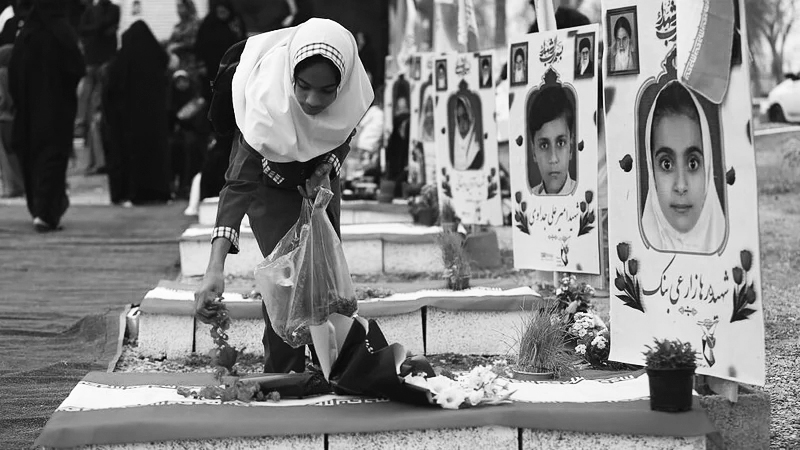
The current aerial and naval war against Iran, of course, didn’t begin on February 28—it is only the latest, most destructive and globally consequential stage of the war on Iran. The current aggression was preceded by the wave of terrorism unleashed by the American and Israeli intelligence apparatuses in January 2026 amid mass protests in Iran.3 These protests were sparked by the ratcheted-up economic warfare carried out by U.S. imperialism throughout 2025, which Treasury Secretary Scott Bessent openly boasted about at the World Economic Forum.4 And in June 2025, the U.S.-Israeli “Twelve-Day War” targeted numerous Iranian military and civilian targets, supposedly “annihilating,” according to Trump, Iran’s underground nuclear program after the U.S. dropped three massive “bunker-buster” bombs. Six months later, U.S. imperialism and the Zionist regime are giving the same justifications for their war on Iran, arguing once again that Iran’s nuclear capabilities must be eliminated.
Facing existential-level destruction from U.S. imperialism and Zionist expansionism, the Islamic Republic in Iran has retaliated with everything it can throw at its enemies in a steady barrage of asymmetrical counter-attacks, hitting U.S. assets and Israeli and Gulf Cooperation Council (GCC) countries’ facilities and infrastructure across the region. It is clear to us—just as it is to many people in the world, despite the barrage of imperialist propaganda—that Iran has consistently acted in measured retaliation so far, even while signalling and demonstrating that it is capable of escalating much further if the present war crimes being executed by the U.S. and Israel cross more lines. Iran’s missile system has degraded and punctured its enemies’ interceptor systems repeatedly, and embarrassingly, revealing that Iran is also capable of unleashing existential damage to U.S. interests in the region, to Israel and to the GCC countries.
To put it unequivocally, the war against Iran by the U.S. and Israel is a war of aggression. This fact places Iran and the Axis of Resistance in a war (or wars) of national liberation against imperialism and Zionist expansionism. At the same time, behind the West Asian (or Middle Eastern) theatre of war there is also the much greater power struggle between the competing imperialist interests—namely the rival blocs led by the U.S. versus China and Russia. While the present escalation certainly threatens to spiral into an even greater global war, the principal contradiction in this moment is the criminal war by U.S. imperialism and Zionist expansionism against the oppressed countries and peoples of West Asia (namely, Iran, Lebanon, Palestine, Yemen, Iraq and Syria).
We should offer a few remarks to clarify why, at this moment, the principal contradiction is a war of aggression against oppressed countries. During the development of our thinking and writing this analysis, some of us saw in the present escalation principally the inter-imperialist contradiction at play in the world. Certainly, the inter-imperialist contradiction is fundamental to understanding global developments now—and even in understanding this particular war. However, as we sharpened our view in the course of writing and debating the rapidly unfolding events, it has become clear to us that the main contradiction in this war thus far is between the U.S. and Israel (a declining superpower and its expansionist junior partner, respectively) on the one hand, and Iran, an oppressed country, on the other hand. Russia and China have so far not directly involved themselves in the fighting. Nor are they supplying, aiding or backing Iran anywhere near as openly or directly as the E.U., the U.S., and Canada have backed Ukraine in the war against the Russian occupation. Iran is among the countries being redivided among the imperialist powers and is not itself fighting for the redivision of the world as the imperialist powers are. This means that Iran is, in this moment, fighting a national liberation war. After years of preparation for such aggression, as well as resistance to Israeli expansionism and U.S. imperialism across the region, Iran has influenced many of the national-liberation forces of the region and built out the Axis of Resistance with Islamist forces (though not so much Marxist-Leninist and Maoist forces in the region).
Despite being an oppressed country, its ideological influence and practical solidarity (with the help of its oil revenues) have made Iran into a regional power in its own right (not unlike Venezuela at the height of Bolivarianism throughout Latin America). Iran, with its own national bourgeoisie, has been asserting its independence and influence across the region (again, like Venezuela5). Iran certainly leans toward the China-Russia side of the inter-imperialist contradiction, but to consider Iran a proxy would be to gloss over the national-liberation struggles that have been building up and boiling over across West Asia for many decades, first in defence of Palestine, also as expressed in the Arab-nationalist regimes of decades past, in the 1979 Iranian revolution and then the rise of the popular-Islamic resistance movements that followed it. It’s important to remember that the Islamic turn of the national-liberation struggles of the region came after the capitulation, collapse or failure of the more secular-nationalist states and movements to adequately confront imperialism and Zionism in the preceding decades—not to mention in the wake of the retreat of the proletarian revolution on the world scale from the late 1970s onward. In the vacuum left by the triumph of revisionism and the defeat of real socialism and proletarian internationalism in the world after 1976, the national resistance movements of West Asia were reforged in an Islamic direction amid the never-ending carnage of Zionism and U.S. imperialism across the region.6 The most notable examples here pertain to Lebanon in the early 1980s with the emergence of Hezbollah, and later the emergence of Hamas in the years following the capitulation of the Palestine Liberation Organization.
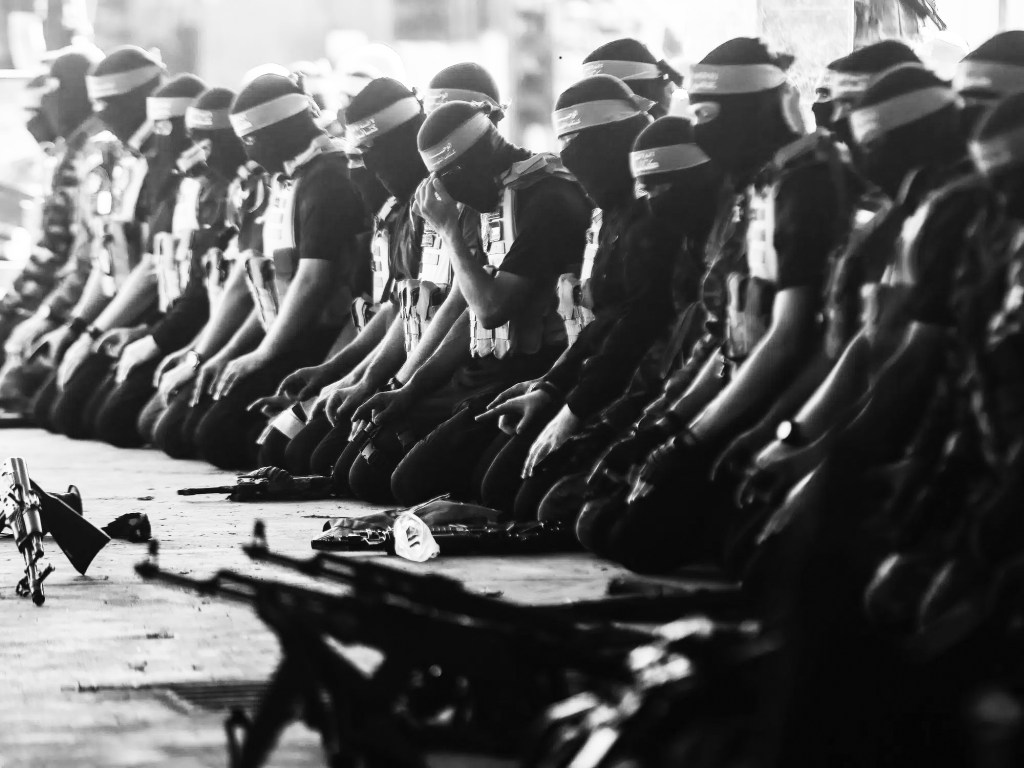
We say all this to bring out the national-liberation dimension to the present war in West Asia, even as inter-imperialist rivalry is also present and shaping developments within the war. The same can be said about the kidnapping of Venezuelan President Nicolas Maduro and the subsequent coercion of the Bolivarian Republic back into U.S. imperialism’s geopolitical fold in January 2026.7 Venezuela’s Russian and Chinese backers did little to avoid losing their influence over Venezuela, even though the kidnapping of Maduro and subsequent coercion of the Bolivarian regime affected their interests. In an even starker example, the war in Gaza is almost purely a war of national liberation against U.S. imperialism and Israeli colonial expansion. In this genocidal war of aggression, the rival imperialist alliance of Russia-China has been wholly absent, only sometimes intervening rhetorically at UN meetings.8 We underscore the primacy of the imperialism vs. oppressed country nature of the war against Iran and the region more broadly precisely because, across the whole world, inter-imperialist contradictions are indeed intensifying, making it easy to conflate, confuse or collapse the former contradictions into the latter. The analysis that follows in this article attempts to sketch out that wider world of inter-imperialist contradictions to help us understand the pivotal role of the U.S.-Israeli war in Iran as imperialist powers jockey for position and redivision of the world yet again.
Zooming out from the Persian Gulf to take stock of the wider implications of the expanding war, its shockwaves have already been felt across the world. For weeks, global energy markets have been seized by the closing off of the Strait of Hormuz to Western shipping and energy interests9 and by the destruction and damage inflicted to oil and gas infrastructure across the region. The entry of the Houthis of Yemen into the war in its second month gives the Axis of Resistance further leverage to disrupt international shipping, energy markets and the global economy. The ensuing energy crisis has already spiked fuel prices, which is not soon expected to climb back down, with economic analysts forecasting much greater inflation on the horizon as fertilizer shortages spike global food costs. Rising costs of production and critical shortages will also lead to economic slowdowns, or shutdowns, while consumption will recede as inflation rises, causing greater recession. This regional war has already become a global crisis—one that U.S. imperialism and Zionist expansionism bear full responsibility for.
The other NATO countries have so far resisted getting pulled into the war directly,10 despite the pressure bearing down on them from without by U.S. imperialism and from within as the deteriorating economic situations in each of their countries are only made worse by the fallout of the war. Most notably, Spain has denied the U.S. used of its airspace for Iran war-related flights, and Italy denied the U.S. access to an air base in Sicily. Beyond these examples, however, the ruling classes and governments of the Western imperialist powers have been largely running diplomatic cover for U.S. imperialism and Zionism while parroting the U.S.-Israeli propaganda points, bolstering their own repressive apparatuses as they stand by and watch Trump and Netanyahu’s criminal war unfold.
At the centre of the world’s destabilization is the coming to power of the fascistic Trump-MAGA regime in January 2025, the exacerbation of deep contradictions within American society and the strategic decline of U.S. imperialism. As we will further discuss below, the second Trump administration has pushed the U.S. state toward fascism, even as its hold over executive power is unstable. While the Trump-MAGA regime has largely subordinated the liberal bourgeoisie and its power centres (Democratic Party, non-MAGA sections of the bourgeois press, academic institutions, etc.) over the past year, it has neither completely defeated its liberal opposition nor been able to withstand acute popular resistance, as demonstrated by the people of Minneapolis in early 2026 when they beat back ICE in their city. The domestic situation in the U.S. has worsened by every conceivable measure, contradicting all of Trump’s “American First” promises (with the only exception being Trump’s mass deportation agenda), while the war in Iran also marks a sharp break from Trump’s campaign promise of never starting another “forever war,” especially in the Middle East. Finally, the release of the Epstein files (however partial and limited) has further divided Trump’s base, since the MAGA movement, once so agitated and mobilized by QAnon conspiracy theories, has been forced to confront the fact that their redeemer, Donald J. Trump, was embedded in the highest echelons of Epstein’s associates and their repugnant child abuse, trafficking and pedophilia cult. The liberal bourgeoisie currently hopes that the chaos and disorder of the Trump-MAGA regime will lead to Trump losing control of the Congress and the Senate in the midterm elections at the end of 2026. But with signs that the midterm elections could be rigged or compromised in any number of ways to keep Trump and MAGA firmly in power, it’s anyone’s guess whether the liberal bourgeoisie and Trump’s other opponents will resist further assaults on the U.S.’s domestic constitutional order by the Trump-MAGA regime.
These breakneck developments on the domestic front in the U.S. have been matched by the unprecedented moves by the Trump regime to go rogue with U.S. imperialism at the international level, unilaterally destabilizing the capitalist-imperialist world order that the U.S. spent the previous eight decades meticulously constructing and imposing since the end of World War II. The present international order has seen U.S. imperialism’s relative position slip in recent decades from unmatched hegemon to a crisis-ridden superpower that can no longer impose its will even against middle powers (let alone major powers). In its desperate attempt to slow, halt or reverse the relative strategic decline of U.S. imperialism, the Trump-MAGA regime, with its proclamation of the “Donroe Doctrine,” has inaugurated a new phase of open reconquest and redivision of the world, with Venezuela and Iran only the latest targets, and Cuba being choked off (causing immense suffering for the people of the island nation), while a number of other countries face similar threats of aggression. Evidently, the era of colonialism is not over.
The greatest danger immediately ahead seems to lie in the U.S.-Israeli alliance’s push for even greater escalation in the face of an intractable Iranian resistance, supported and aided to some extent by its allies in the Axis of Resistance. Trump’s 15 points for Iran’s capitulation issued in the last week of March 2026 stood light-years apart from the maximalist demands that Iran set out in the opening weeks of the war, which included the complete lifting of U.S. sanctions on Iran, withdrawal of U.S. troops from Arab nations, the dismantling of Israel’s nuclear weapons, full withdrawal of Israel from Gaza, the West Bank, the Golan Heights and Shebaa Farms and Netanyahu standing trial for war crimes and genocide. The U.S. and Israel have no easy diplomatic means for retreat, while the crises on their domestic fronts that both Trump and Netanyahu face make it difficult for either of them to walk back from the present war. Despite the inconceivable destruction already levelled at it, Iran hasn’t appeared anywhere near ready to capitulate (all the while trolling Trump and Netanyahu with Lego mini-fig diss tracks). Any level of defeat, or incredulously declared “victory,” in the Iran war will only deepen the domestic crises in the U.S. (and Israel).
From our vantage point in Canada over the past month, it has seemed to some of us as though, metaphorically speaking, we’ve been standing on a coastline in the minutes preceding a tsunami. These minutes may end up lasting days, months, perhaps even a few more years before the monstrous waves begin to crash, given the syncopated rhythm of imperialism (because, as Lenin put it, these are the “weeks where decades happen”). So rapid have the developments at the international level been over the past year that it is widely, casually debated today—not only among Communists, but also among the masses—whether we are on the brink of World War Three, are now entering it, or have already been trapped within it for the past few years.
The world is plagued by capitalist crises that the bourgeoisie is incapable of resolving to the satisfaction of the broad masses and has thus turned toward fascism—that supremely nihilistic ideological deformation that provides cover for imperialist war, pits the masses against one another and holds out grotesque promises and false solutions to the crises of capitalism—to manage and safeguard its power. The ideological and political degeneration of the masses under the influence of fascism further ups the urgency for Communists to seize the moment with heightened class struggle, internationalism and programs for revolution that can give the masses a historical off-ramp from the future of imperialist war and fascism that the present world order guarantees. To be sure, however, to tens and hundreds of millions of people across the world—in Gaza, Iran, Lebanon, Syria, Iraq, Yemen, Ukraine, Pakistan, Afghanistan, numerous fronts in Africa and many other parts of the world—the waves of inter-imperialist rivalry and imperialist aggression have already been crashing down upon their societies. Yet, at the same time, out of apparent sight, along the shifting tectonic plates of inter-imperialist contradictions, even greater pressure mounts and greater geopolitical earthquakes loom, as the global situation deteriorates further.
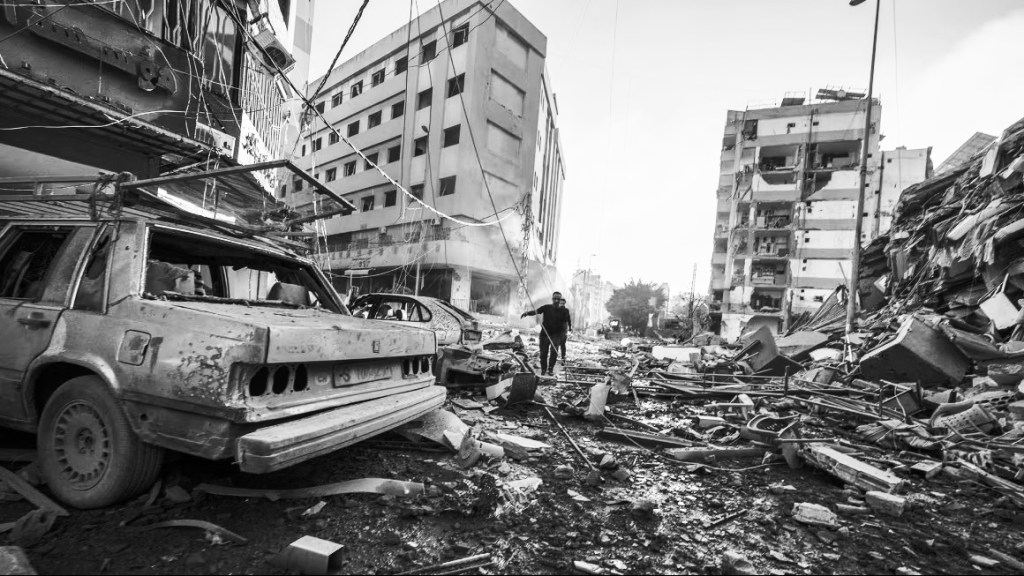
The aftermath of Israeli airstrikes on the Dahiyeh neighbourhood in southern Beirut in October 2024, which has been attacked again, along with numerous other sites in Lebanon, since the onset of the U.S.-Israeli war on Iran and the subsequent war of aggression against Lebanon by Israel. Since March 2, 2026, more than 1.2 million people have been displaced and 2,000 have been killed in Lebanon alone.
However things unfold in the war against Iran in the coming weeks or months, we must be clear about these deeper contradictions and crises that wrack the capitalist-imperialist world system today, so we can remould ourselves for the gargantuan tasks ahead of us and so that our agitation and propaganda among the masses, not to mention our practical programs for class struggle, are correctly oriented to the profound crises and revolutionary possibilities that are coming (or are already here). The masses are clamouring to understand the world today, and we Communists cannot lag behind.
In the sections that follow, we consider the escalating war in West Asia in terms of the broader conjuncture in which we are situated by taking stock of the cascading crises and contradictions developing across the world. We identify the deeper, protracted crisis (or crises) of capital accumulation by looking at fundamental changes that have taken place in the postwar era when U.S. imperialism first established its hegemony over the capitalist world and explore some of the major political-economic changes from the 1970s onward.
With a clearer view to the crises and contradictions shaping the present world, we bring our analysis back to Canada, which is currently contending with an exceptional combination of internal and external challenges. Canada faces not one but two secessionist movements, direct threats from U.S. imperialism, a looming global recession (or depression) and Mark Carney’s Liberal government dragging the country down the road of militarism and corporatism. Once we map the current terrain upon which we are taking steps in advancing the proletarian revolution, we conclude by reaffirming the revolutionary tasks that befall us, which the Political Program of the (N)CPC laid out in 2023.
This analysis of the current conjuncture is, like all scientific endeavours, a work in progress. We welcome sincere engagement and critical feedback from all comrades, supporters and friends of the (N)CPC, our journal, Railroad and the international proletarian revolution.
2. The Escalation of the Crisis at all Levels
The Political Program of the (New) Communist Party of Canada identifies three major contradictions in the world today: first, among the imperialists; second, between the imperialists and dominated countries; and third, between the bourgeoisie and the proletariat. A fourth potential and also former contradiction between socialism and capitalism ceases to exist in the world today, but when this contradiction did exist for the better half of the twentieth century (1917–1976), as the international proletarian revolution was advancing, it was central to world developments and held out the ultimate possibility of defeating the imperialist powers, ending colonialism and beating back the bourgeoisie once and for all. In other words, the advance of the international proletarian revolution once carried the possibility, and certainly the objective, of bringing about a permanent resolution to the above-named major contradictions in the world. However, since the defeat and retreat of the international proletarian revolution from 1976 onward, and the disappearance of the contradiction between socialism and capitalism on the world scale, the three other major contradictions in the world have only intensified, bringing the world, once again, to the brink of another world war and with fascism taking root or taking power in more countries. From Gaza to Venezuela, Cuba, Iran and Lebanon, brazen colonial oppression and conquest have returned to the scene of history with a vengeance. The major imperialist powers are manoeuvring against one another with increasing strife to maintain or advance their positions in a fractious world order, especially at the initiative of U.S. imperialism. Whereas two generations ago the Western bourgeoisie was celebrating the victory of liberal democracy and capitalism in the Cold War as the “end of history,” 35 years later the capitalist-imperialist world is going up in flames once again.
To understand how the present war on Iran and the global energy and economic crises it is precipitating are bringing all the major contradictions in the world to a head, we must establish a longer view concerning the development of these contradictions. However the war against Iran unfolds or resolves in the coming weeks or months, the contradictions animating this war will not soon subside.
2.1 From the advancing international proletarian revolution to new imperialist wars of redivision
In the eight decades since the end of World War II, U.S. imperialism has been the ringleader of the capitalist-imperialist world system. In the immediate postwar decades, U.S. imperialism had to contend with the formidable threat of the rising socialist bloc that was forged out of the two world wars, and it did so in part through the development of a new geopolitical infrastructure. The U.S.-designed and imposed postwar global order—or the liberal “rules-based international order,” structured around the United Nations—was a Cold-War creation intended to moderate the rivalry between the capitalist-imperialist and socialist powers, especially in the age of nuclear warfare. But this U.S.-led international architecture changed, and adapted to the changes unfolding within, the socialist countries.
We understand, like all anti-revisionist Communists, that counter-revolutions took place in the Soviet Union from 1953 to 1956 and after 1976 in China that overthrew the proletarian-socialist states that preceded them. These counter-revolutions occurred in and through the Communist Parties of these countries, nominally the same parties that had led the greatest revolutions in human history. Maoist-Communists specifically understand these counter-revolutions to have emerged out of real class struggle in those Communist Parties and in those societies, class struggles that, by one means or another, ultimately saw the reconquest of power by new bourgeoisies from within these socialist societies. By contrast, the competing and more hegemonic narrative held by bourgeois propagandists and revisionist-“Communists” alike is that socialism survived in the Soviet Union right up until its collapse in 1991 and survives to this day, or is presently still under construction, in China. These revisionist accounts utterly obscure not only how a new class of capitalist oligarchs and billionaires reemerged within, and now rein, in China, Russia and the rest of the formerly Soviet countries, but also how the formerly (truly) socialist bloc was dragged back into the capitalist-imperialist world system. The implications of this bourgeois obfuscation are numerous—topmost among them is the mystification of the contradictions playing out in the world today. To counter the prevalent and ultimately false narratives of this or that great power fighting this or that “authoritarianism” of its rivals, we need to delve back into this history to reveal the true inter-imperialist nature of these contradictions. While this historical accounting may be familiar to Maoists and other anti-revisionist Communists, the hegemony of the bourgeois and revisionist narratives concerning this history makes this a matter of great confusion. It is far from clear in the minds of most of the masses and thus it bears restating here.
When they were still ruled by dictatorships of the proletariat, the Soviet Union and China industrialized largely of their own accord and were pushed to build out their own international order, in part by design and in part by the sieges, subversion, embargoes and extreme opposition maintained by the imperialist countries against them. It is a world-historic accomplishment that the international proletarian revolution succeeded in the period between 1917 and 1976 in taking, advancing and holding on to industrial power that, at times, rivalled that of the capitalist-imperialist powers while providing rapidly rising qualities of life to the broad masses of people (and with none of the industrial and colonial forms of slavery or subjugation characteristic of capitalist development). Between 1917 and the early 1950s, the international proletarian revolution advanced arduously through a world in turmoil and war. The socialist bloc of humanity that was consolidated out of the ashes of two world wars and a number of other imperialist wars of aggression set an example for and inspired the more populous section of humanity that remained under the boot of capitalism-imperialism in the dominated and colonial countries. Many Communist Parties of the world and the anti-colonial national liberation movements they led, supported or allied with demonstrated in real time that socialism was the alternative to capitalism-imperialism, creating openings for further sections of humanity to make their break from capitalist and colonial domination.
But in a tragedy of the grandest historical proportions, the socialist bloc was unable to fully consolidate itself before counter-revolution pulled one of the major socialist powers, the Soviet Union, off the road of proletarian internationalism (under Khrushchev, between 1953-6). This reversal of the revolutionary tide in the Soviet Union became the basis for the “Sino-Soviet split” that followed it. Revolutionary China under Mao’s leadership was forced to stand alone, face threats from the new social imperialism of the Soviet Union and undertake its industrialization strictly endogenously with little help from abroad. Yet, socialist China advanced anyway, despite the various imperialist forces stacked against it. China’s construction of socialism not only proceeded at a pace and scale matching developments in the Soviet Union a generation earlier, but it did so while applying key lessons gleaned from studying Soviet socialist development and its shortcomings. Key among these lessons was that the revolutionary process under socialism must aim not only to advance the forces of production, but to also, more importantly, transform and revolutionize the relations of production in the process (i.e., to overthrow bourgeois class relations during socialist construction, rather than re-engender them).
What it meant when new bourgeoisies emerged or took power from within the socialist countries is that the relations of production were diverted sharply back in the direction of capitalist relations of production, first by allowing bureaucratic-capitalist managerial power to overtake the narrowing divide between mental and manual labour, and later and more openly in the form of the direct private ownership of the means of production.11
The counter-revolutionary overthrow of the dictatorships of the proletariat within each of these great socialist powers were naturally expressed, later, in the transformation of the external relations of these countries across the now qualitatively transformed “socialist bloc.” Mao criticized the Soviet Union from Khrushchev onward as practising “social imperialism,” which was a new kind of imperialism emerging out of the new kind of ruling class (but still capitalist in essence) that had seized power in the Soviet Union in 1953. While the bourgeois propagandists and revisionist-Marxist trends would have us believe that socialism remained standing until the dramatic disintegration of the Soviet Union decades later in 1991, or that it continues on today in China, these bourgeois historical accounts obscure the decades-long, continuously advancing processes that brought new bourgeoisies to power in both the Soviet Union (and later Russia) and China starting from those fateful years of counter-revolution. If we fail to understand this, then we fail to apprehend the emerging capitalist markets, monopolies and, later, inter-imperialist forms of competition, that emerged in the world since the overthrow of genuine socialism.
While bourgeois historians mark the disintegration of the Soviet Union in 1991 as the ultimate and official end of socialism, this revisionist historiography obscures how this moment in history merely represents the dramatic division of the spoils among the then-disintegrating Soviet bourgeoisie, a bourgeoisie that had been consolidating its capitalist class position over the course of decades preceding that moment. After the fall of the Soviet Union, this is how the Russian Federation became a new kind of hegemon among the formerly socialist-bloc countries, the sum of which were all more or less ruled by their own post-Soviet capitalist oligarchies.
China’s re-entry into the capitalist-imperialist system came about through a distinct sequence of events, but no less to the interest of the capitalist-billionaire class of that country as well as of capitalist-imperialists the world over. Instead of disintegrating the Communist Party after the bourgeoisie came to power in China, the bourgeoisie continued to work through the Communist Party, rendering it into a formidable command structure that unified its class interests, facilitated China’s integration into the capitalist-imperialist system on the best possible terms (for China’s bourgeoisie, that is) and resubordinated the Chinese proletariat after the Cultural Revolution and the death of Mao Zedong in 1976. The new bourgeoisie under the leadership of Deng Xiaoping exploited the enormous prestige of the Communist Party in China to keep its hold on power and a lid on the new social contradictions that were sure to emerge on the capitalist road of development.
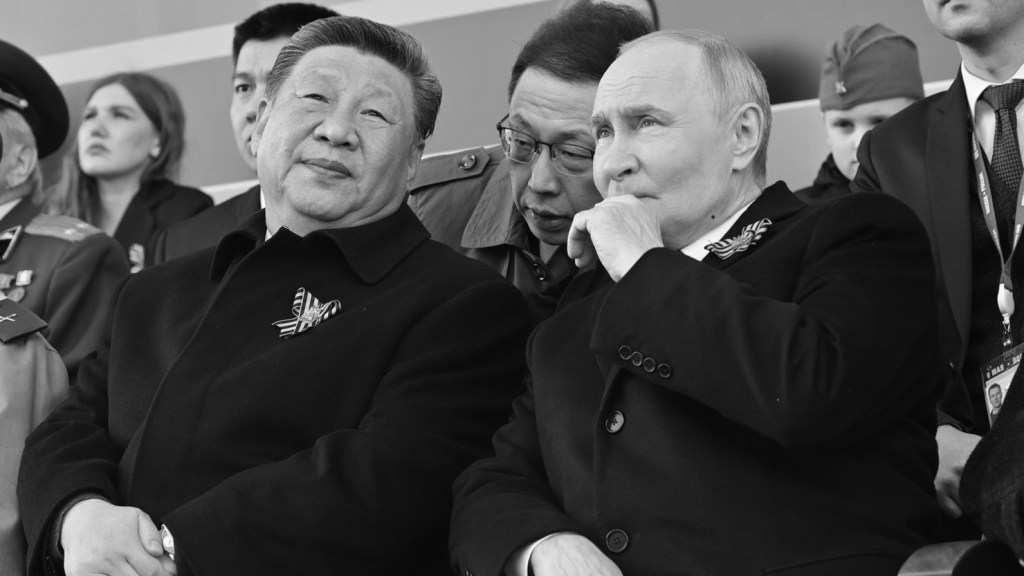
Over the past half-century, 1976–2026, the Communist Party of China, from Deng Xiaoping to Xi Jinping, has been a Communist Party in name only—one that fears and loathes the Cultural Revolution and reviles everything Mao Zedong and the CCP under his leadership stood for and much of what the masses in China had spent the previous half-century fighting for. Incredibly—and to the great confusion of the masses of people across the world who have not been exposed to the real nature of these historical developments and have instead been bombarded with the bourgeois and revisionist accounts—China’s “Communist Party” has overseen the development of a capitalist superpower that has been displacing and impeding U.S. imperialism’s preeminence in the world for the past two decades.
Stepping back now from the counter-revolutions in the Soviet Union and China which overthrew socialism and ultimately gave rise to new capitalist-imperialist powers: amid these tragic reversals for the international proletarian revolution, the “Third World” of newly independent and formerly colonized countries were decisively coerced back into the exploitative fold of capitalist international relations. This did not happen all at once, however, but step by step. In those places, where the proletarian revolutionary struggles or popular anti-colonial movements were strong enough to push back against imperialism to some extent, and where some degree of independence from the dictates or designs of U.S. imperialism was achieved, it would take new coups, counter-revolutions or wars of aggression for the imperialists to reclaim control. West Asia and North Africa provide pertinent cases in point for our analysis here.
Nationalist anti-U.S. and anti-Zionist regimes claimed power for varying lengths of time, sometimes decades, in Algeria, Libya, Egypt, Syria, Iraq, Yemen and also Iran after the 1979 overthrow of the Anglo-American imperialist-installed and -backed Shah monarchist regime. Many decades of imperialist wars, proxy conflicts and regime-change operations later, and Iran and Yemen are the only remaining anti-U.S., anti-Zionist countries to have survived in the region. In Jordan, Saudi Arabia and Morocco, U.S.- and Zionist-friendly monarchies have ruled for decades, while the Gulf States have arisen as vassals to Anglo-American imperialism and get by as oil and gas rentier states playing host to U.S. military installations and living off the labour of the millions of Asian and African migrant workers who have few rights in those countries. Outside small oases of Western-imperialist settlement (Israel) and vassalage (the GCC, Jordan, Morocco), the Arab and West Asian world has been under a constant state of siege and occupation for the last half-century. Amid this, Iran has emerged as the only remaining major stronghold of opposition to U.S. imperialism and Zionism in the region, making it a beacon for resistance to the U.S. and Israel and thus shaping the character of the national-resistance movements of the region.
Now, with their latest war, the U.S. and Israel are making a major power play to remove Iran, their biggest obstacle to dominating West Asia.12 But this war is proving to be a fool’s errand of world-historic proportions for U.S. imperialism and Zionism. From the genocidal destruction of Gaza to the siege on Lebanon and now the war in Iran, the masses of the region, and the people of the world, will not soon forget the crimes of U.S. imperialism and Zionism. The future of tens of millions of people ravaged by the U.S.-Israeli aggression hang in the balance. So too does the fate of the U.S.-led world order that is so evidently in crisis today. The outcome of this war could be a turning point in the development of both U.S. imperialism and Israel. Certainly, this outcome will shape the near-future of the fascist Trump and Netanyahu administrations. Significant proportions of American and Israeli society, not to mention the rest of the world, can also see the insanity of this war. The world is being locked into the vice grips of global energy and economic crises. If we are to grasp the full range of contradictions behind this war and how things have come to the point of such explosive developments, we require a deeper analysis of the material underpinnings that form the basis for the inter-imperialist rivalries and contradictions in the world today. These economic underpinnings are the competing blocs of monopoly-capitalist powers in the world, which have developed to the point where the market competition among them is being overtaken by shooting and killing and destroying whole countries to conquer new markets. This surfeit of profit-chasing, warmongering ruling classes is just another expression of the overaccumulation of capital on a world scale, to which we now turn our attention.
2.2 The reemerging capitalist crisis of overaccumulation
After 25 years of postwar boom and economic stability, driven by Keynesian monetary policies that financed public and private spending through debt, by the early 1970s the U.S. economy entered a period of economic slowdown that saw both a rise in unemployment and inflation. The cost of the Vietnam War, a fairly extensive social welfare system, relatively intact wages and job protections secured by unions and the labour movement (for certain segments of the population, at least, but a considerable part nonetheless), coupled with increased global competition from other imperialist countries, resulted in economic stagnation and rising interest rates. As the rate of profit fell across productive sectors, including construction, chemical production, oil refining, and manufacturing (specifically in steel and other metals, heavy equipment, the automotive industry, and the manufacturing of appliances) capitalists were investing less and less in the productive forces, which led to even further economic slowdown and stagnating job growth.13
Combined, these conditions created what bourgeois economists termed stagflation. We believe, however, this is best understood as a crisis of the overaccumulation of capital. By the 1970s, economic stagnation was characterized by an abundance of uncirculating, uninvested capital that coexisted with high unemployment, high interest rates, rising debt (consumer and industrial) and a falling rate of profit in core productive sectors, all of which compelled capitalists to withhold further investment in the productive forces, further exacerbating economic slowdown. The GDP in the U.S. contracted by -0.7% in 1970 and reached –3.1% by 1975, while unemployment rose to nearly 5% in 1970, hit 8.2% in 1975 and stayed high throughout the decade. Inflation hovered around 5% through the 1970s as well. Unlike cyclical economic downturns, the “stagflation” of the 1970s was paradoxical, seemingly defying the rules of the capitalist marketplace. This was a crisis characterized by too much capital and too much labour at the same time, which should have combined to produce further economic growth, but instead caused a prolonged arc of declining economic growth in core productive sectors. The previous major period of the crisis of overaccumulation of capital, the Great Depression, “solved” the problem with the market crashing cataclysmically, delivering widespread loss of capital, industrial shutdowns, skyrocketing unemployment and a defaulting banking system, which resulted in tremendously deleterious social consequences. Clearly, the Great Depression was not a socially conscious solution to the problem. So the sluggish economic situation in the U.S. in the early 1970s was a serious problem.
The Nixon government responded to these challenges with innovations. First, in 1971 Richard Nixon took the U.S. dollar off the gold standard, which ended, in practice, the Bretton Woods system devised at the end of World War Two that had guaranteed world currencies’ convertibility to the U.S. dollar, with the dollar’s value itself backed by gold at $35 per ounce. For the previous quarter-century, the regulation of the global financial system through the Bretton Woods system, the International Monetary Fund and the International Bank for Reconstruction and Redevelopment (the early precursor to the World Bank) allowed for, by current standards, a fairly regulated global market with stable currency exchange rates and controlled inflation, conditions that facilitated both the reconstruction necessary after the devastation delivered by World War II and the United States’ aggressive rise to global economic dominance.14 The post-Bretton Woods system, on the other hand, opened the way for fiat currencies whose value floated in relation to one another.
Then, rather brilliantly from the perspective of U.S. hegemony, in 1973 Nixon made a pact with Saudi Arabia to price its oil exports exclusively in U.S. dollars, paving the way for the U.S. dollar to become the “Petrodollar,” the key token of transaction in the world economy. The USD became the world’s de facto reserve currency.
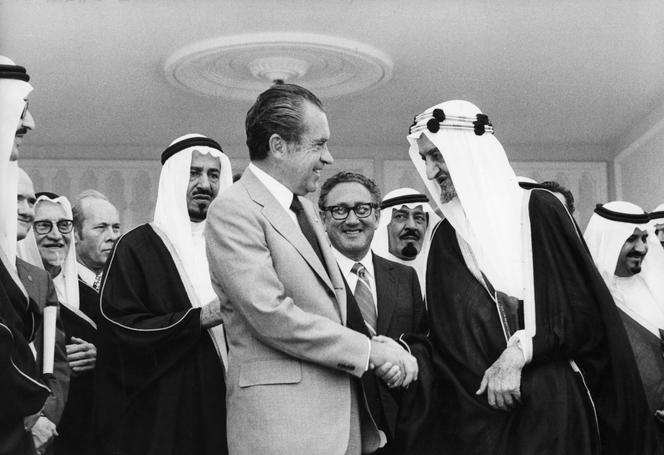
This created the impetus for the Federal Reserve to print more U.S. currency, since countries that depended on Saudi Arabia’s oil exports needed the dollar to make their purchase. Even while the U.S. faced increased competition from German and Japanese industry, the sustained demand for U.S. dollars propelled the U.S. economy forward. In exchange for trading in U.S. dollars, Saudi Arabia received guaranteed military support and defence from the U.S., solidifying, next to Israel, the longest-running U.S. collaboration in the region. Since the U.S. dollar no longer had to be convertible into gold after 1971, the U.S. could print money essentially on demand. The only threat to this system, as later decades would reveal, would be other oil-producing powers who chose to exercise some independence and denominate their oil sales outside the Petrodollar system. Iraq, Libya, Venezuela and now Iran have all faced the wrath of U.S. imperialism for not playing by the rules of this hegemonic setup.
With the development of capitalism in China and its manufacturing sector becoming the “factory of the world” in the 1990s–2010s, China accumulated enormous sums of U.S. treasury bills, giving it increasing leverage with the U.S. in the otherwise U.S.-dominated global financial system. Over this same period of time, the restoration of capitalism in the former Soviet Union, and specifically in Russia, brought forward one of the world’s energy superpowers. The development of capitalism in Russia and China has created new poles of trade and transaction, which pose a major threat to U.S. hegemony. This is the monopoly and financial capitalist backdrop to the economic and military war playing out around the Strait of Hormuz, and why Iran has been letting through shipping denominated in Chinese yuan and blocking all capital connected to the U.S.-led global financial and economic systems. This is what has driven the U.S. to, by mid-April, threaten and begin a naval blockade around Iran’s blockade. Behind the economic and energy crises, which seem unavoidable now in the coming weeks and months, there lies the ruling financial interests at the core of U.S. imperialism.
The U.S.-Saudi pact and the origin of the Petrodollar are also a major part of the story of the financialization of the global economy under U.S. supremacy through “neoliberal globalization.” As the USD became the world’s reserve currency, countries held more and more U.S. dollars and invested those back into U.S. financial markets. One of the main features of the re-subjugation of the newly independent countries was the use of debt and international finance to impose conditions on the dominated countries that facilitated unequal trade agreements, the offshoring of production, the globalization of the proletariat and all manner of war and plunder against the oppressed countries. Dizzy with the profits reaped by expanding and deepening the exploitation of the international working class through newly globalized production chains and all the other plunder of the oppressed countries, monopoly-finance capitalists amassed gargantuan sums of wealth. This surplus of capital in the imperialist countries required (and requires) new ways for money to make money, especially when the other ways have become saturated, monopolized markets. New forms of rent-extraction, and a higher degree of parasitism by the ruling class, is the only way forward for monopoly-finance capital. These are the class relations that constitute the great immiseration unfolding across much of humanity in this historical period.
A key thing to highlight here is that a crisis of capitalist overaccumulation was already becoming a problem with the reemergence of Japan and Germany as industrial competitors (in the form of excess productive capacity in the world and growing international competition). The Petrodollar system offered a financial way forward for U.S. imperialism that maintained its hegemonic position amid the concrete forms of overaccumulation that were manifesting by the early 1970s. What is known as “neoliberal globalization” in the academic literature and practically understood now by most mainstream commentators, was the set of policy shifts and reorientations taken up U.S. imperialism, the Anglo-American imperialist alliance and their junior partners, other allies and vassals. Privatization, lowering corporate taxes, financial deregulation, the explosion of real estate, insurance and other exotic forms of finance, the explosion of public and private debt, gutting of public spending, the imposition of austerity on the people—it all amounts to a one-sided class struggle, which the masses in many of the imperialist countries have been subjected to over the past forty years, since the collapse or retreat of their revolutionary vanguards and the retreat of the international proletarian revolution on an international scale.
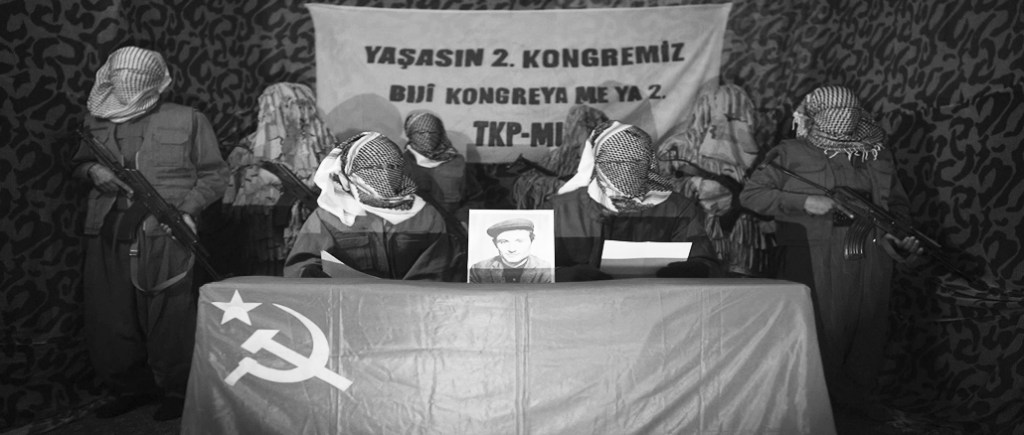
It’s remarkable that this latest major outbreak of war is centred on a part of the world, West Asia, that was as much centre stage in the 1970s as U.S. imperialism was reconstituting its hegemony in the world. As we have seen, deepening its hold on the region came via its pact with the Saudis, backing the Zionist colonial expansion, beating back pan-Arab nationalism, which was dealt a major blow with, first, Sadat in Egypt, later with the overthrow of Saddam Hussein in Iraq, and most recently with the overthrow of Assad in Syria and the coming to power of former al-Qaida and ISIS leader al-Julani (Ahmed Hussein al-Sharaa). U.S. imperialism and Zionism have anchored their power across the region through genocidal colonization and ruthless military attacks. The defeat of pan-Arabism and secular-nationalist trend unfolded, it should be noted, alongside the counter-revolutionary wave rolling out across the transitioning socialist bloc. The cost of U.S. imperialism’s unfolding presence in the region and Israel’s fascist colonization of surrounding peoples and lands has victimized and displaced tens of millions of people, and killed no less than many millions. Naturally, this violence and colonial subjugation has cultivated a near-universal opposition among the people of West Asia. In this historical period, the Axis of Resistance has captured and mobilized that opposition. This has been the concrete form taken by anti-imperialism in West Asia amid the retreat, and containment to a few pockets, of the international proletarian revolution across the region (namely, parts of Palestine and Turkey and Kurdistan).
It’s painful to imagine the world that was lost or within reach of the international proletariat just a decade or two prior, between the 1950s–60s. It was a great fortune to U.S. imperialism in the 1970s that China underwent counter-revolution and that the dictatorship of the proletariat was overthrown, when just a few years prior, when Mao Zedong was still a leading influence in the party and the Cultural Revolution in China was going strong, Chinese revolutionaries celebrated and pledged their support for Black-revolutionary and anti-imperialist forces in the U.S., and vice versa. The oppressed world combined with a huge swathe of the younger generations in the imperialist countries to hail Vietnamese guerrillas dealing blows to U.S. imperialism and the advancing proletarian revolution in China. The legitimacy of the Soviet Union waned amid growing anti-revisionist Marxist-Leninist movements that were at the forefront of the next revolutionary tide and rejected the reactionary developments in the Soviet Union. And then, with the counter-revolution in China, by the mid-1970s, two-thirds of the world’s population were being thrown back into the world market to be feasted on by the imperialists once again (again, not all at once, but with the flow starting to move decisively back in a direction favourable to imperialism). This meant new opportunities for U.S. capital (and that of its allies) to penetrate, first, the newly independent countries, and eventually the formerly Soviet and Chinese markets. The bourgeoisies, new and old, in these contested markets welcomed this new era of “peaceful coexistence” with the U.S.-led imperialists. For some time, between the 1980s–2000s, the imperialists feasted together. But in the medium-to-longer term, U.S. imperialism would reach strict limits in these new markets, faced by other imperialist powers grounded in their own specific monopoly-capitalist, ruling-class structures—especially, Russia and China. Granted, Russia and China have enormous distinctions between each other’s forms of imperialist power, just as they each have their distinctions from how U.S. imperialism has operated in the world since the 1970s. To understand the great inter-imperialist conflagration that has been developing in the world for some years now is to understand how these distinct capitalist-imperialist powers are colliding with one another in the present international political and economic system.
2.3 From the defeat of the international proletarian revolution to the crisis (or crises) of overaccumulation in the imperialist countries
Moving on to the home fronts of the imperialist countries, the defeat of real socialism in the world allowed the capitalist-imperialists to lay siege to the postwar social contract. The neoliberal consensus overtaking ruling-class circles across the Anglo-American imperialist countries (AAIA) from the 1980s blazed the way in this siege, with most other countries of the world allied with them. This many-sided offensive by capital included attacks on organized labour, the restructuring and deregulation of work for the globalizing world (which implied global wage-scaling) forced migration by various imperialist machinations, the globalization of production, the shifting of the tax burden onto the popular classes, with deep tax cuts for the rich, the explosion of public and private debt, the privatization of public goods and services, and laying siege to any and all others aspect of the postwar consensus of Keynesianism and (supposed) class peace. With the international proletarian revolution beat back, it was the letting loose of the complete domination of capital. In the imperialist countries, these transformations have squeezed the working class in a vice grip that has only continued to tighten over the past 40 or more years.
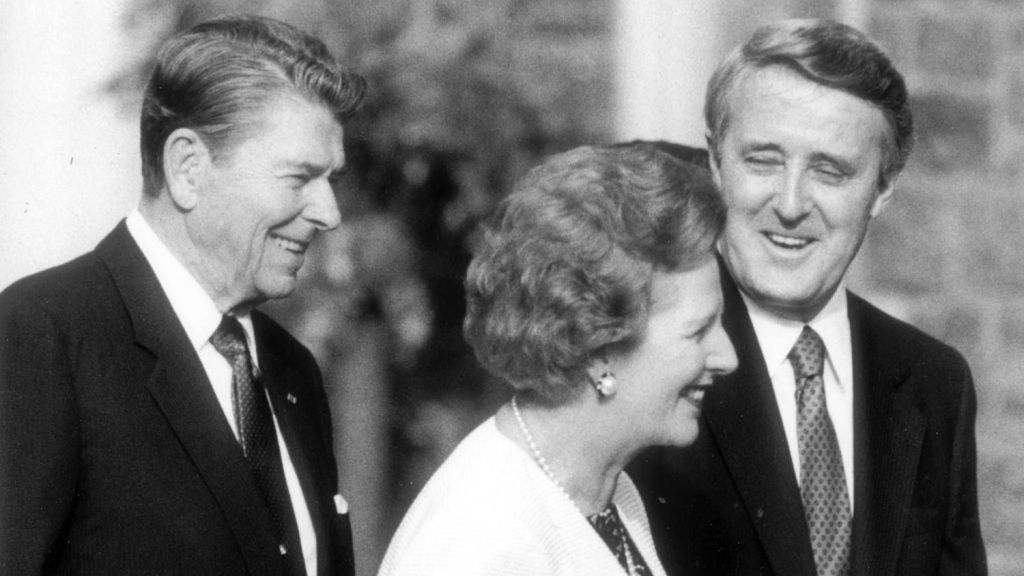
The leading figures who inaugurated the now widely disgraced, discredited and repudiated neoliberal era—AAIA heads of state for the U.S., the U.K. and Canada, Ronald Reagan, Margaret Thatcher and Brian Mulroney—after meeting each other on June 20, 1988.
By the 1990s, globalization was in full swing, seeing the establishment of the World Trade Organization, the European Economic Area single market, the introduction of the Euro, and the North American Free Trade Agreement (NAFTA) between the U.S., Canada and Mexico, among a slew of other free-trade agreements across the world. Meanwhile, the privatization of housing, health care and education in the imperialist countries wrested open new markets for the investment of capital and the realization of new financial profits.
As neoliberal attacks on labour pinched the working class and as opportunities for the lower sections of the petty bourgeoisie narrowed, the masses became more reliant on debt to make up the gap, with wages less and less able to cover the costs of the reproduction for the working class. Single-earner family households, over the decades, were necessarily replaced by households with two or more income earners just to keep up, placing increasing strain on working-class families and individuals. Over time, the dream of owning and paying off a home disappeared for more and more of the population. And if a mortgage on a home could be secured, it came at the expense of being “house poor” with every adult in the home being pushed into the labour force just to “make ends meet” (which is the common expression for a phenomenon Marx identified a century and a half ago as the pushing down of the proletariat to its most basic cost of reproduction). But eventually, the amount of consumer and mortgage debt would become too much for the masses, revealing these markets to be one giant speculative bubble.
When the exotic financial products of mortgage-backed securities15 came crashing down in the subprime mortgage crisis between 2006 and 2008, setting off the Great Financial Crisis, the central banks of the U.S. and its Western imperialist allies, including Canada, stepped in to shore up monopoly-finance capital—not the masses—to the tune of many trillions of dollars. The financial oligarchy and its institutions, we were told, had become “too big to fail.” In one of the greatest transfers of wealth in history, the costs of the financial crisis were socialized through the printing of money and reinflating those very same financial institutions with the interest-free money to cover their losses and to go on lending and investing in the world economy. Years later, these moves by monopoly-finance capital have led to a whole new wave of concentration of capital and wealth, as represented in the rise of private equity firms, hedge funds and asset management companies that control whole swathes of global production. (Think BlackRock, Vanguard, etc.)16
Ironically, a major part of the demand in the global economy sustained after the GFC came not from the continuously stagnating, increasingly financialized Western-imperialist countries, where capital was plentiful but struggled to sustain profit margins and economic growth in the productive sector, but rather from the rise of Chinese demand. Many a bourgeois economist has correctly identified that a major factor in propping up the global economy post-2008 has been the capital demands and consumptive power of China’s growing economy over the past two decades. From its real estate bubble to the expansion of domestic consumption, and through to China’s enormous global investments through its Belt and Road Initiative and related capital-intensive projects abroad, capitalist China has, ironically, been a major part of keeping the U.S.-led imperialist system afloat. After 2008, China pivoted from being the “factory of the world” to becoming a capitalist-imperialist power. The most significant evidence for this is the whole parallel international economic and financial architecture built up around and through China’s Belt and Road Initiative. For these reasons, the 2010s were pivotal in the escalation of inter-imperialist rivalry in the global economy, as the previously mutually beneficial and interdependent economic relationship forged between U.S. imperialism and the rising economic power of China (since the latter’s entry into the World Trade Organization in 2001) eventually transformed into the increasingly antagonistic contradiction that we have witnessed in recent years since the Obama administration “pivoted” to East Asia, pulling, dragging, as many of its imperialist allies and subalterns as it could along with it. Canada under Trudeau kowtowed to U.S. imperialism in 2018 when it arrested Huawei executive Meng Wanzhou amid the growing geopolitical rivalry, throwing Canada’s lot firmly in with U.S. imperialism’s strategic imperatives. U.S. imperialism’s support for the Western-aligned “pro-democracy” movement in Hong Kong, the tensions in policy over the future of Taiwan, the Trump 1.0 administration’s racist scapegoating of China for the pandemic and its origins, the subsequent trade war and protectionist measures levied against China, the industrial competition in innumerable sectors and all the other geopolitical contests and tensions playing out between the U.S. and China are all signs of the power struggle that has been unfolding between these two great powers in recent years. This contradiction is reaching a high point as the world waits with bated breath to see if the U.S.’s counter naval blockade around the Strait of Hormuz tries to stop Chinese tankers.
So we see that, while in the short term U.S. monopoly-capitalist firms benefited enormously between the 1990s and the 2010s from having branch plants and subcontractors in China (Apple, Tesla, Walmart, to name a few among innumerable manufacturers and retailers that have benefited American and western companies), which reaped major profits from the heavily exploited labour of hundreds of millions of Chinese workers, in the long term, this strategy eventually propelled Chinese capitalism into a position of both financial power and industrial supremacy, which is what makes it today the up-and-coming economic superpower.
Meanwhile, the protracted economic crises in the imperialist countries of low-growth, popular austerity, the decline of real wages, crushing debt, all of which have worsened since 2020, along with cost-of-living inflation since then, have engendered intractable social and political crises in the imperialist countries. These are conditions out of which, absent a communist vanguard party in the U.S. and in many other imperialist countries, fascism has been able to cultivate a mass following in the form of MAGA, and other fascistic and nativist movements have been able to grow, metastasize and take hold. These are the conditions out of which the most reactionary sections of the imperialist ruling classes are stepping forward with fascist solutions and the reactionary mobilization of the masses.
Since the Great Financial Crisis (GFC) of 2007–09, financial and economic crises have unfolded in quicker succession and growing impact. This has included the sovereign debt crises of the 2010s that gripped a number of the more peripheral European countries (the “PIIGS,” or Europe’s inner periphery—Portugal, Ireland, Italy, Greece and Spain), followed later by the great market manipulations and monopoly-capitalist interests intertwined with COVID-19 lockdowns. COVID-19 wasn’t only a calamitously mismanaged global health crisis, but a crisis that created the emergency conditions out of which monopoly-finance capital was able to swindle and manoeuvre on par with the scale of the bank bailouts—or “quantitative easing”—that followed the GFC just over a decade prior.
By the late 2010s, even the bourgeois economists were ringing alarm bells that another GFC-level collapse could be on the horizon. The inflated stock valuations and the concentration of obscene scales of financial wealth and power by sovereign funds, hedge funds and private equity firms, made possible by the bailouts and cheap money coming out of the GFC, began to appear as tenuous and inflated as real estate in the U.S. had become prior to the subprime mortgage crisis. No one could predict how the next economic collapse would unfold, however (except perhaps for the global consultancy firms that handed blueprints over to the world’s governments for how to manage the pandemic, whose role in COVID-19 pandemic management fuelled conspiratorial and right-libertarian reaction). COVID-19 lockdowns crashed stock markets temporarily, but were ultimately a boon for monopoly capitalists, like tech capital and the online retailing giants, as a huge unemployment wave was imposed and as lockdowns opened up new and greater markets for monopoly capital while huge swathes of the market were closed off to smaller firms and businesses locked out of their brick-and-mortar operations during lockdowns. This is why that part of the petty bourgeoisie that saw their businesses and small enterprises wiped out between 2020 and 2022 became a strong social base for movements like the Freedom Convoy and other right-populist or conspiracist movements that seemed to many to carry the deepest criticisms of, and pose the greatest opposition, to pandemic lockdowns.17 While both sides of the culture-war divide were busy becoming amateur virologists in those years, monopoly-finance capital was, once again, advancing its concentration, centralization and accumulation of capital at the expense of the many.
Here we are again, as humanity was just under a century ago, on the eve of what many predict will be a global depression, amid escalating inter-imperialist rivalry and war. Major economies are wracked with public debt like never before, as in the U.K., France and most especially the U.S., which carries almost $40 trillion in debt. How the U.S. will cope with and deal with this debt is one of the major questions facing the near-future of U.S. power. Losing the Petrodollar is certainly not a strategic shift that U.S. imperialism can afford or sustain without a significant shift from its position of preeminence in the world economy and domestic destabilization. This is what makes this war in Iran such a dangerous one, and U.S. imperialism’s moves under the Trump-MAGA regime so reckless. U.S. imperialism can’t afford a defeat or retreat.
However the world manages to come out of the present conjuncture of crises, however things resolve in the short term, we must mind the fact that the resolution of all of the last few crises has only permitted very short reprieves for monopoly-finance capital, giving them just a few more years of breathing room, at the expense of enormous costs for major parts of humanity and the world, and all while setting the stage for even bigger crashes later. This is the shape of today’s crises, or crisis, of capitalist overaccumulation.
2.4 The instability of U.S. imperialism at the centre of it all
Throughout 2025, it has been widely recognized that recession in the U.S. has been held back only by the hundreds of billions of dollars in capital18 ploughed into the data centre and AI boom over the past year, without which the U.S. would have already formally entered a recession. Many a bourgeois commentator has expressed concern at the AI boom being the next boom-bust cycle in the U.S. and, by extension, the world economy. Despite this frenzied investment, according to Goldman Sachs Chief Economist Jan Hatzius, AI contributed “basically zero” to GDP growth in 2025, despite soaring tech company valuations.19 However, a sure source of profits amid this tech boom is and will continue to be government contracts in the military, intelligence and repressive apparatuses, which U.S. imperialism under both the Trump 2.0 and Biden administrations have been and were only too ready to lay out the capital and conditions for.
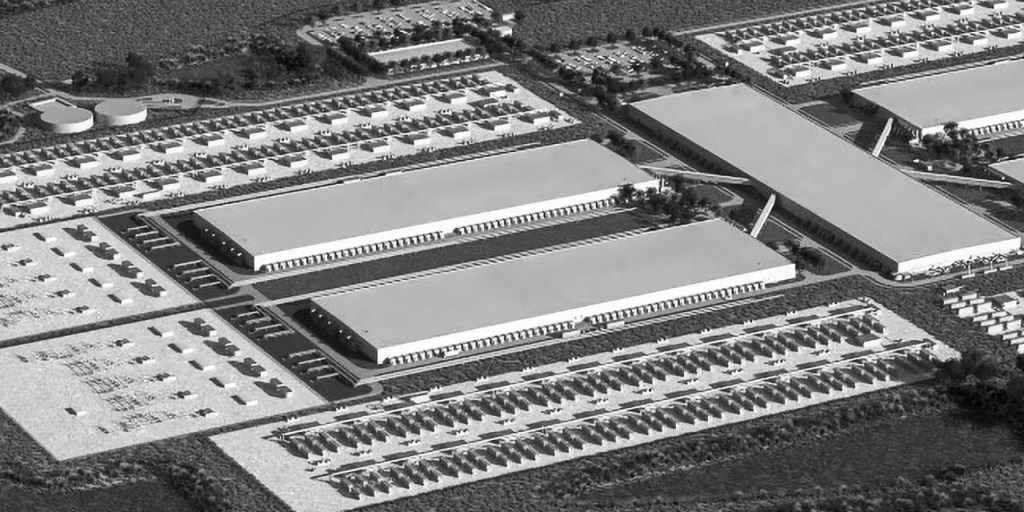
Like a large fractal image of the much smaller semiconductor chips and circuit boards that are packed and stacked into such data centres, here is an image of Meta’s $30-billion Hyperion data centre, its largest to date, which is now under construction in Richland Parish, Louisiana. Hyperion will require 10 natural-gas power plants, delivering 5.2 gigawatts of power (which, by comparison, exceeds Toronto’s peak power consumption of 4.6 gigawatts on its hottest summer days) and will consume as much water per day as 77,000 North American households.
This AI and data centre bubble ties in with inter-imperialist contradictions in the world today in ways that run deeper than idle capital in the hands of monopoly-finance capital seeking the next big fix. At present, the U.S. maintains only a very slight edge in the tech sector, particularly in its production of semiconductors and processing power. But the U.S. is quickly losing this lead to China. Following up on Biden’s protectionist measures to defend and accelerate the U.S.’s industrial edge in this field, Trump 2.0 has leaped ahead by making major direct investments in American tech companies (ironically, not so different from how the U.S.’s rival in the Chinese Communist Party and Chinese state manage and support their own strategic industries—but that’s a different story for a different time). It’s in this state-monopoly capitalist nexus of power relations developing between U.S. tech capital and U.S. imperialism, which has accelerated under Trump 2.0, that we find the highest echelons of the new fascism: new levels of surveillance, means for suppression and increasingly targeted, algorithm-driven ways to categorize, track and eliminate enemies within the broader development of a corporatist state-monopoly capitalism.20
There is a lot at stake for U.S. imperialism in maintaining its tech supremacy in the coming years, considering its otherwise declining strategic position. This is overwhelmingly apparent today in the high-tech, drone and AI-driven wars we are seeing in Iran and Ukraine. So, if the cost of slowing the strategic decline of U.S. imperialism is building data centres that are larger than small towns, that sap whole energy grids and spike the costs of energy for consumers and fuel the climate crisis, then so be it—no declining hegemon has ever exited history peacefully and without a bang.
In this context, Taiwan today has become yet another major geopolitical fault line in the world not only because China’s emerging power will allow it to more easily reclaim the rogue island back under its sovereign rule at some point in the future, but also because Taiwan is a manufacturing hub for the world’s most advanced semiconductors. Taiwan has for years been the world’s leading centre of chip production. With the U.S. aiming to constrain China for as long as possible from getting ahead in this crucial aspect of global tech production, losing control of Taiwan in the next few years would be a significant blow to U.S. imperialism and a significant gain for China. This is why the U.S. has been building out its domestic-production capabilities in this sector in the past couple years. The U.S. could not survive an inter-imperialist war for very long without the domestic industrial capacity in these high-tech forces of production. The wars in Ukraine and especially in Iran have demonstrated how significant these technological gains are for sustaining, fighting and prevailing in these protracted regional wars of attrition.
The enormous tension in the sum of the contradictions laid out above makes the global situation today dynamic and explosive. On the one hand, although a waning hegemon, the U.S. possesses the world’s leading military capabilities, and its financial system remains at the heart of the global economy, although more and more tenuously. On the other hand, it is confronted today by the more economically dynamic China, which possesses all the ingredients necessary to overtake the U.S. economy and power in most respects, soon, and in some ways it already has. Over the past couple decades of the relative decline of U.S. hegemony, the U.S. has failed to decisively win most of its military adventures and geopolitical contests, from Afghanistan and Iraq to Ukraine. Those geopolitical fronts and war theatres in which U.S. imperialism has gained anything at all have only come through enormous savagery, destabilization, and considerable blows to its international legitimacy, from the proxy war in Syria that eventually removed Assad and brought to power former al-Qaida and ISIS leader Jolani as the ally of U.S. imperialism, to the U.S.’s unwavering support for the genocidal and expansionist Zionist regime in Gaza, the brazen kidnapping of Maduro and now the war against Iran.
Meanwhile, as fuel costs skyrocket (with crude oil jumping by 40–50% to well over $100/barrel), Russia stands to benefit to some extent from the war in the Persian Gulf. On March 13, only two weeks into the war, Trump, incredibly, pulled back U.S. sanctions on Russian oil sales, allowing Russia to reap major rents on the global oil economy after it endured years of a war of attrition with Ukraine as well as economic sanction. As for China, the second-largest consumer of petroleum in the world after the U.S. and the largest recipient of oil coming through the Strait of Hormuz, it presently faces a serious threat in losing a close ally and a major oil supplier. Though China has become considerably more energy independent as it has shifted to renewables over the past decade of domestic capital investment, China does not want to see itself become dependent on U.S. energy if the war and destruction across the Persian Gulf carry on.
The last two decades of transition from one superpower in the world to two or more is what accounts for the incredibly dangerous geopolitical crisis that grips the world right now, the same kind of transition that brought about two world wars in the previous century. While U.S. imperialism has been “pivoting” to confront China explicitly through the previous three presidencies, from Biden to Trump 1.0 to Obama, the Trump-MAGA regime represents an acceleration toward more decisive, and potentially catastrophic, confrontation.
2.5 Internal contradictions in the U.S. drive its war machine
Amid these past decades of U.S.-imperialist decline and growing popular malaise, right-wing populism and fascistic movements have made major strides in the reactionary mobilization of the masses, far more than any of the revolutionary mobilizations of the masses, which have been only momentary, spontaneous and unable to sustain in the absence of a formidable and proven Communist Party that can lead the masses, or at least sections of it, and accumulate revolutionary forces.
In Canada, where the accumulation of revolutionary forces has been barely more advanced than across the rest of the imperialist countries, there are urgent possibilities in front of us, and these can be seized upon with the application of disciplined proletarian-revolutionary organization. Where the revolutionary mobilization of the masses is fully possible but not being organized, then we see (and expect) the reactionary mobilization and organization of the masses to unfold instead. The Trump-MAGA regime in the U.S. in the present historical conjuncture described above has marked a dangerous leap in the reactionary mobilization of the U.S. masses. This constellation of forces makes the possibility for revolutionary explosions and advances real and full of tension.
Apprehending the depth and extent of the crisis, or crises, of U.S. imperialism today, as we have attempted to do above in the broadest strokes, has been necessary to make some sense of the seemingly chaotic and frantic moves by U.S. imperialism in the world today. Despite what many liberals in the U.S. would have us all believe, the present woes of the U.S. are not reducible to Trump (or Netanyahu) and their monstrous personalities. It is the other way around. The construction and mobilization of the MAGA camp over the past decade have captured and weaponized popular disaffection and grievances into a movement of reactionary economic populism with vague, mythical dreams of recasting America and U.S. imperialism. This has (apologies) trumped and displaced the previously hegemonic neoliberal consensus. We have the Democratic Party in the U.S. and the Liberals in Canada to thank for playing no small part in the emergence of right-wing reaction, as these two parties have spared no costs in recent decades to suppress such a force of economic populism from emerging in their own bases, and advance their own neoliberal governance, which they did while plastering the most vapid identity politics over the most regressive policies. It was years of these kinds of neoliberal governance that fuelled the right-wing reaction that is now laying siege to anything it can tag or associate with EDI.
After learning the lessons of the first Trump administration, the Trump-MAGA regime took to the offensive immediately upon coming to power in January 2025. In the hearts and minds of its “America First” social base was the belief that better days were coming for the American people (or at least for white American people) under Trump. Instead, year one has served up further social decline, political instability, economic chaos, new wars and further fascistic developments. Trump’s radical departure from this isolationist foreign policy agenda and the disastrous domestic policies have only deepened the contradictions and crises of American society. The working class and popular masses in the U.S. continue to see their costs of living soar and living standards sharply decline, while the crypto, tech and other monopoly capitalists grift and thieve out in the open like never before.
In the year or so since Trump’s return to the White House, the Trump-MAGA regime has been bulldozing anyone and anything standing in its way. After the pardoning of nearly 1,600 of the “Jan. 6” MAGA putschists on the first day of Trump’s second administration, the emerging Trump-MAGA regime wasted no time in forcing its agenda on both the domestic and international levels. Domestically, we’ve seen repeated shutdowns and mass layoffs of whole sections of the U.S. government, which has aimed at both subduing opposition and dismantling departments that are more in service to the people than monopoly capitalism. Meanwhile, it’s cut taxes for the rich like never before, which is the downstream outcome of slashing public systems. These attacks on the masses have been paired with dozens of other illegal and unconstitutional moves by the Trump-MAGA regime, which in the course of the first year were largely rubber-stamped by the Republican-stacked Supreme Court. The Trump-MAGA White House’s unconstitutional arrests, detentions and deportations of hundreds of thousands of people have shocked popular opinion and shaken up some of Trump’s base, especially as ICE violence began taking out U.S. citizens. The federalizing of the National Guard and its deployment in Los Angeles, D.C. and Minneapolis constituted egregious power grabs and armed shows of force by the Trump-MAGA regime. The extent of Trump 2.0’s unbridled breach of the “rule of law,” along with the inability of the U.S. constitutional order to limit and constrain it,21 warrants us considering that U.S. imperialism has entered a qualitatively distinct moment in its evolution (or rather, degeneration), which can only be considered a step in a fascist direction.
The Immigration and Customs Enforcement (ICE) wing of the repressive apparatus has added roughly 12,000 new deportation officers in 2025, which more than doubled its officers from 10,000 the year prior. Many of these new officers were lured with signing bonuses of up to $50,000, paid out of the some $73 billion in new funding allocated to the agency last year by the Trump-MAGA regime. This virtually private paramilitary force under the command of the Trump-MAGA regime, taken with the unprecedented acts of the Executive Branch’s federalization of the National Guard, and the threats made or materialized against the Trump-MAGA camp’s political opponents (Democrats broadly and anyone that can be identified with the Left, especially since the assassination of Charlie Kirk22) have all been signs of the shift into some kind of fascism in the U.S.
But as the masses have pushed back (like in Minneapolis) and have continued to seethe with indignation, as the Trump-MAGA camp is tripped up and falls within its own web of contradictions (as demonstrated with the Epstein files) the domestic situation in the U.S. is fully pregnant with contradictory and opposing possibilities.
After Venezuela, Trump might have seriously thought that a repeat in Iran could keep wind in the sails of his imperiled administration—except now the war has just blown up an even bigger crisis on top of the already-explosive domestic contradictions (the same goes for Netanyahu in Israel). Despite the detainment and deportation of hundreds of thousands of people already, U.S. unemployment numbers continue to rise, reaching levels not seen since the end of the COVID-19 pandemic. Meanwhile, the main investments propping up the American economy and stock market today are data centres and its related infrastructure that can’t save the U.S. economy in the short term because data-centre construction and operation yields nowhere near the level of long-term employment that previous industrial booms have yielded. Additionally, as we’ve all been told, this infrastructure is designed to displace and replace a significant part of the labour force. So, the U.S. economy faces no real way out of its domestic economic crises, even in the short term, making the danger of fascism, imperialist wars of aggression and inter-imperialist rivalry and world war that much more real in the present conjuncture. There is no telling how much bigger a disaster Trump and Netanyahu’s disastrous Iran war will become. But we can be certain that the heightened contradictions in the present world will not disappear in the coming months and years, not without a significant reorganization of the world—by war or revolution.
2.6 The spectacular demise of the rules-based international order
Turning our attention to the rest of the world over the past year… We have seen the Trump-MAGA regime smash through the “Washington Consensus”23 that U.S. imperialism imposed on the world over the preceding 30 or so years. The main expression of the U.S.’s sharp turn against the globalized world order has been its trade war and the imposition of universal tariffs on all countries of the world. One of the main justifications advanced by Trump and his cabinet members for global tariffs has been to balance the U.S.’s long-running trade deficit, and maybe also rake in hundreds of billions of dollars in customs revenue (essentially, by taxing its own consumers). In the lead-up to and in the wake of the “Liberation Day” tariffs of a year ago, this gave the U.S. greater leverage in its bilateral relations with all countries across the world who wanted access to the U.S. domestic market, which remains the top export destination in the world economy. While liberals can only see in Trump moves of a demented megalomaniac, a more materialist explanation of the situation reveals that the policy moves of the Trump-MAGA regime as not just that—even if that is one level of things—but also the urgent and desperate attempts of a section of the ruling class in the U.S. to shore up its power. Has it all worked? It’s no so clear. Calamity is the outcome, anyway.
Paired with its economic war against the world, the Trump-MAGA regime’s threats to its allies (Canada, Greenland, Europe, NATO…) and its shake-up of its political-military alliances is the other major aspect of its shifting relationship to the world. Trump 2.0’s tariffs and economic threats definitely played a part in forcing its NATO allies and vassals to assume a far greater share of the burden of running the capitalist-imperialist world system when they agreed to push up their military budgets to 5% of their GDPs. The push for NATO rearmament has been intended to push Europe more into rivalry and war with Russia, thereby allowing the U.S. to better pivot to and focus on its confrontation with China, while also preparing those allies to pull their weight in an inter-imperialist war. For years, NATO urged its member countries to push their defence spending up to 2% of GDP. But in the wake of Trump’s global trade war, in the spring of 2025 NATO succeeded in railroading its member states into assuming a mandate to push up military spending to 5% of GDP. Some may see this as a “military Keynesian” solution to the problem of economic stagnation in the West. But given that the technical composition of militarism and military production today is not what it was during the 1930s, or even during the Cold War, these military expenditures are not likely to yield the kind of economic recovery that pulled the U.S. and Western powers out of the Great Depression and sustained growth well into the 1960s.24 Since the 1980s, the number of jobs in the U.S. in military production has dropped by 2/3 from 3 million to 1 million. Meanwhile, the shift in public expenditure to war and militarism will further gut socially useful forms of public spending, which is precisely what’s happening in Canada now.
Another plank of the Trump-MAGA regime has been to seize control over the U.S. Federal Reserve. In the opening months of Trump 2.0, the Trump-MAGA regime bullied or sacked opponents at the Federal Reserve, like Chair Jerome Powell and Lisa Cook, while pushing for a policy change in the direction of lowering interest rates. The prevailing fear in the financial world is that by giving Trump control over the Fed, and therefore the USD printing press, the regime risks exacerbating inflation in the U.S. and in the world economy by giving Trump more control over the global financial system. Over this past year, the U.S. dollar lost about 10% of its value, as more parts of the world economy move to divest from a devaluing USD and riskier U.S. Treasury bills. This trend, if it continues, will elevate the cost of U.S. borrowing within the world economy (because “T-bill yields,” what the U.S. would have to pay out, would necessarily rise). In turn, the accumulation of U.S. public debt would accelerate, further undermining U.S. global financial hegemony and the status of the USD as the world’s reserve currency. This may be why Xi Jinping announced in January 2026 that China would begin taking measures to see the renminbi become the world’s new reserve currency amid the developing trend worldwide away from the U.S. dollar over the course of 2025.25 But the de-dollarization of the world economy would be a catastrophic shift for all imperialist powers and capital tied to U.S. financial interests, including China (which is why it hasn’t happened yet). These are the threats and liabilities—financial, economic and geopolitical—that the Trump-MAGA regime faces in managing and mitigating the declining U.S. imperialist hegemon right now. This is a major part of what accounts for the U.S. going rogue from the international order that U.S. imperialism itself constructed over the past few decades. Trump’s trade war, which is coercing its “allies” and other trading partners into better terms of trade for U.S. imperialism, is just the U.S. trying to recuperate some of the ground it lost in recent decades within the capitalist-imperialist system. It’s anyone’s guess whether these desperate and urgent moves by the Trump-MAGA regime will stabilize U.S. imperialism in the short term, or accelerate its decline, but a growing chorus of imperialist figureheads, technocrats and world leaders have been suggesting that it could indeed be the latter. More and more of the world, including the U.S.’s erstwhile allies, are looking to China as the more stabilizing force in the present capitalist-imperialist world. The contradictions that ensnare U.S. imperialism today, and by extension the world, are unavoidable and lie at the heart of the now-exploding contradictions.
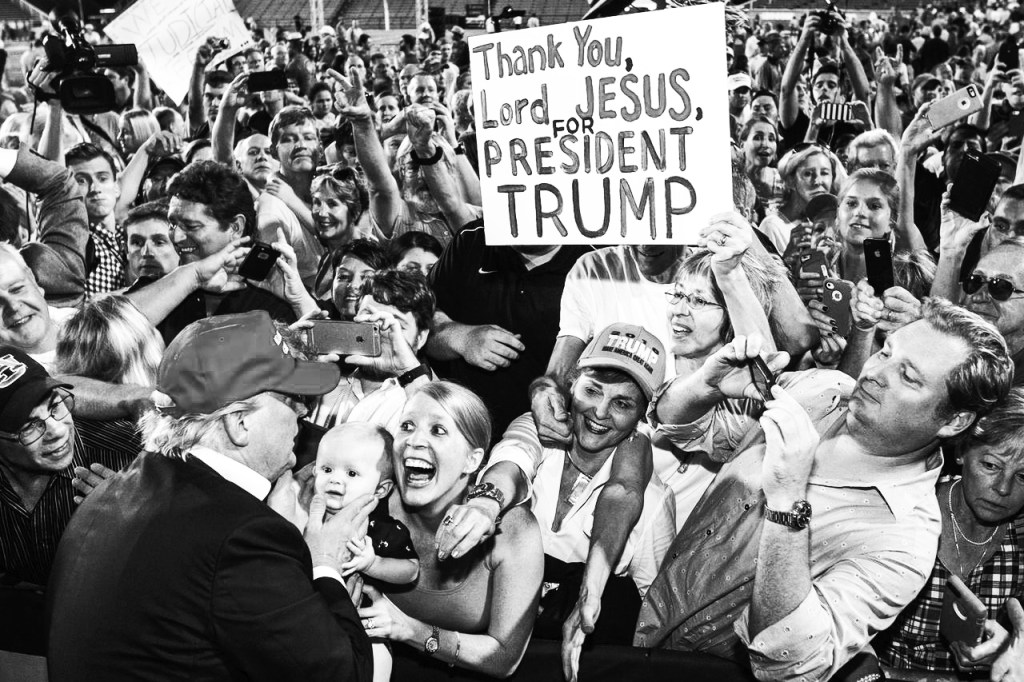
3. Canada—At the Table and on the Menu
While the January 2025 New Year’s statement in Railroad #1 stated that “the deterioration of the international situation [could not] be ignored” and recognized that we were “witnessing the acceleration of inter-imperialist contradictions on a global scale,” we did not foresee, like most people, the pace with which and extent to which these inter-imperialist contradictions would shake up (though not yet break up) the Western imperialist pacts.
Adding to what’s already been said above about the Trump-MAGA regime’s desperate campaign to arrest or reverse the strategic decline of U.S. imperialism, over the span of the last year or so, the White House has treated its allies with threats of (i) the U.S.’s departure from NATO if other members do not ramp up their share of military expenditures to 5% of GDP (and more recently, to fight in the war against Iran) and (ii) with invasion or annexation, specifically in the cases of Greenland and Canada. Finally, (iii) amid the U.S.-Israeli war in Iran, the global crisis arising from Iran’s closure of the Strait of Hormuz26 has further divided NATO, which Trump has continued to verbally attack, raising questions among its own members about the future of the military pact.27
In this tumultuous global situation, Canada has taken on the airs of betrayed ally, an identity the Carney government has cultivated while charting a course for the Canadian bourgeoisie. Most of the Canadian bourgeoisie seems to want to carry on with the existing capitalist-imperialist world system, even as this system is on the brink of even more war. In the present conjuncture, Canadian imperialism is both in contradiction with and utterly dependent on and still allied to U.S. imperialism.
While Canada endured the on-again, off-again threats and taunts of being annexed, invaded or dismembered by the U.S. over much of the last year, even more threatening to the Canadian bourgeoisie as a whole has been the secessionist movements in Alberta and Quebec that have emerged out of regional dissatisfactions both with the Canadian federation in general and with the governing Liberal Party in particular. Some of these dissatisfactions are legitimate, while others have an utterly reactionary character—they are all being seized upon and integrated into different kinds of reactionary politics in different parts of the country. This is the powder keg Canada has become while it faces pressures from its criminal allies, the U.S. imperialists and the fascist Zionists, to join their desperate and murderous conquests. There are many ways things could unfold in the coming years. In any case, the proletarian revolution in this country will have to find its footing and advance on increasingly perilous ground.
The single greatest factor in Canadian politics over the past year has been the Trump-MAGA regime coming to power and the subsequent downturn in U.S.-Canada relations that followed it. Sure, the snide “Governor” jabs by President-Elect Trump were already being made in late 2024 against the (by then) lame duck prime minister Justin Trudeau. But most people at the time would have brushed off Trump’s remarks as the kind of shit-talking we have all come to expect from him. After all, how could Trump resist kicking down on Trudeau’s Liberal government while it was nearing its collapse in late 2024? Remember that Trudeau’s government held on to power for almost a decade with its woke-branded neoliberal governance, which makes it the longest-running government in the Western world over that tumultuous decade. But as Trump took office for the second time, pushing aside a bankrupt, genocide-sponsoring Democratic Party that offered no alternative for the people but more (neo)liberalism, it unleashed its global trade war against foes and friends alike. The annexationist remarks against Canada became louder and more frequent, with Trump’s threats moving from bluster to increasing possibility. In response to the materializing threat of the Trump-MAGA regime, the political conversation in Canada in the first quarter of 2025 fixated on these new threats emanating out of the White House. Suddenly, incredibly, the expression “U.S. imperialism” was being discussed by the national broadcaster and in the bourgeois press like never before. Not surprising, however, is how short-lived this “anti-imperialism” in Canada’s bourgeois press was, and how quickly it disappeared when it came to the kidnapping of Maduro and the onset of the war against Iran.
In the years immediately preceding Trump 2.0, our international readers should be reminded, Canada was also experiencing the proliferation of right-populist opinion, dissatisfaction and opposition to the ruling Trudeau Liberal government. For years, Conservative Party leader Pierre Poilievre had been leveraging and pushing on this rightward shift in Canada’s political discourse to re-energize the base of the Conservative Party, and his position within it, in preparation for the demise of the Trudeau government. Trudeau’s handling of the COVID-19 pandemic, which was experienced differently by different sections of the population (and agitated a major section if it), along with his recruitment of millions of new international students and workers into Canada during these years, followed by the inflation of 2021–23 and the dramatic worsening of the housing crisis, all combined to discredit and assure the collapse of the Trudeau government and the defeat of the Liberals in the coming federal election. Poilievre tapped into and helped cultivate the same sorts of right-populist and conspiratorial movements that, south of the border, made up a major part of the MAGA movement. However, Poilievre channelled all of that into his own brand of right-populist conservatism. By late 2024, victory for Poilievre’s Conservative Party in the coming election not only seemed certain, but it seemed like the federal Conservatives might even clinch a majority government after a decade out of power. At the time Trump was re-elected in late 2024, a lot of Canadians—ready or not and like it or not—were anticipating their own kind of rightist-reactionary government to be in power at some point in 2025 right alongside Trump 2.0.
But then, as the Trump regime oriented itself antagonistically against Canada and its other allies, with global tariffs and repeated threats of annexation, the Liberal Party turned on a dime and redefined itself. It scrapped the by-then bankrupt Trudeau brand, and with the help of the bourgeois press and other outlets of respectable public opinion the Liberals fomented a new wave of Canadian nationalism. Through the first half of 2025, this new “elbows up” Canadian nationalism was forged in the popular imagination as Canada finally standing up to the U.S. against the spate of insults and threats emanating from the Trump administration, which this Canadian nationalism framed as a betrayal of Canada’s contributions to the Anglo-American imperialist pact.
As the chaos and threats of the Trump regime unfolded over the past year, the culture-war divisions that had been gripping Canada (just as much as they had been in the U.S.) over the preceding years were pushed into the background by this new wave of national concern. With no small amount of irony, Trump openly stated his preference for the Liberal Carney against the right-populist Poilievre during the 2025 federal elections in Canada, giving Carney a headwind in the polls leading up to election day. Then, in one of the most unanticipated turns of events in the history of Canadian politics, the Liberals secured a near-majority in Parliament in the April 2025 federal election, which has by mid-April 2026 (as we were completing this analysis) become a majority after a series of surprising floor crossings and won by-elections.
The Liberal Party’s rebranding operation over the past year and a half wouldn’t have been possible without the liberal bourgeoisie and its media apparatuses, which embraced Carney and his career serving monopoly-finance capital in the AAIA countries, across both the public and private sectors, as the kind of man for the job of Prime Minister in a time of crisis. The Canadian electorate bought it—what alternative did they have? Poilievre lost steam in popular opinion as a boomer conservatism reached for the experienced conservative banker put in front of them.
What’s been the track record to date of this supposed saviour of Canada, which some sections of the liberal-bourgeois press in the Western world have gone so far as to don a leader of the resistance to the new Trumpian world order? Carney’s speech at the World Economic Forum in January 2026 came as a bold affront to the Trump regime in that specific moment, revealing the shifting balances in the transatlantic imperialist alliance. But it must be underscored that Carney’s program has been nothing more than the continuation of neoliberal-imperialist globalization of the past four decades, but accelerated and intensified with more militarism, corporatism, emergency preparations and repressive laws. This is the state of Canadian imperialism amid the calamitous collisions that are unfolding in the world. In this situation, the Carney government is struggling to remain an ally to U.S. imperialism, and is probably just trying to wait out the rest of the Trump administration.
The “elbows up” nationalism has since been channelled into the new militarism mandated by NATO’s 5% spending targets, which Canada has now adopted to both appease U.S. imperialism and also bolster its strength in its alliance to it. Most of the Canadian bourgeoisie is not interested in seeing its domestic market carved and swallowed up by American interests. What Canada’s monopoly-financial capitalists want is a continued coexistence with U.S. imperialism within the AAIA and NATO frameworks, even if that alliance looks different than it has over the past 80 years. These policies are what makes the Carney Liberal government a perfect representative for the Canadian bourgeoisie’s interests at this point in time.
It’s true that Carney’s government has been among the most vocal of the U.S.’s erstwhile allies in opposing the Trump-MAGA regime’s disruption to the multilateral international system. Carney’s Davos speech appealed to other middle powers to move on from the destabilizing international order by reforging their relations with each other. The Carney government’s independent initiative amid Trump’s tariff chaos is also evident in his Liberal government’s scaling back of diplomatic tensions with China and India, both of which he signed new trade deals with. New trade deals have also been made with Japan, Australia, Qatar, UAE, South Korea, Malaysia, Indonesia and Mexico, and multiple other agreements are in the works. Some of these deals have created real tension with U.S. interests, such as Carney’s dramatic lowering of the tariff on Chinese electric vehicles entering Canada from 100% to 6.1%, and agreeing to take 49,000 Chinese EVs in exchange for China lowering its 85% tariff against Canadian canola to 15%.
But along with this independence comes Canada’s continuing overall unity with U.S. imperialism. Carney’s government continues to back, at least diplomatically, the U.S.’s ongoing imperialist endeavours. This was the case with Canada’s approval of Maduro’s kidnapping and the seizing of Venezuela’s oil, followed by Canada’s basic approval for the U.S.-Israeli war on Iran. With the Canadian imperialists still hitched to the wagon of American imperialism, Canada has all but signed up for any near-future military and geopolitical catastrophes that the fascistic Trump regime, or any future administration of U.S. imperialism, embarks upon.
With Canada’s adoption of NATO’s 5%-of-GDP military spending mandate, what followed later in 2025 was the cutting of some 40,000 jobs from the federal public service, while the Canadian government shifted its spending toward its new military-industrial priorities. Canada is also taking initiative among its NATO allies for the creation of a new rearmament and “defence-industrial” bank, reportedly to be headquartered somewhere in Canada. The creation of this bank would make Canada a financial capital of the Western alliance in its drive into militarism. As we were writing in late March 2026, Canada hosted negotiations in Montreal for the creation of this bank. The combination of these financial and military-industrial developments will soak up hundreds of billions of dollars in investments in the coming years for finance capital, some part of which will get invested in Canada’s militarizing economy.
Complementing the militarism of the Carney government is its corporatism. The Carney government has also leveraged whatever remains of the bourgeois-nationalist sentiment invoked in the first part of 2025 to force through a whole new series of “nation-building projects.” While arguments of economic sovereignty and the need to tie together Canada’s internal market and industrial regions more effectively through internal trade and infrastructural development have some material basis, we cannot overlook how these projects will be a boon for Canada’s monopoly capitalists far more than for the people. The passage of Bill C-5 in the federal parliament and Bill 5 in the Ontario legislature in 2025, for instance, are key examples of how Canadian levels of government have utilized the present trade crises and tensions with the U.S. to ram through infrastructure and resource-extraction projects that trample over the rights of Indigenous peoples, the interests of workers, rural communities and the environment.
But not all of Canada is going along with the new conservative brand of Liberal governance. In the Prairie provinces, especially in Alberta and across rural Prairie regions, the populist right is much stronger and more concentrated than anywhere elsewhere in Canada. The Liberals’ re-election has put even greater winds in the sails of Prairie disaffection and Albertan separatism.28 Alberta premier Danielle Smith has committed to permit a referendum to proceed if a citizens’ initiative petition gets 178,000 signatures during a four-month period, after her government updated legislation earlier in the year to allow referendum questions on such a petition to proceed without having first been assessed for their constitutionality. The floated Alberta referendum questions are dominated by anti-immigration proposals: to increase Alberta’s control over immigration, to decrease migrants to Alberta (a federal jurisdiction) and to remove social programs that Alberta controls for migrants and constitutional questions about whether more power should devolve to Alberta as a province, possibly paving a way to secession.29 At present, it is estimated that about 26% of Albertans support separation, but that number shoots way up when we look at the rural prairie regions.
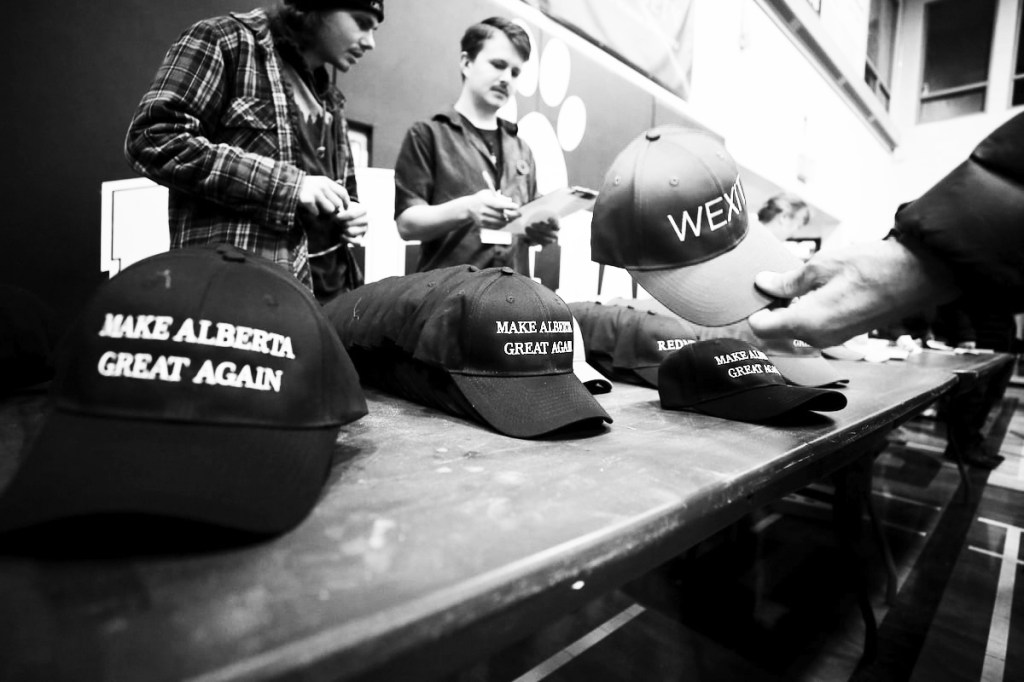
Meanwhile, on the other side of the Canadian federation, amid the collapsing, corrupt CAQ party in Quebec at the provincial level, Quebec reactionary and separatist party, the Parti Québécois, has been gaining popularity, especially given the absence of a proletarian-socialist alternative for the working class and popular masses. Framed in the past as a centre-left party, the PQ has redirected itself over the last decade toward a conservative nationalism that has pushed anti-immigration laws and agitated against the Muslim population. The PQ is promising to hold another referendum on Quebec’s separation from Canada should it win the October 2026 election.
It’s no surprise that both referendum movements have been mobilizing anti-immigrant sentiments, seizing upon the shifting public opinion over the past few years against the record levels of immigration to Canada following the COVID-19 pandemic. While the Carney government has not so brazenly attacked the basic rights of working immigrant masses in the ways we are seeing in the U.S. under the Trump-MAGA regime, Carney’s parliament is ultimately orienting its policies in a similar direction, albeit in more liberal ways. Carney’s “Immigration Levels Plan” sets out to achieve “sustainable immigration levels,” by reducing the number of temporary residents in the country by nearly half from 674,000 in 2025 to 304,000 by the end of 2027. Canada has experienced a 74% reduction in study permits since January 2024, with 2026 numbers already half that of 2025. Hundreds of thousands of workers in Canada in 2026 are seeing their status expire, driving many into losing their status. Deportations are now at a record high, with the Canada Border Services Agency (CBSA) currently deporting 400 people a week. The June 2025 Strong Borders Act gives new powers to law enforcement to intervene in immigration, with funding for the CBSA to enforce it. Carney has committed to reduce the temporary resident population from 7.4% of the country’s population (as of 2024) to less than 5% by the end of 2027.
One might think that Carney’s immigration policy changes would appease reactionary politics in Alberta, but his liberal brand of militarist populism won’t be enough in itself. Alberta has long been in conflict with the federal government over oil revenues, from the National Energy Program in the 1980s to the pipeline conflicts in the 2010s. With the signing of the “Canada-Alberta Memorandum of Understanding” in November 2025 that would move Alberta’s oil and gas to Pacific markets, Carney has been working to woo Albertan public opinion back into the federal fold.30 The B.C. premier, feigning Indigenous consultation concerns, expressed consternation at not being included in the MOU. B.C. will need to officially buy in, but it’s clear they are united with Alberta’s resource development goals and aim to be a cornerstone of Carney’s new “nation-building” project, which has already fast-tracked six major energy and mining infrastructure projects.31 These include two major electricity projects, a hydroelectric plant in Nunavut that will dam two rivers, and the twinning of an electricity transmission line from interior B.C. to the B.C. coast. The third project will rely on this energy: a liquefied natural gas export facility on B.C.’s coast. The last three projects are open-pit mining developments: nickel sulphide north of Timmins, Ontario, graphite in Saint-Michel-des-Saints, Quebec, and tungsten and molybdenum in Sisson Brook, New Brunswick. At least seven more projects are being considered. Many of these have First Nations partnerships, marking another Carney-era shift—from reconciliation and consultation to making business deals.
These infrastructural, resource extraction and military-industrial developments will line the pockets of Canada’s monopoly-finance capitalists, while propping up a small section of Canada’s population in the coming years. But conditions are looking much grimmer for the vast majority of the population. Despite slowing growth of the immigrant labour force, unemployment continues to rise, with the official rate hitting 6.7% in February 2026, during which Canada lost some 84,000 jobs.32 Meanwhile, the condo market has plummeted in the big cities over the past couple years, while higher interest rates are pressing down heavily on mortgage holders, many of whom are working-class or lower-petty-bourgeois families who are massively in debt and possibly even “underwater” right now (in other words, owing more money on real estate than its present market value). Even the “experts” have begun sounding the alarm about the fact that the single biggest capital asset class in Canadian society is presently deflating. The knock-on effect will be rising foreclosures and defaults among the heavily indebted borrowers, many of whom will have seen their small savings wiped out if they bought at the top of the market. These are the existing trends, even before the fallout from the global energy crisis really begins to make itself felt.
Amid the crises looming and already here, it is entirely possible that one or both of these separatist movements could win their referenda, with Quebec currently more likely than Alberta, according to polls. The geopolitical earthquakes and tsunamis of political tumult we anticipate in the coming months and years could tip the scales in favour of one or both of these separatist movements. How would the U.S. respond to this? In the case of Alberta, this has already been a matter of open discussion in the MAGA movement, right up to Trump’s cabinet. While U.S. imperialism doesn’t seem to be very interested in absorbing a French-speaking population, Canada’s oil wealth might just be enough. While it is not clear that the majority of the Albertan separatist opinion is looking to be absorbed by the U.S., a secessionist Alberta would certainly rewrite the geopolitical situation of Canada.
How would the Canadian state respond to developments heading in any of these directions? Would it repress these developments by force?
These referenda could also fail, and Canada could become more united amid the destabilizing force to the south of it. That unity could have a progressive character, but it is more likely, under the reigning class relations, to have a fascistic character. Canada is already making preparations for stronger repressive measures and a more robust repressive apparatus, as it has been doing since October 7, 2023, with the criminalization of dissent against the movement in support of Palestine. This is in addition to the other forms of repression that are likely to intensify, like the doxxing campaigns by Zionists and fascists, police harassment and so on.
There is virtually no way forward that isn’t beset with war and strife, with fascist movements gaining more ground or taking power. The class struggle is intensifying. Popular suffering is guaranteed and already rampant. All this makes the ground for proletarian-socialist revolution that much riper and more urgent.
4. Grasp the Revolutionary Imperative
4.1 Looking back to comprehend the battles ahead
Situated as we are in an imperialist country, some of the most crucial lessons for us to apply to the current conjuncture lie in those of the history of the Communist International in Europe in the 1920s and 1930s. The Communist Parties of that period were on the front lines of opposing the spread of fascism in Italy, Germany, Spain and many other countries, winning over vast segments of the working class through their mass work and agitation-propaganda, building the United Front and countering the penetration of fascism among the popular masses. We still have much to learn from these methods of work.33
When inter-imperialist contradictions erupted into open war and when fascism attempted to destroy the socialist Soviet Union and put an end to socialist construction in the early 1940s, these same parties carried out armed struggle, building partisan armies throughout Europe. Outside the main imperialist centres, in Central and Eastern Europe, these armed struggles led to the founding of the People’s Democracies. In Western and Southern Europe, they ended in compromises with the bourgeoisie, which granted limited economic victories for the working class but also set the stage for the development of capitalism-imperialism, as we have outlined above, to drag the world right back to the brink of fascism and another calamitous global war.
The point is that these Communist Parties were large and powerful organizations. Having been constituted from the wreckage of the discredited Socialist Parties of the Second International, the Communist Parties of the Third International came into being with many thousands of members, with a pre-existing socialist press, with skilled organizers, agitators, propagandists and leaders ready to take up the necessary revolutionary work and with a significant mass base among the working class. The broad enthusiasm among the advanced workers for the October Revolution enabled the Communist Parties to expand their influence rapidly. As the fascist menace rose, the Communists established combat organizations of various shapes and sizes. In Germany, for instance, the Red Fighters’ Front was a well-organized militia with tens of thousands of members who fought rival fascist and social-democratic paramilitaries in defence of the Party. In general, we must say these parties were well versed in clandestine work, if only because in that time even simple labour organizing demanded the use of clandestine methods. We point this out not to disregard the political and practical limits of a good number of these parties, like the electoralist deviations and very limited degrees of Bolshevization of some of these parties,34 but to underline the resources that they had at their disposal.
To this, we must add that the Third International was led by, and benefited from the assistance of, the socialist Soviet Union. Material resources and advice from seasoned revolutionaries were available to Communists in the capitalist countries. When the National-Socialists seized power in Germany, for instance, many German Communists found refuge in the U.S.S.R. In the end, what was most instrumental in overcoming fascism in continental Europe was the heroic war effort of the Soviet Union and its Red Army.
This brings us to where we’re going with this overview of the past: despite the relative strength of the Communist Movement from the 1920s to 1945, fascism was only defeated, war was only ended, at the cost of enormous sacrifices. By the end of that period, the European parties had been driven underground—in Italy starting in the second half of the 1920s, in Germany in 1933, in Spain after the defeat of the Republicans, in France at the beginning of the war, et cetera. Tens of thousands of revolutionaries had been arrested or executed. The Soviet Union suffered enormous human and material losses. Strong revolutionary organizations, the likes of which simply no longer exist in any imperialist country today, allied with the first socialist country in human history, could only wrest victory from the jaws of defeat at such tremendous cost.
On the coastlines, under the prairie sky, from the mountains to the tundra: the tasks before us
It is difficult for many activists in the imperialist countries to wrap their heads around the fact that all of this occurred within living memory. The clash between fascism and socialism that we have described does not lie in some far-away past, but only a few generations back. Similar conditions to the ones that gave rise to the two previous world wars and to the rise of fascism are here again. As we have made clear above, we do not think that fascism immediately confronts us in Canada, but we do think conditions will continue to deteriorate as the bourgeoisie resorts to fascistic tactics and as class unrest intensifies in an organized fashion and is methodically undertaken.
Reflecting upon the experience of our Communist forebears in the 1920s and ’30s reveals a stark truth: we are not prepared for what lies ahead. The situation may demand more of our subjective material than we assess ourselves capable of turning over. But we must step forward anyway, because more wars, economic downturn and fascist threats approach us, among other crises cascading across the capitalist-imperialist world system. The international proletarian revolution may be the only thing that can divert humanity from these calamities. Certainly, parts of the oppressed world may be the first to throw off the yoke of imperialism by themselves once again (and this is precisely what a number of communist-led people’s wars and revolutionary movements in the oppressed countries have been fighting for decades in the Philippines, India, Turkey/Kurdistan, and so on). Perhaps the Axis of Resistance will deliver a significant blow to U.S. imperialism and Zionism and their vassals and allies in the Arab world. But we Communists in the imperialist countries would be cowards, shrinking from our historic duties, if we sat around waiting for revolution to happen in some far-off places. The only guarantee we have in halting the present escalation of war and the march toward militarism and fascism, in escaping from the clutches of this crisis-ridden capitalist-imperialist world system, is a major popular revolution that breaks the chain of imperialist unity across the NATO countries, that smashes the grip of monopoly-finance capital in at least one of the countries in the NATO alliance. This would have world-historic consequences. The subsequent counter-revolution could drag the whole of the Western-imperialist alliance into a spiral of counter-revolution and further revolution.
For decades, the oppressed countries have been brimming with popular upsurge, revolutionary possibility and, in some cases, protracted people’s wars. But these alone have not yet been enough to face and overcome the genocidal onslaught of the imperialist powers, as the unmatched heroism of the Palestinian people, the Lebanese people and the Yemeni people today are showing us. It would be utterly cowardly for anyone calling themselves a “communist” in the imperialist countries to take a passive position in this world of revolt by maintaining that the revolution needs to happen “over there” before it can happen “over here.” We are already living in times where the masses are ready, more than ever, for revolutionary answers and ways forward, and the imperialist countries are brimming with popular discontent, revolutionary openings and the slide into fascism.
We are under no illusions that the proletariat and the broader masses in the imperialist countries are anywhere near ready to unfold a proletarian revolution and seize power. But things can develop quickly, especially if communist vanguard parties can reconstitute themselves among the masses and in the proletarian struggles in the imperialist countries in the coming years. Important strides in this direction have come through the constitution of the Organizing Committees of the (New) Communist Party of Canada back in 2021, the convening of the Party’s Founding Congress in 2023 and the subsequent work of consolidation and expansion across this large prison house of nations known as Canada. Steps like these in Communist party-building have not been taken in Canada since the late 1970s; so while there is still a very long and difficult way to go still, our optimism is grounded in practice and some key developments in recent years.
To press ahead further and to make the strides that need to be made in the coming years, we assert and recapitulate the positions taken by the (N)CPC through a series of statements over the past year:
- We must be ruthlessly critical of the limits of the left in the imperialist countries. In particular, we must be self-critical about the failure of Maoists and Marxist-Leninists in most of the imperialist countries to establish organizations larger than a few dozen people, or in the best cases a few hundred. We must ask ourselves why, identify all shortcomings and help to correct them posthaste as part of our proletarian internationalist responsibilities.
- It is urgent to build mass work among the proletariat on a whole new scale. This work must serve to bring large sections of the working class into political conflict with the bourgeoisie. Only in this way will large numbers of proletarians become committed and competent revolutionaries. The masses who want to fight must have the reflex of joining our mass organizations and not those of the reaction.
- Communists must work to develop a broad movement out in the open that rallies all progressive people’s forces toward a common socialist cause. We must be bold and audacious in our projection of a socialist horizon, and we must get to work popularizing a new vision for society that counters the bourgeois dead ends and nihilistic, fascist “alternatives.”
- It is also necessary, and this is a crucial task for any truly revolutionary organization, to build a robust apparatus that will not collapse as soon as the bourgeoisie decides to blow on it. Revolutionary parties in the imperialist countries must be capable of working outside the purview of bourgeois legality and have a minimal capability for special forms of work, even when such special work is not yet warranted by their local conditions. Only by building all these tools, along with and amid wide-ranging and deep-reaching mass work, will we give ourselves a fighting chance should the worst come to pass.
Victory is not guaranteed—only the immensity and torment of the struggles ahead of us are. So we may as well struggle to win, which we can only do by convincing many others around us to rise from their passivity and build the proletarian revolutionary vanguard that will be required to wrest humanity from the existential risks and crises it faces. We have a world to win or a world to lose, and the supposed inevitability of the latter option—which is bourgeois cynicism, defeat and despair—needs to be smashed.
To all those Communist, revolutionary, progressive and conscious peoples in Canada and the imperialist countries, let us fully comprehend our moment and the necessary tasks at hand. Let us take up the Political Program of the (N)CPC, apply its directives and popularize its viewpoints and positions. If we can adequately organize ourselves, we are historically positioned to deliver disorienting blows within the centres of imperialism and help release a chain reaction that could lead to world developments the kind and character of which, it is true, none of us can claim to foresee from our current vantage point, but which have been achieved before by people like ourselves. That we cannot foresee it, nor guarantee it, must not prevent us from turning ourselves wholeheartedly over to the effort and the cause, because it is only by doing so that we can win.
Whatever becomes of the present escalation in the Persian Gulf, let us deepen our wells of steadfast determination, resilience, audacity and fighting spirit. Let us commit to serious, properly paced training that enables us to grow roots ever deeper in the class and respond nimbly to opportunities as they arise. Let us fight to win the world we could lose.
Revolutionary will,
The Editorial Board of Railroad
1. The following statement from the Editorial Board of Railroad builds from, and significantly expands upon, two statements given by other sections of (New) Communist Party of Canada to conferences of fraternal parties in 2025, specifically: “Once again, we must turn the escalation toward world war into an escalation toward proletarian revolution,” by the International Department of the (N)CPC given to the Italian CARC Party’s conference, Stop the Third World War of the U.S., Zionist and European imperialists on September 28, 2025; and “To stand against fascism and war, we need fighting Communist Parties,” from by the Executive Bureau of the, CC (N)CPC to the International Theoretical Conference on Fascism and Imperialism in the 21st Century in the Imperialist Heartlands, hosted by the National Democratic Front of the Philippines from November 28 to 29, 2025. These statements have not been reproduced by the (N)CPC, but are available in the conference proceedings from these two events.
2. Statement by President of Iranian Red Crescent Society, Pirhossein Kolivand, 21 March 2026. (Available at: https://www.nationalheraldindia.com/amp/story/international/over-80000-civilian-places-attacked-by-us-israel-since-war-began-iran)
3. These covert operations were publicly alluded to by Israeli Heritage Minister Amichai Eliyahu before Netanyahu ordered his ministers to refuse further interviews. Motamedi, Maziar, “Narrative war: Who killed thousands during Iran’s nationwide protests?” Al Jazeera, 19 January 2026. (Available at: https://www.aljazeera.com/news/2026/1/19/narrative-war-who-killed-thousands-during-irans-nationwide-protests)
4. According to his interview at the World Economic Forum in Davos, Switzerland, January 2026, it was his department’s “economic statecraft” that engineered a shortage of U.S. dollars in Iran by disrupting the supply chain for Iran’s oil exports and implementing so-called “secondary sanctions” that further blocked Iran from the global financial system. This contributed to the collapse of the country’s currency, the rial, causing soaring inflation (food prices rose 72%), which was followed by civil unrest beginning in late December 2025. (See: https://www.youtube.com/watch?v=nuqtAtSVKwQ)
5. Except that in the case of Venezuela, the national bourgeoisie is more of the bureaucrat-capitalist variety—what some have called the “Boli-bourgeoisie”—not to be confused with those sections of the bourgeoisie firmly aligned with U.S. imperialism.
6. We say this with full recognition that Communist-led national-liberation forces remain significant and active across Palestine, Turkey and Kurdistan and, to a lesser extent, in other countries in the region.
7. While the U.S. did not and could not orchestrate a regime change in Venezuela, it has forced the Bolivarian Republic to prostrate itself before U.S. imperialism as the latter seized control of Venezuela’s oil.
8. We sincerely hope that at least some of the Xi Jinping fanboys and other “Marxist-Leninists” out there can take pause for a moment, give their heads a shake, sit with and reflect upon what Gaza, Venezuela and the war in Iran today say about their cynical, revisionist, opportunist and passive orientation toward their long-awaited multipolar world and maybe redeem themselves by becoming real revolutionaries.
9. Note that through the first month of the war, Iran had been letting through oil shipments to its allies and, as we were completing our writing, had just announced it would begin lifting restrictions for certain other non-hostile countries. All this reveals larger geopolitical factors at play, which are discussed in greater detail below. (See https://gulfnews.com/world/mena/inside-irans-hormuz-strategy-who-can-pass-and-who-cant-1.500495192)
10. Most of the 32 NATO countries have officially remained neutral or noncommittal about the U.S.-Israel war with Iran. Only six of the 32 NATO countries have issued statements in support of U.S.-Israel’s war since it began on February 28: Canada, Czech Republic, Albania, North Macedonia, Lithuania and Latvia—though none of these countries have expressed interest in getting involved.
11. For more on the question of counter-revolution and capitalist restoration in the formerly socialist countries, see (among many other works) Martin Nicolaus’s The Restoration of Capitalism in the Soviet Union (1975, Liberator Press) and Pao-Yu Ching’s Revolution and Counter-Revolution: China’s Continuing Class Struggle Since Liberation (2021, Foreign Languages Press).
12. Not that the Zionists will stop their genocidal expansionism after Iran, Lebanon and Palestine. A number of leading figures in Israel, including former prime minister Neftali Bennett, having recently commented that Turkey is Israel’s next major strategic threat after Iran. See Simon Speakman Cordall, “Turkish ‘threat’ talked up in Israel as Netanyahu focuses on new alliances,” AlJazeera, February 23, 2026 (available at: https://www.aljazeera.com/news/2026/2/23/turkish-threat-talked-up-israel-netanyahu-focuses-new-alliances).
13. Robert Brenner, The Economics of Global Turbulence: The Advanced Capitalist Economies from Long Boom to Long Downturn, 1945–2005.
14. The U.S. controlled two-thirds of the world’s gold when the Bretton Woods agreement was brokered in 1944 in Bretton Woods, New Hampshire.
15. These were financial products consisting of bundled-together mortgage payments that allowed capitalists to bet on the ability of homeowners to make their mortgage payments in the future.
16. While taking a very limited and erroneous position on how to deal with the supremacy of finance capital, Stephen Maher and Scott Aquano’s The Fall and Rise of American Finance: From JP Morgan to Blackrock offers a decent chronology for the developments of finance capital in the post-2008 world.
17. See the social investigation on the Freedom Convoy movement in Canada, “War in the enemy’s camp,” in kites #7, by comrades Jorge, Paul and Arthur (May 2022).
18. Microsoft, Alphabet, Meta and Amazon reported $370 billion in capital expenditures for AI data centres in 2025.
19. Atlantic Council interview with Goldman Sachs Chief Economist Jan Hatzius, January 2026: https://www.youtube.com/watch?v=zZHN0-ZNe_4
20. These are formidable technologies in the hands of the bourgeoisie, to be sure, but we also shouldn’t overestimate these technologies, lest we enter into the conspiratorial and libertarian fantasyland of all-powerful, all-seeing, omnipotent “totalitarian” powers, which is a false conception of the bourgeois State and the main competitor to the correct Leninist conception of the State as a unity of opposites, an aggregate of class antagonism in society, a complex reflection of the class struggle and always a dictatorship of one class or another.
21. The recent Supreme Court ruling that Trump’s tariffs violated federal law and exceeded Presidential authority would seem to be an exception to this. Time will tell how the Trump administration manoeuvres around the judicial system further.
22. The unprecedented conviction of “North Texas Antifa” in the recent Prairieland case, in which the federal government brought domestic terrorism charges against Left activists, is one of the most significant examples of this.
23. The “Washington Consensus” was a set of economic policies pushed upon developing countries by the International Monetary Fund, World Bank and the U.S. since the 1980s and ’90s that have imposed privatization, debt dependence and the subordination of those countries’ economies within U.S.-dominated global capitalism.
24. Though, we will remark that military Keynesianism has kept the Russian economy somewhat afloat amid the sanctions and war in Ukraine over the past few years, so militarism can’t be totally disregarded as a sink for market-hungry capital with nowhere else to go.
25. See Stephanie Yang, “China reveals its plan to challenge the U.S. dollar for dominance. Could it ever work?,” CNN, February 3, 2026 (available at: https://www.cnn.com/2026/02/03/money/china-dollar-currency-challenge-hnk-intl).
26. Or, to be more precise, Lloyd’s of London closure of the Strait of Hormuz as the shipping insurance giant withdrew its insurance for vessels in the Persian Gulf amid the war.
27. The Trump-MAGA regime breaking the U.S. off from NATO, even if only temporarily, would give Israel an opening to attack Turkey (see footnote 12), which it cannot do while Turkey and the U.S. are both NATO members.
28. Part of the (N)CPC-CC’s recently published line, “On women, ideology, capitalism and revolution,” treats the rise of American-based churches in the Prairies, which seems necessary to more deeply understand the Albertan rural separatist sentiment.
29. https://calgary.citynews.ca/2026/02/19/alberta-referendum-questions-october-2026/
30. Canada-Alberta Memorandum of Understanding: https://www.pm.gc.ca/en/news/backgrounders/2025/11/27/canada-alberta-memorandum-understanding
31. https://financialpost.com/commodities/mining/need-to-know-six-new-nation-building-projects-carney-list
32. https://www.investmentexecutive.com/news/unemployment-rate-hits-6-7-after-canada-lost-84000-jobs-in-february/
33. See Gilles Gauthier’s “Correct Our Tactics and Methods of Leading Struggle,” which is also appearing in Railroad #2.
34. This question of the limitations of the first wave of Communist Parties, especially those in the imperialist countries, is an important topic for us, which is part of what draws us to the analysis and answers given to this question in the (new) Communist Party of Italy’s “Four Main Issues for Debate in the International Communist Movement.” We may soon publish our own response to this document.
 (New) Communist Party of Canada / (Nouveau) Parti Communiste du Canada